Car keys · Cliffside
Ignition Lock Repair in Cliffside
The key slides in fine and turns without any resistance at all, and the dash lights flicker, but nothing catches.
In plain words
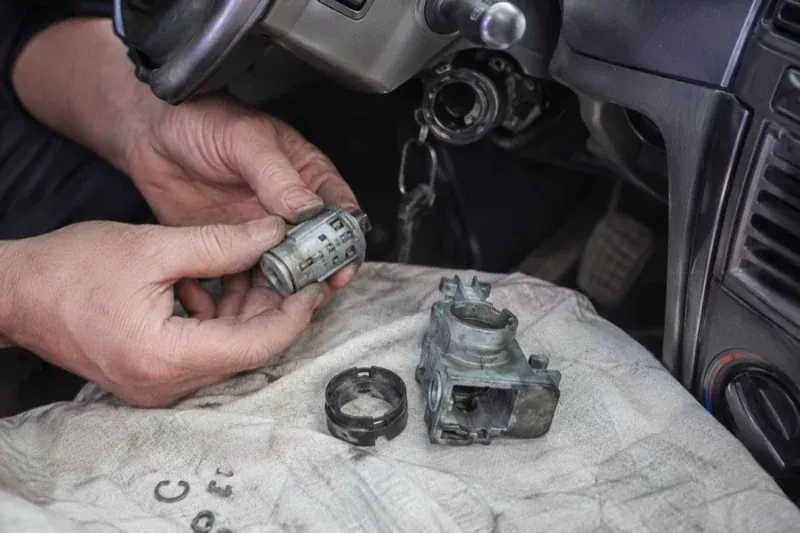
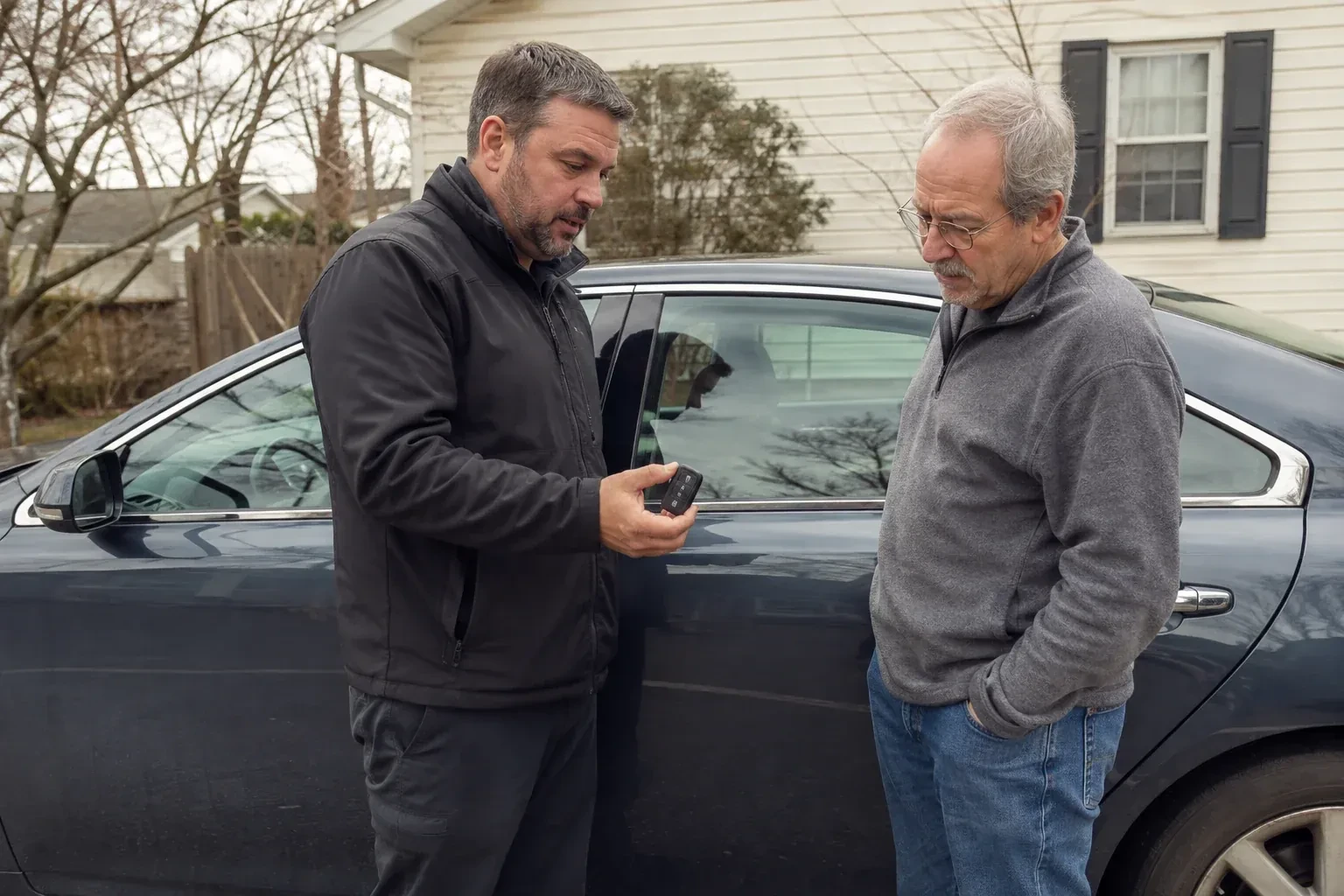
Most ignition lock work happens where the vehicle already is, a driveway, a parking lot, a curb, rather than requiring a tow to a shop first. The locksmith brings cylinder decoders, extraction tools and repinning equipment to the vehicle, assesses the mechanism in place, and works through accessory, on and start until the barrel turns the way it should. A shop visit only becomes necessary when the fault turns out to be electronic rather than mechanical.
How the visit goesTurning the key used to take one smooth motion. Lately it grinds partway through, sometimes needing a second attempt, and yesterday it stopped reaching start altogether. The key itself looks the same as always; something inside the ignition has changed instead.
Ignition Lock Repair
How the visit goes
Mechanical fault or electronic fault
A cylinder that turns cleanly but leaves the vehicle silent makes a mechanical keyway fault less likely, though the cause can still be the immobilizer, the transponder chip, the wiring behind the switch, or an unrelated starting fault such as the battery, starter or park/neutral circuit. The locksmith checks whether the barrel physically moves through accessory, on and start, whether the steering lock disengages, and whether dash lights respond at each position. Where the mechanical side checks out cleanly, the remaining question is named and set aside as separate, dealer-level work rather than folded into the same repair.
Removing a broken key without losing more of it
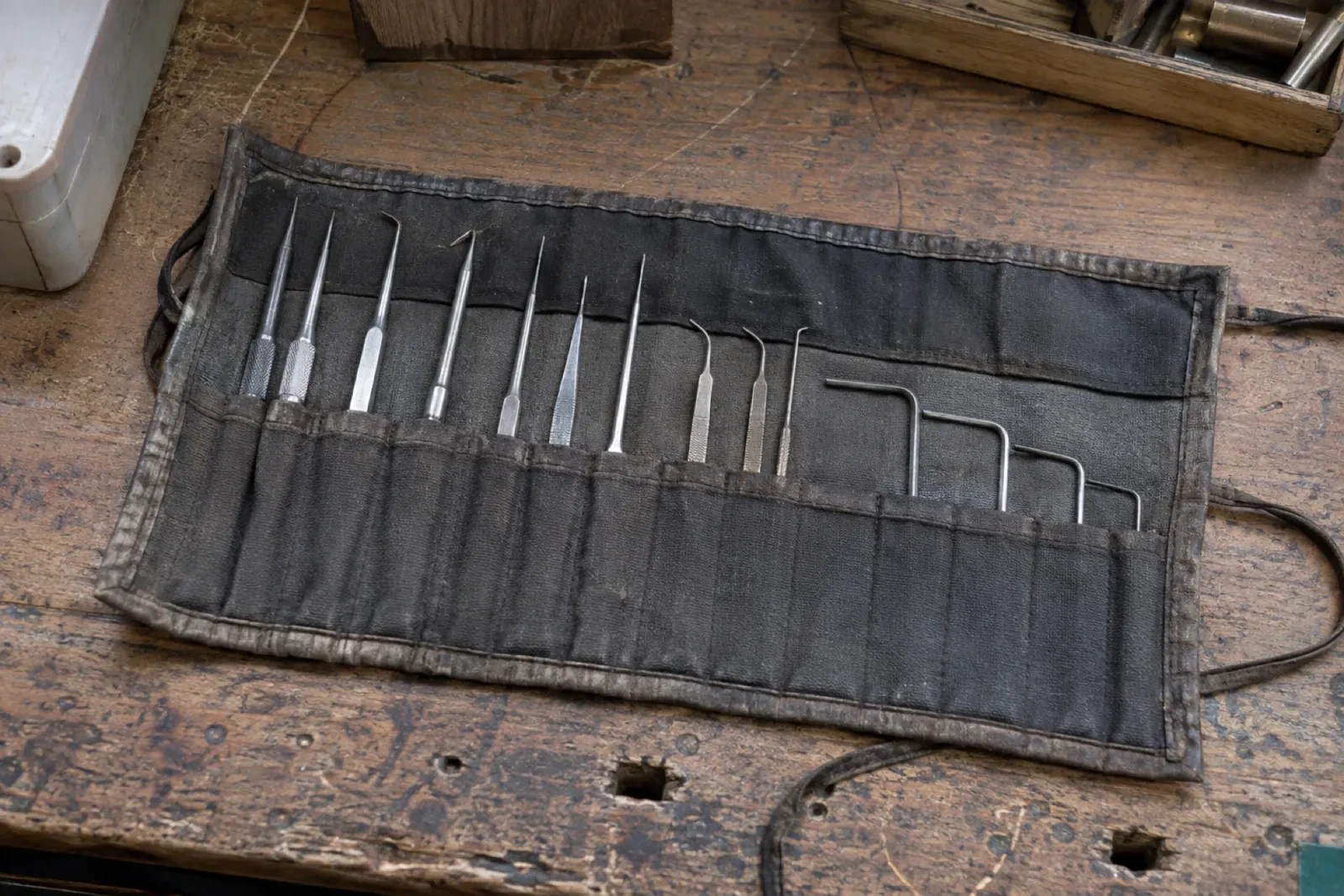
A snapped key calls for patience rather than force. Hooked and spiral extractors reach into the barrel and draw the broken piece out along the same path it went in, rather than pushing it deeper or twisting it further. Once the fragment is clear, the cylinder is tested and examined for the wear that likely caused the break, and a freshly cut key replaces the two broken halves before the vehicle is handed back to its owner.
One key doing everything it did before
If the doors and trunk already shared a key with the ignition, that arrangement is preserved or restored wherever the vehicle's design allows it, so the same key you carry now still opens everything it used to open before. Where a new key was cut, it is tested in every lock on the vehicle before the visit is called finished, not only in the ignition itself, so a lock quietly left out never becomes tomorrow's surprise.
Ignition Lock Repair
In the van
Keyed-alike pinning kit
Steering column trim tools
Key blanks and cutting machine
Dry graphite or PTFE lubricant
Cylinder decoder
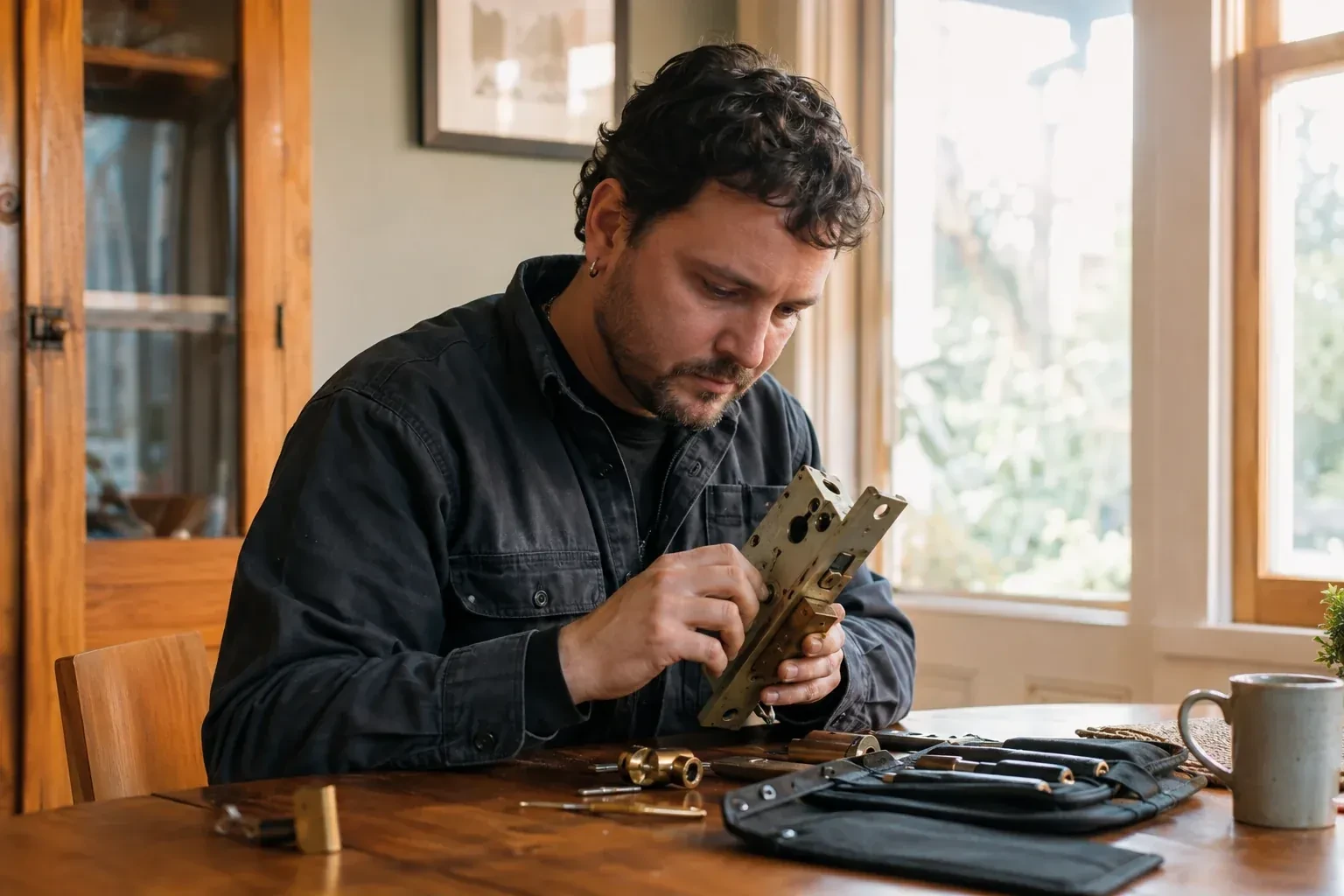
Ignition Lock Repair
What affects the quote
Aftermarket wiring near the ignition
A remote starter, an alarm, or other aftermarket wiring tied into the column changes what the locksmith has to work around and identify correctly before the mechanical repair can proceed safely.
Vehicle make, model and column design
How the ignition assembly is built varies by vehicle, a simple housing reached with a few steps, or a column locked down with shear bolts and trim that has to come off carefully. That difference in access shapes how much time the repair takes.
Whether an electronic diagnosis is also needed
When the mechanical repair alone does not account for everything the vehicle is doing, checking the immobilizer or transponder side becomes a separate task, priced and scoped apart from the lock cylinder itself.
What to have ready
- Would you like extra keys cut during the same visit?
- Do you have the vehicle permit or proof of ownership handy?
- What is the vehicle's year, make and model?
Ignition Lock Repair: questions
QuestionsAre there tools that shouldn't be used to try to free a stuck ignition?
Pliers, screwdrivers used as levers, and excess force in general tend to bend the key, mark the housing or snap something inside the barrel rather than resolve the underlying wear. A stuck ignition responds better to being read and serviced with tools built for the mechanism than to being pried at, so it is worth waiting rather than working through it alone.
How do you tell the cylinder apart from the switch behind it?
The cylinder is the part the key physically touches and turns; the switch is the electrical component behind it that responds to each position. The locksmith checks whether the barrel itself moves cleanly through every stop and whether the dash and starter respond at the right moments. When the barrel turns properly but the response is missing, the switch or wiring is a likely cause, though the battery, starter and park/neutral circuit are checked too before settling on it.
Does cold or wet weather affect an ignition cylinder?
It can. Road salt, grit and moisture from a slushy season work their way into the keyway over time, and old grease inside the mechanism can stiffen in the cold. A barrel affected this way is cleaned, dried and treated with whatever lubricant the vehicle's own service information calls for, which helps it move freely through the next stretch of similar weather ahead.
Related services
- Car Key ReplacementThe car is yours now, but somebody else still holds a key to it.
- Spare Car Key DuplicationA car sits at the cottage all season, and the only key to it lives on a ring three hours away in the city.
- Key Fob ProgrammingA cracked case or a spin through the wash left the fob unresponsive, and opening it up reveals a slightly corroded board where the buttons used to sit.