Locksmith
Straight answers about locks
What should you do the day you move in? How do you know if a lock is worth keeping? Why does your car key work some days and not others? These notes answer the questions that come up again and again, in enough detail to be useful and no more.
Good questions about locks
Can you open an interior door such as a locked bathroom or bedroom?
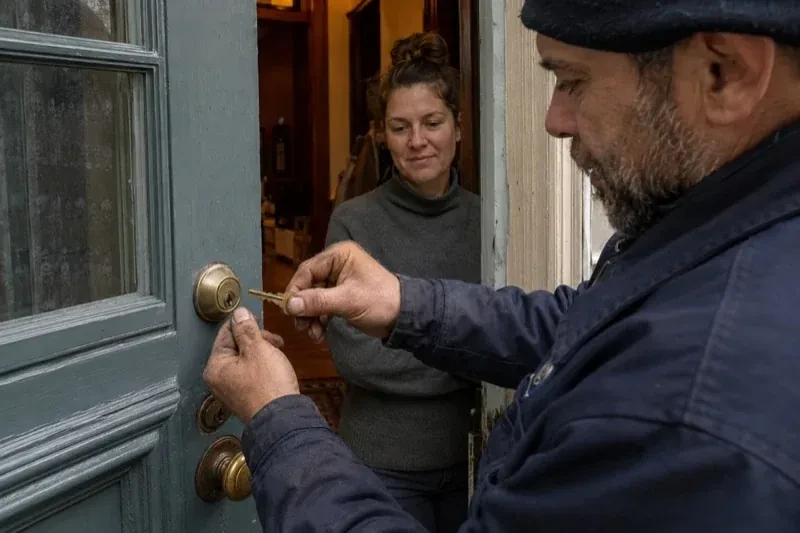
Yes, and these are usually gentle jobs. Privacy locks on bathroom and bedroom doors are built with a small emergency release on the outside, and when that has been painted over or stripped a locksmith can still operate the latch from outside with the right tool. Older interior doors with a keyed mortise lock or a bit key are opened by picking or by cutting a key to the lock. The door and trim stay as they were.
Do you work with our alarm company and access-control provider?
Yes, and it makes the visit smoother. The alarm station is told an entry is expected and the authorised person handles the disarm and password. For access control, the provider can often confirm the controller's status, unlock a magnetic lock remotely, or re-enrol fobs once you are inside, while the locksmith handles the mechanical side and the override cylinder. Nobody's wiring is cut; each party does the part it is set up to do.
Does the glue trick work?
It is a well-known idea and a poor one. A drop of adhesive on the other half rarely bonds to a piece of brass sitting in a tight keyway, and what it does bond to is the cylinder, the pins and the face of the lock. That film then has to be dissolved before proper extractors can slide in. Keep the halves apart and dry.
The intruder found our spare keys. What should be rekeyed?
Everything those keys fit. That usually means the front, back and side doors, the garage man-door, the mailbox and any padlocks, and in a rental the suite door with the landlord's involvement. Rekeying changes a serviceable cylinder to answer to a new key, and a cylinder that cannot be rekeyed is replaced instead. Doing every affected opening in one visit, keyed alike where the cylinders are compatible, means no forgotten door still answers to the stolen ring.
How long does a jammed lock opening take?
It depends on which family the jam belongs to. A bolt bound by the door is often freed in minutes and the adjustment afterwards takes a little longer. A seized cylinder needs patient cleaning before it turns and a bench service after, and a frozen one needs thawing time. A tailpiece swap is short once the door is open; a mortise case service is longer. The locksmith gives a sense of the time once the cause is identified at the door.
Do I need to be there for the whole visit?
An authorised adult should be present at the start, for identification and to agree the list of doors and the number of keys, and at the end, to test every key and take the count. In between, the work happens at the doors and on the van, so you are free to get on with your day inside. A property manager or a family member with your authorisation can stand in if you cannot be there.
Can I keep one door on a different key from the rest?
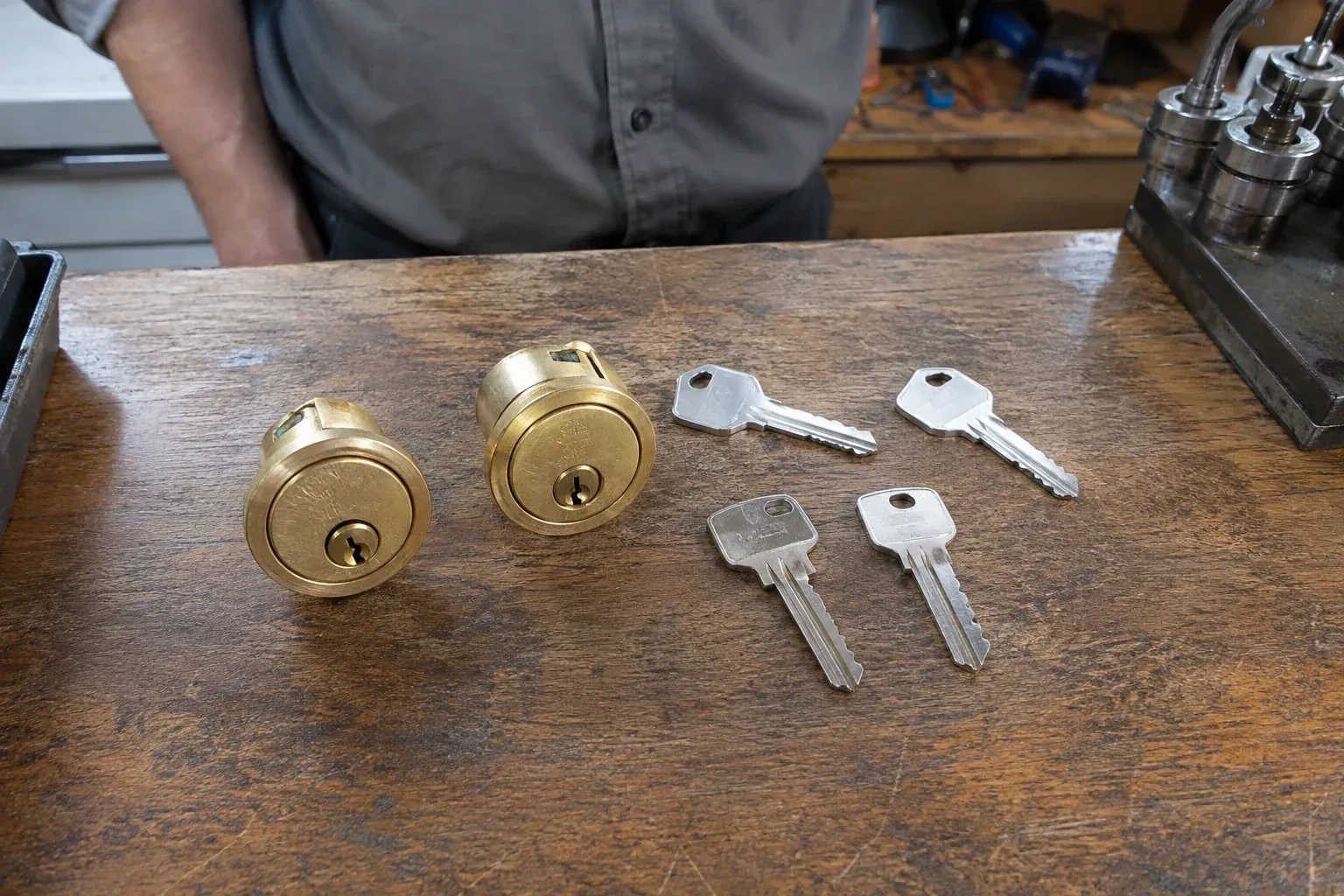
Yes, and it is common. A basement suite or in-law apartment often gets its own key so the tenant's key opens their door and nothing else, while your key opens the main house. A home office, a storage room or a shed can be kept separate for the same reason. The locksmith sets up the groups you want, pins each accordingly and tags the keys so the separate one is not mixed into the household set.
Do I need a deadbolt on the door from the garage into the house?
It is worth having. The door between an attached garage and the living space is in practice often the softest way in, since a garage door left open leaves a passage knob as the only barrier. A thumb-turn deadbolt there costs a few minutes a day and closes that gap.
What happens to the old lock?
It is yours. Some people keep a sound old cylinder as a spare or move a decent deadbolt to a shed or garage door, and the locksmith can rekey it to the house key for that purpose. Worn or damaged hardware is taken away for recycling if you prefer. Either way, the old keys should be gathered up and discarded so nobody confuses them with the new set.
Can you match a missing knob, plate or thumb-turn?
Often, yes. Locksmiths who work on older hardware keep salvage and reproduction trim in the common patterns and finishes, and a knob, rosette or escutcheon can usually be found close enough that the pair on one door match. Where nothing suitable exists, the trim from a less visible door can be moved to the entry and the reproduction fitted where it is seen less. Bring or photograph the surviving piece so it can be matched.
What is the difference between a keypad lock, a Bluetooth lock and a Wi-Fi lock?
A keypad lock is operated at the door by code and needs no phone at all. A Bluetooth lock adds phone control when you are within a few metres, which covers most daily use and keeps the lock off the internet. A Wi-Fi lock, either built in or through a small bridge, lets you check and change the lock from anywhere and sends alerts, at the cost of more battery use and a dependence on the home network. Many models combine two of these.
What actually happens during a gate or building entry lock visit?
The locksmith first watches the gate or door move and checks the hardware fitted to it, then works out whether the issue sits in the lock, the closer, the hinges or the alignment of the frame itself. Whatever combination is found, the relevant piece is adjusted, rekeyed or replaced, and the whole assembly is cycled repeatedly afterward to confirm it closes, latches and locks the same way every time. Any keys involved are cut and tested before the visit is considered complete.
Can a business's mail slot lock be replaced the same way?
Yes, a commercial mail slot or parcel compartment uses much the same small cam or wafer lock as a residential mailbox, and the same measuring and fitting process applies. Employee turnover is a common reason a business chooses to replace rather than simply live with an uncertain number of old keys still in circulation.
When does a locksmith decide to drill a safe instead of opening it another way?
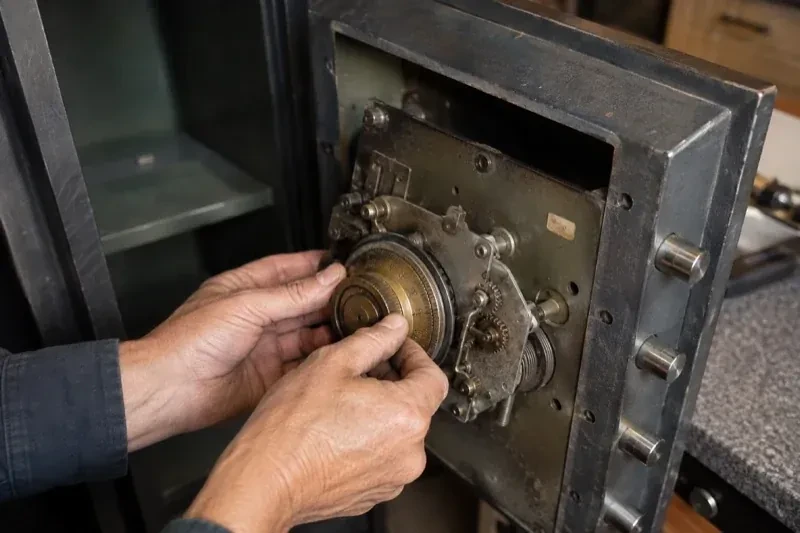
Drilling is chosen when the gentler options for that specific lock, manipulation and decoding on a mechanical dial, or a manufacturer reset or override on an electronic one, are unavailable or have not worked, rather than following one fixed order on every safe. It is also the answer when the lock has genuinely failed, such as a seized wheel pack or a dead circuit board with no working override. The decision is explained before drilling starts, not discovered afterward.
Can more than one person have their own code?
Yes, on an electronic keypad that supports multiple users, each person can be given a separate code rather than everyone sharing one, which also makes it simple to remove a single code later without resetting the whole lock. A mechanical dial lock, by contrast, has one combination for everyone who needs it, so a change in who has access there means changing that one combination.
Is a smart lock more secure than a high security mechanical lock?
They solve different problems. A keypad or smart lock manages who can enter and when, and many have no keyway to pick. A high security mechanical lock resists physical attack and controls key copying without batteries, apps or connectivity. Many businesses use both: electronic access on high-traffic doors and high security cylinders on rooms that must hold regardless of power. The locksmith helps you match the tool to each door rather than choosing one philosophy.
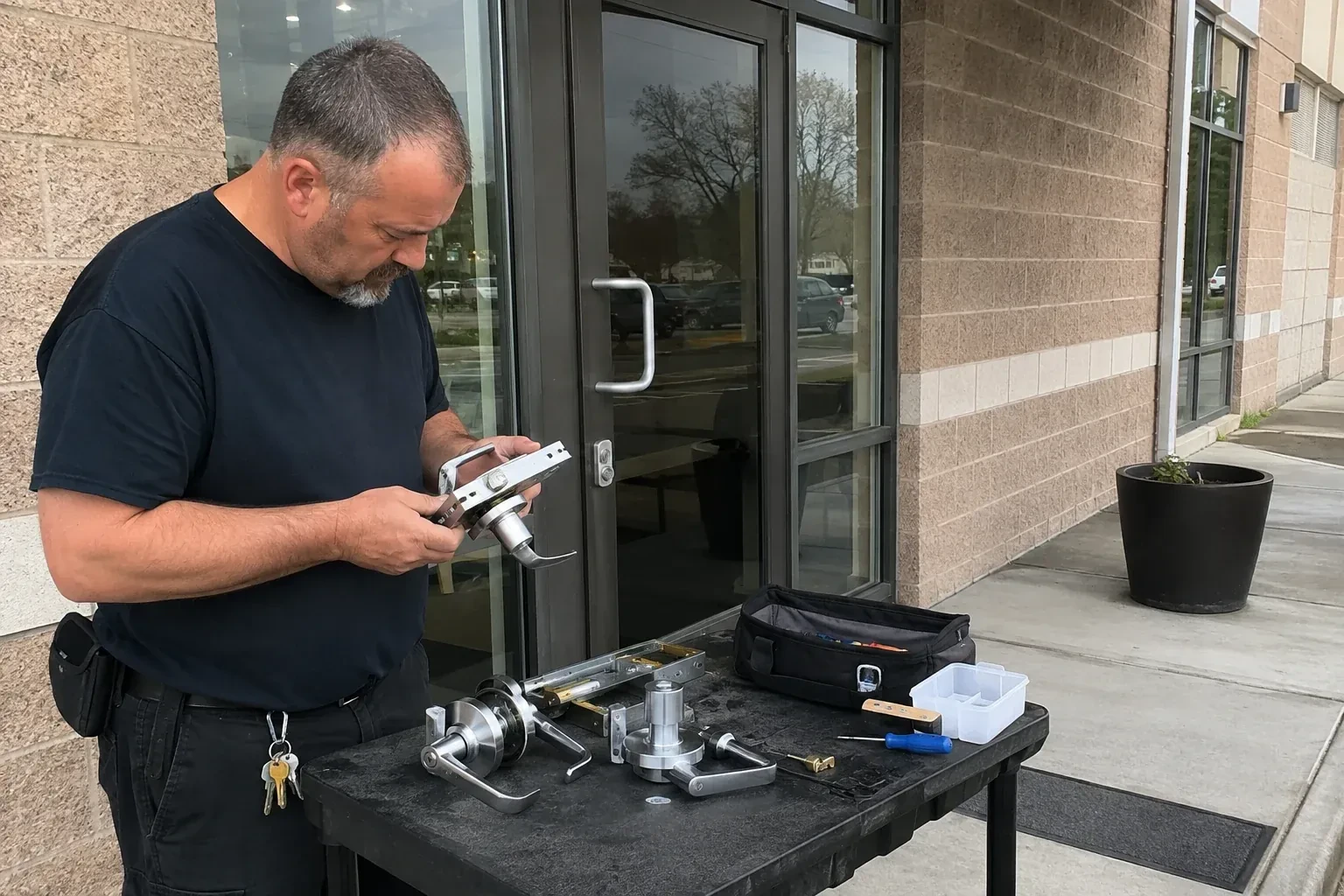
Will every old key stop working once you are done?
Every old key that operated a cylinder included in the plan will stop working, and the locksmith proves it by trying old keys at each door before leaving. Old keys keep working only at openings you chose to leave alone, which are written on the chart so there is no confusion. If a master key existed, it is tested too, since a forgotten master is the most common way an old key stays alive.
Can different lock brands be mixed in one master key system?
Sometimes, but it depends on the keyway and pinning platform each brand uses; some are compatible with one another and some are not. Where a mix already exists on a property, the assessment identifies which cylinders can be brought into a single hierarchy and which need replacing with a matching platform so every level pins correctly across the whole set of doors.
How is a lost fob or card handled?
It is switched off in the software the moment it is reported, which stops that specific card or fob from working at any door it used to open. A new one is issued and enrolled in its place. No lock has to be changed and no other credential in the building is affected, which is the main advantage a lost fob has over a lost mechanical key.
Can exit hardware be styled to match the rest of the building's finishes?
Yes, within what the door's rating allows. Exit devices and their trim come in a range of finishes to sit alongside other door hardware in the building, and outside trim in particular, being the visible part from a public side, can be chosen to match levers or pulls used elsewhere. A fire-rated opening narrows the finish choice somewhat, since the whole assembly has to stay within its listing.
What should I do with the old hardware once it is replaced?
That is entirely your choice. Some businesses keep old hardware briefly in case a spare part is needed elsewhere on the same system, others prefer it removed from the site straightaway, particularly after a break-in where the damaged pieces are no longer wanted around. The locksmith can leave it with you or take it away, whichever you prefer.
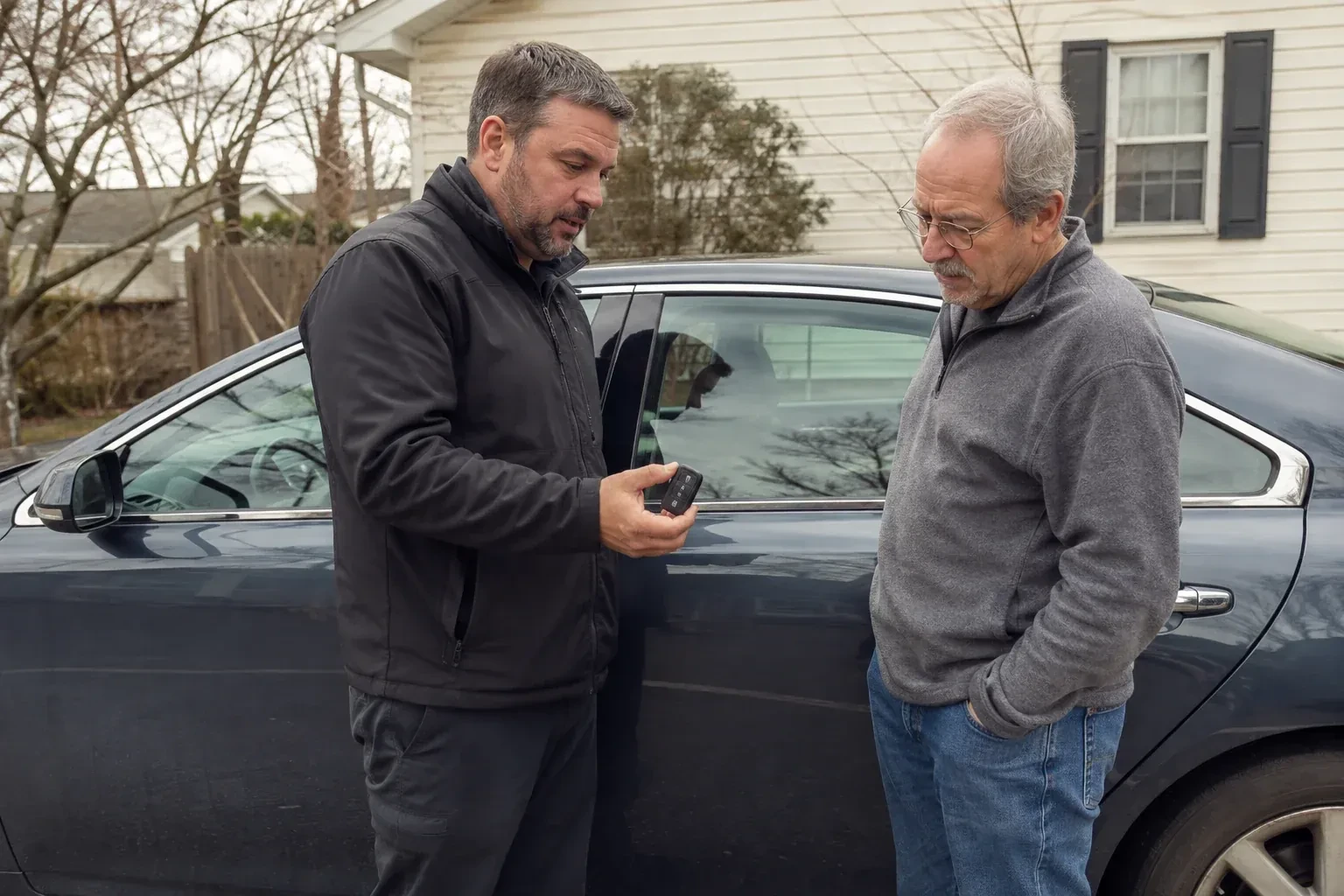
The whole car is dead, not just the fob. Can you still open it?
Yes. When the interior lights, horn and remote are all silent, the car's own twelve-volt battery has run flat, and the fob has nothing to talk to. The door is opened through the mechanical cylinder or with a wedge and reach tool; loose or corroded connections and other faults can look the same as a dead battery, so it is checked and confirmed safe before a jump pack brings the car back to life. If the battery will not hold a charge, you will know before the locksmith leaves.
Can the key I lost still start my car?
Until it is erased, yes, because the immobilizer still recognizes its chip. During the programming session the locksmith can remove every key from the car's memory except the ones in your hand, and unpair the old remote as well. After that the lost key is a blade that opens a door at most, and nothing else. If that blade worries you, changing or rekeying every mechanical cylinder it operates, doors and ignition, plus a trunk, tailgate, fuel door or glovebox where the car has one, finishes the job.
What if the fob's battery is already low?
A low battery in the original does not stop a spare from being made, since the chip and code stored inside still respond during programming even as the battery fades. It is worth mentioning the low battery when you call, though, since the new fob is a natural moment to have a fresh battery on hand for both keys and to note which type each one takes.
What happens if every fob for my car is lost at once?
On many vehicles the key memory has to be reset before any new fob can be added, since nothing already accepted remains to authorize one; some vehicles instead accept an authenticated app or manufacturer service credential without a full reset. Where a reset is needed, it may take a security code specific to your vehicle or an approved access pathway built for exactly this situation. Once the reset completes, a full new set of fobs is registered and tested before the visit ends.
Can a vehicle from before transponder keys were common have one added now?
It depends on the vehicle and what its factory ignition system supports; some older models can accept an aftermarket immobilizer and matching transponder key, while others were never built with a compatible module at all. This is worth discussing model by model rather than assuming either answer, since the mechanical side of an older ignition is often the easier half of that conversation.
Are there tools that shouldn't be used to try to free a stuck ignition?
Pliers, screwdrivers used as levers, and excess force in general tend to bend the key, mark the housing or snap something inside the barrel rather than resolve the underlying wear. A stuck ignition responds better to being read and serviced with tools built for the mechanism than to being pried at, so it is worth waiting rather than working through it alone.
What should I do before calling about a vehicle lock problem?
Note which lock is affected, whether the key turns without effect or resists turning, and whether the remote behaves differently from the mechanical key on that same door. That description helps the locksmith bring the right parts for the specific fault.
What is the difference between decoding a lock and picking it?
Picking manipulates the wafers to open the lock without necessarily learning their depths, useful when the goal is just to turn the lock once. Decoding reads each wafer's actual depth, usually with a scope or a feeler-style tool, so that information can be turned into a cut key. For key service the lock is generally decoded rather than only picked, since the point is producing a working key, not just a single turn.