Commercial
Commercial Locks
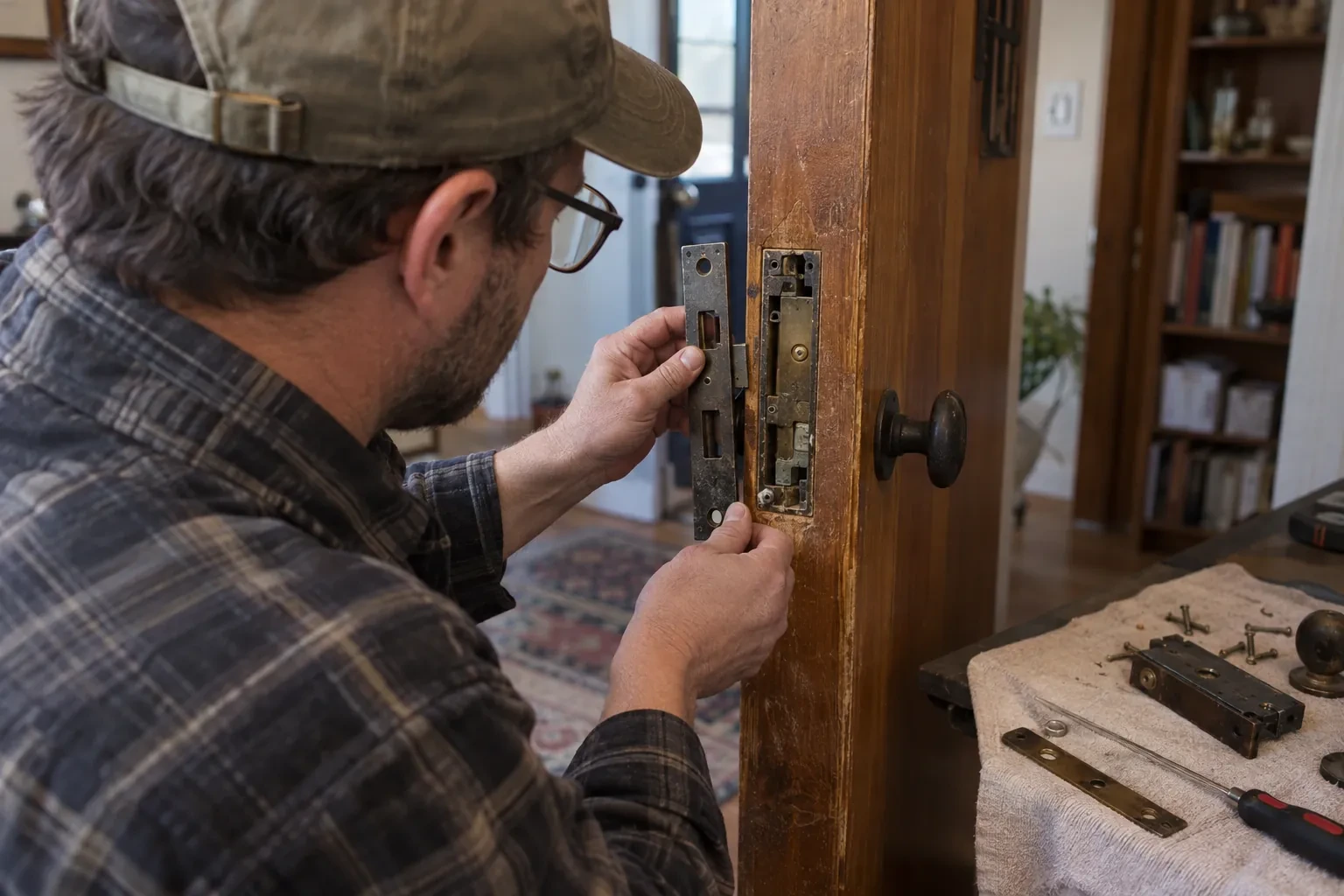
A commercial lockout can mean a locked front door with customers arriving, a jammed back door with a delivery waiting, or a stockroom key gone missing during a shift. Business lockout work opens the door, checks the lock and gets the day back on track.
Which one do I need?
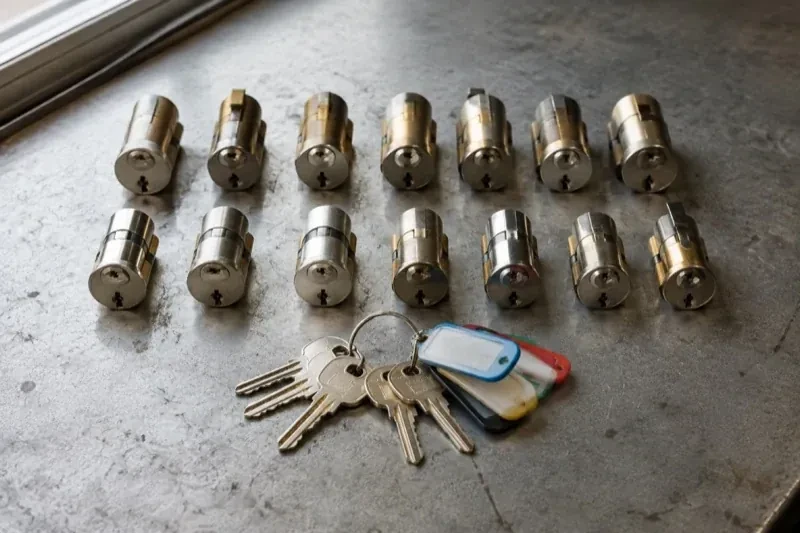
- The office has been reshuffled twice since the locks were last touched.Commercial Rekeying
- A property manager taking over a small commercial building inherits a shoebox of keys with no labels and no chart.Master Key System Design
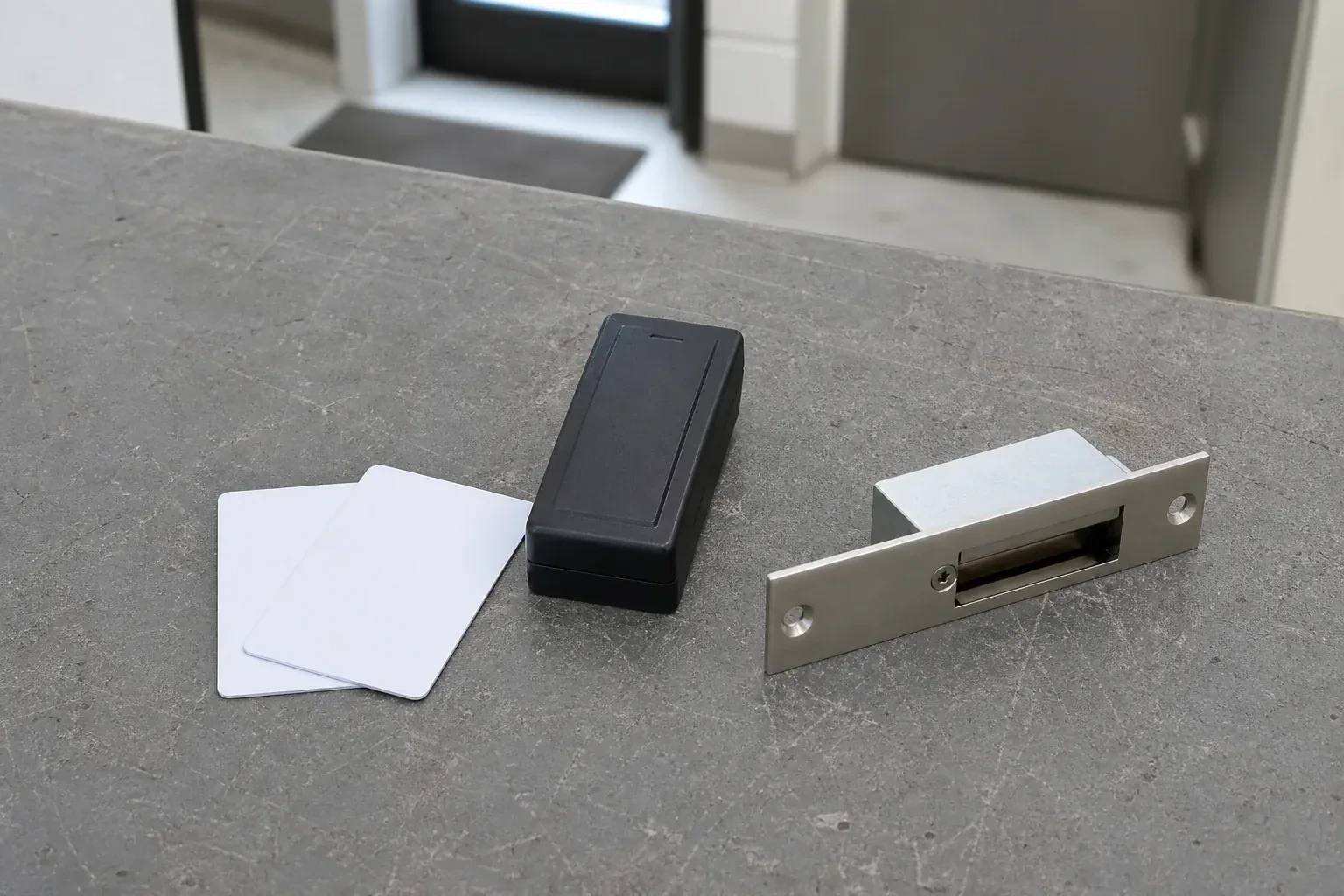
- Another employee left and the keys never came back.Access Control Installation
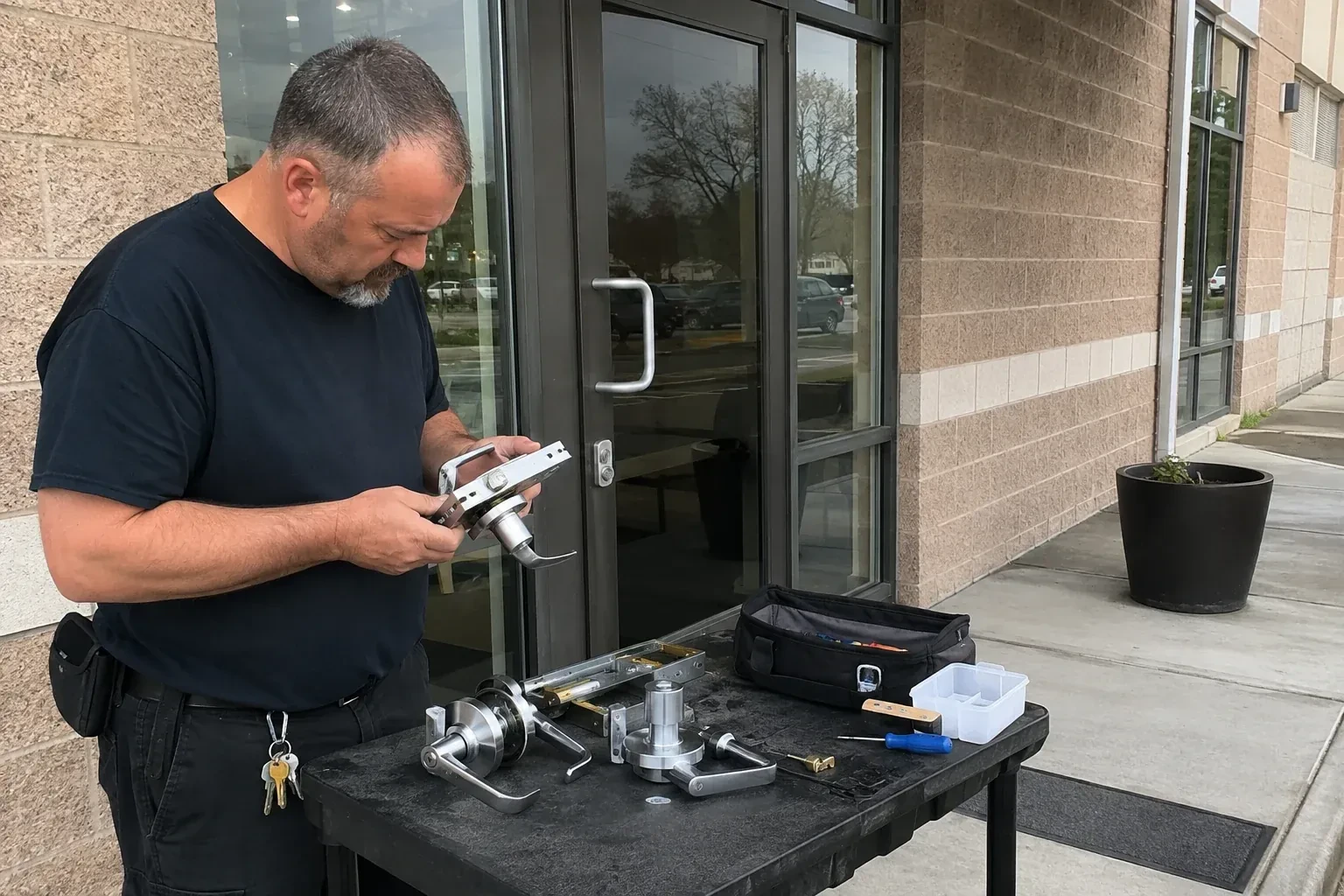
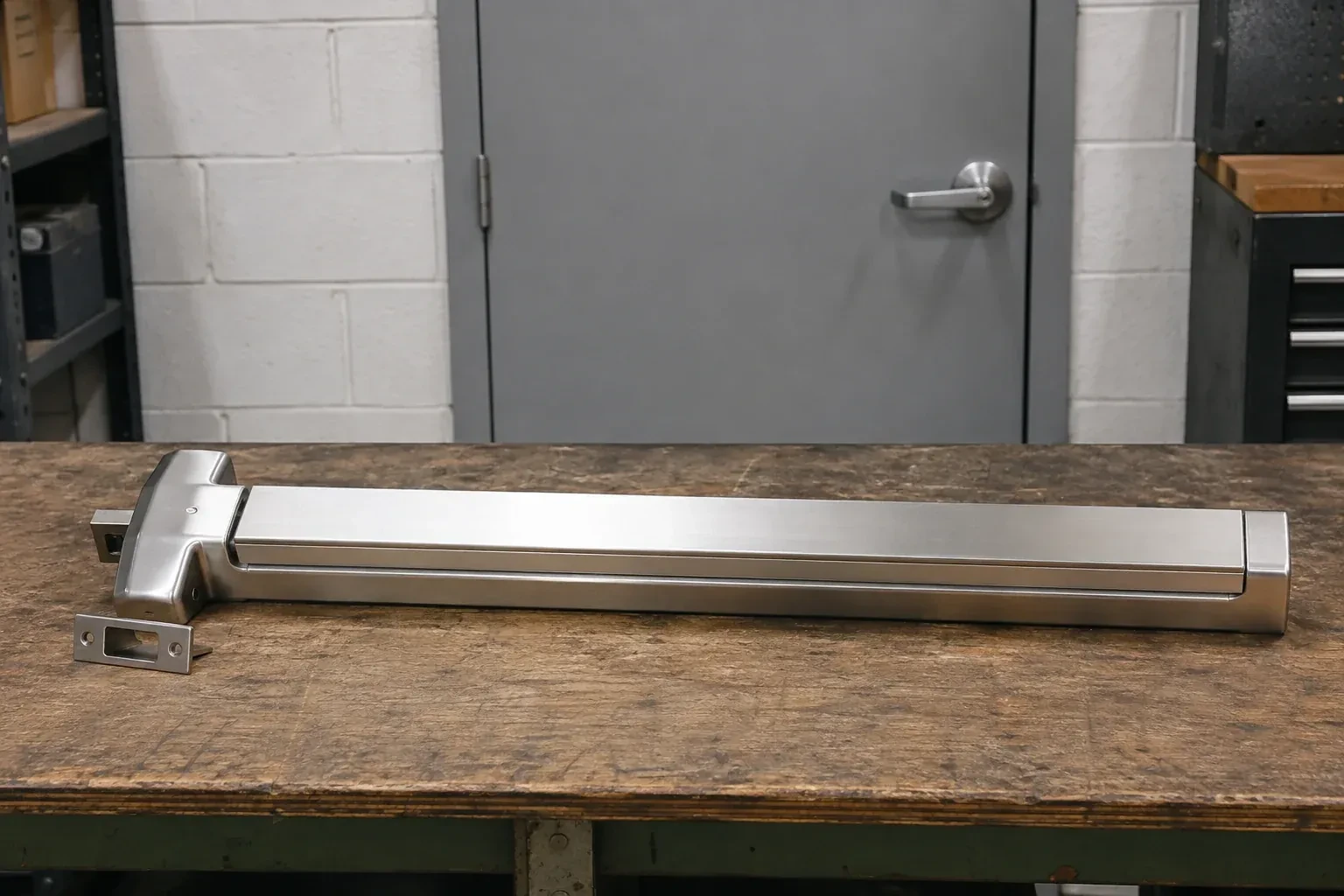
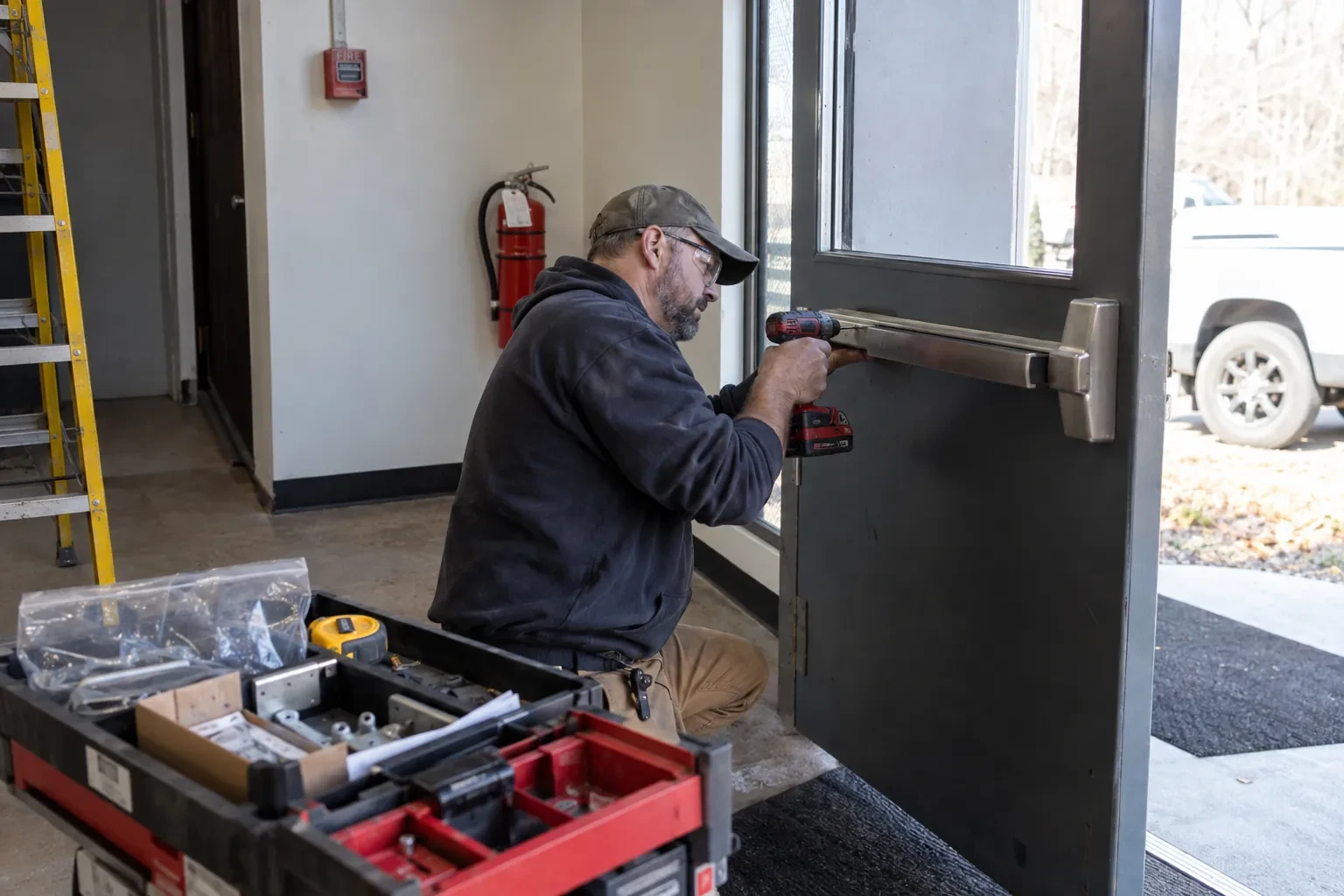
- The crossbar on the loading-dock door barely returns anymore.Panic & Exit Hardware
- An inspection report flagged the rear exit as needing hardware that opens with one motion and no key, and that door currently has an ordinary keyed knob on the inside.Commercial-Grade Lock Replacement
Commercial Locks
Locks for shops, offices and buildings: rekeying at turnover, commercial-grade hardware, exit devices, master key systems and access control.
Commercial Rekeying
Who is entitled to order the change
Every commercial rekey starts by confirming that the person asking for it has the standing to do so. For a small business that is usually the owner or a director; for a larger one, a facilities manager or property manager acting under written authority. The lease matters here too, because it decides which doors are the tenant's to alter and which remain the landlord's, and many leases ask that the landlord be given a key or told when locks change.
Getting this straight before any cylinder comes out protects the business, its neighbours in the building and the locksmith, and it means the finished keying chart lands in the right hands.