Car keys · Toronto
Ignition Lock Repair
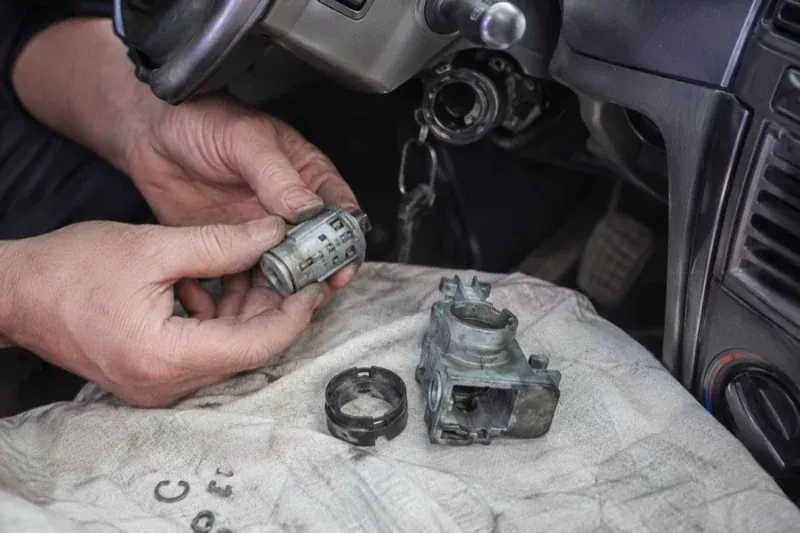
The key slides in fine and turns without any resistance at all, and the dash lights flicker, but nothing catches.
In plain words
Where the hardware allows it, a replacement or serviced ignition cylinder is pinned to match the key already in your pocket, rather than handing you a second key to keep track of. The same thinking extends to the doors and trunk: if they already share a key with the ignition, the locksmith keeps that arrangement intact, so one key still does everything it did before the visit began.
How the visit goesHalf the key is still in your hand. The other half stayed behind in the ignition when it snapped, and now the dash won't light and the wheel won't unlock no matter how carefully you nudge what is left.
Ignition Lock Repair
How the visit goes
Confirming who the vehicle belongs to
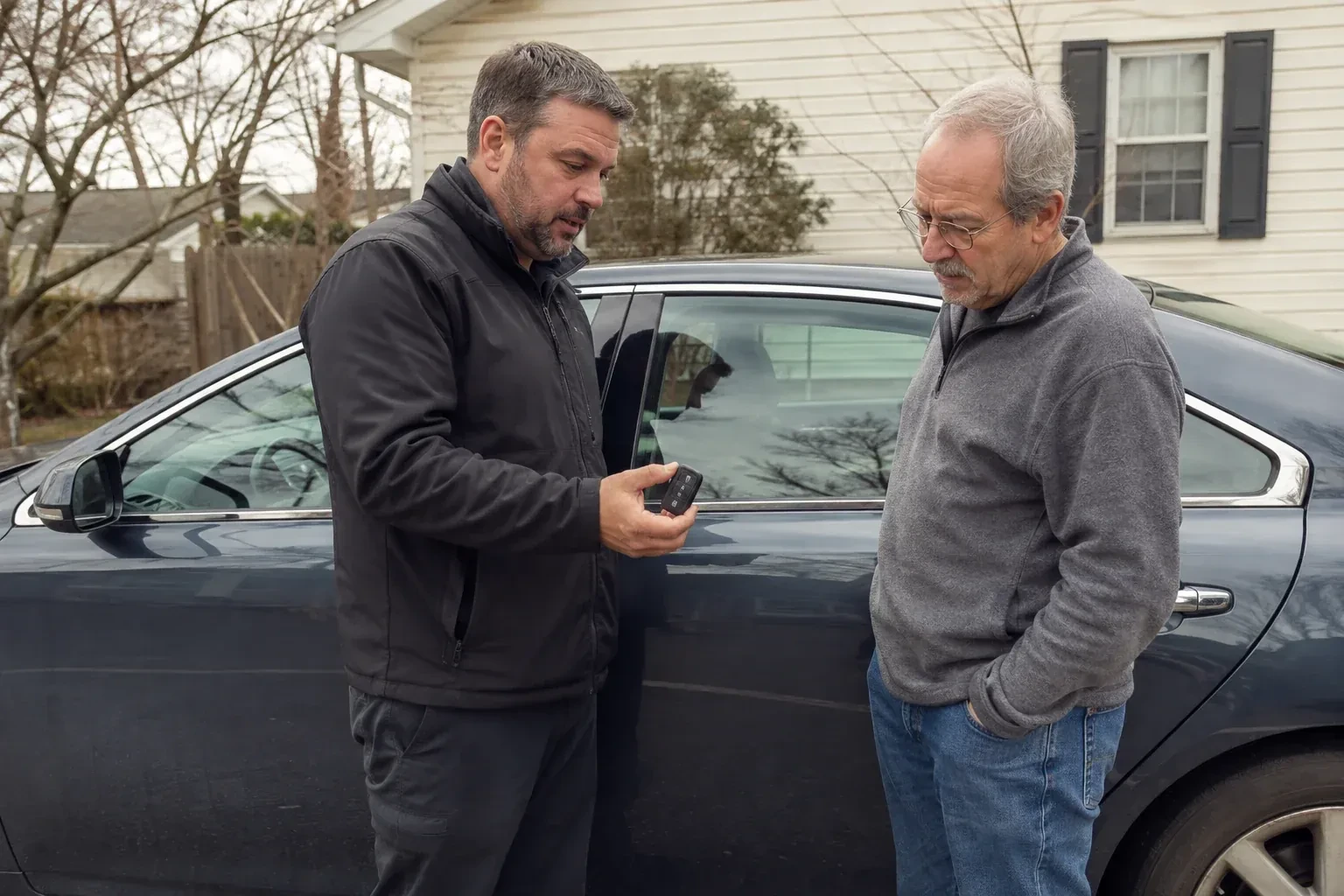
Before any tool touches the ignition, the locksmith confirms that the person requesting the work owns the vehicle or is authorized to have it serviced. A vehicle permit or registration document matched to a driver's licence is the simplest route, and a rental agreement, a fleet authorization, or a call to the registered owner fills the gap when the paperwork is not on hand. This step is a courtesy to every vehicle owner on the road, not an obstacle, and a careful locksmith treats it as the natural first step of the job rather than something to rush past.
Testing every position before calling it finished
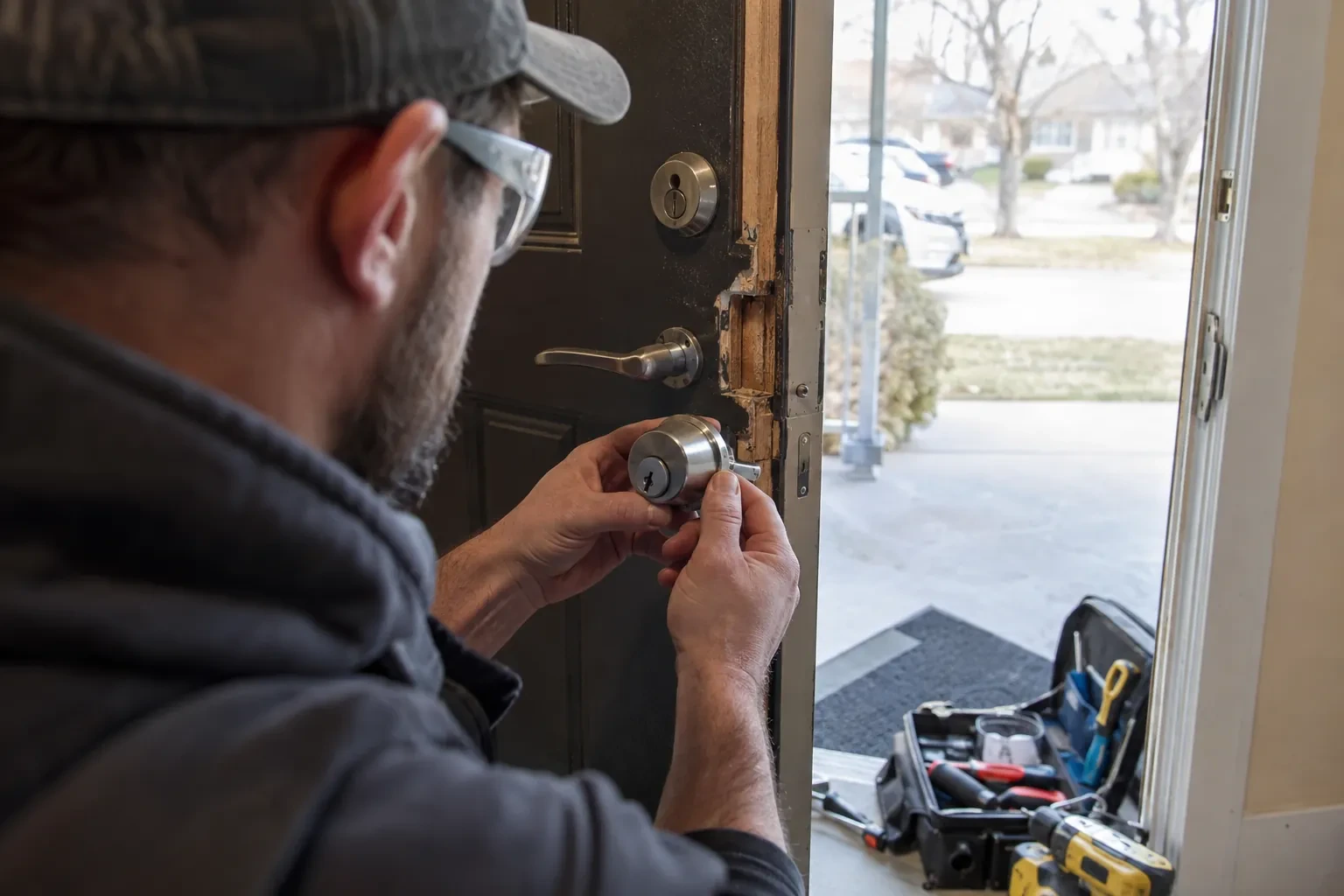
A repaired or replaced cylinder is cycled through every stop, off, accessory, on and start, with the key the owner will actually use afterward. The steering lock is engaged and released several times, the dash is watched for the expected response at each position, and the engine is started and shut off to confirm the whole sequence holds up in practice rather than just on the workbench.
A little care that keeps the barrel turning smoothly
A cylinder that has just been serviced benefits from the same light touch that kept it healthy in the first place: whatever lubricant the vehicle's own service information calls for worked into the keyway every so often, since some ignitions specify grease rather than a dry product. Wipe debris off the key itself before each use, and retire a key that has started to look rounded or thin, well before it becomes the reason for another visit.
Ignition Lock Repair
In the van
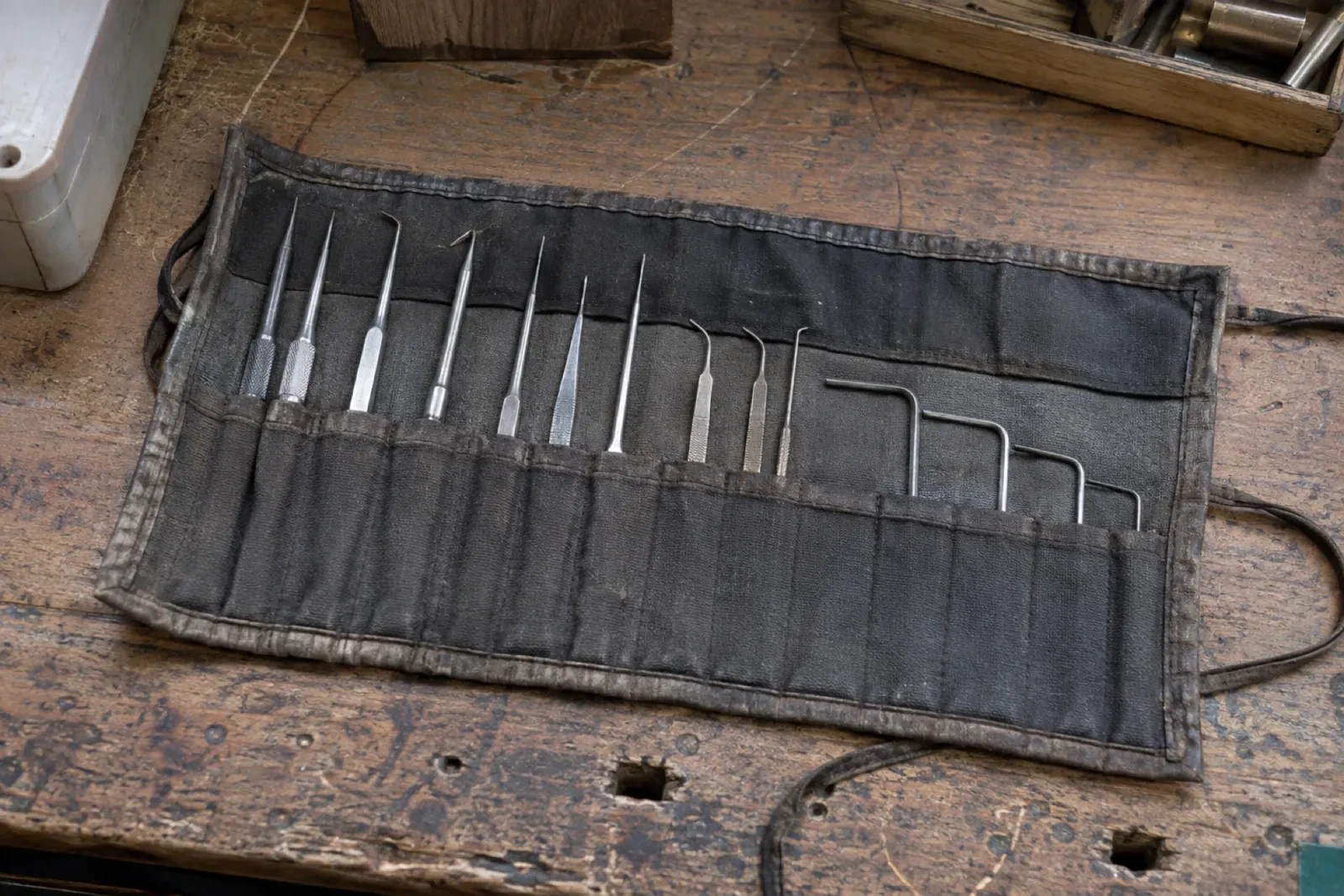
Keyed-alike pinning kit
Steering column trim tools
Key blanks and cutting machine
Dry graphite or PTFE lubricant
Cylinder decoder

Ignition Lock Repair
What affects the quote
Number of new keys cut
One replacement key is the simplest case. A household or a business vehicle used by several people may want a few keys cut and tested at once, and each one is counted into the visit.
Whether a working key is available
A repair that starts with a working key to test against and pin the new cylinder to is more straightforward than one starting from a key that is lost, badly worn or entirely absent from the household.
Service in place versus full replacement
Cleaning, freeing and lubricating an existing cylinder is a lighter job than removing a barrel that is cracked, seized or too worn to trust, pinning a new one, and refitting everything around it afterward.
What to have ready
- Is the key stuck and unable to be removed?
- Is any part of a key broken off inside the ignition?
- Does the key insert, turn partway, or not turn at all?
Ignition Lock Repair: questions
QuestionsAre there tools that shouldn't be used to try to free a stuck ignition?
Pliers, screwdrivers used as levers, and excess force in general tend to bend the key, mark the housing or snap something inside the barrel rather than resolve the underlying wear. A stuck ignition responds better to being read and serviced with tools built for the mechanism than to being pried at, so it is worth waiting rather than working through it alone.
How do you tell the cylinder apart from the switch behind it?
The cylinder is the part the key physically touches and turns; the switch is the electrical component behind it that responds to each position. The locksmith checks whether the barrel itself moves cleanly through every stop and whether the dash and starter respond at the right moments. When the barrel turns properly but the response is missing, the switch or wiring is a likely cause, though the battery, starter and park/neutral circuit are checked too before settling on it.
Does cold or wet weather affect an ignition cylinder?
It can. Road salt, grit and moisture from a slushy season work their way into the keyway over time, and old grease inside the mechanism can stiffen in the cold. A barrel affected this way is cleaned, dried and treated with whatever lubricant the vehicle's own service information calls for, which helps it move freely through the next stretch of similar weather ahead.
Related services
- Car Key ReplacementThe car is yours now, but somebody else still holds a key to it.
- Spare Car Key DuplicationA car sits at the cottage all season, and the only key to it lives on a ring three hours away in the city.
- Key Fob ProgrammingA cracked case or a spin through the wash left the fob unresponsive, and opening it up reveals a slightly corroded board where the buttons used to sit.