Lockouts · Toronto
Break-In Damage Lock Repair
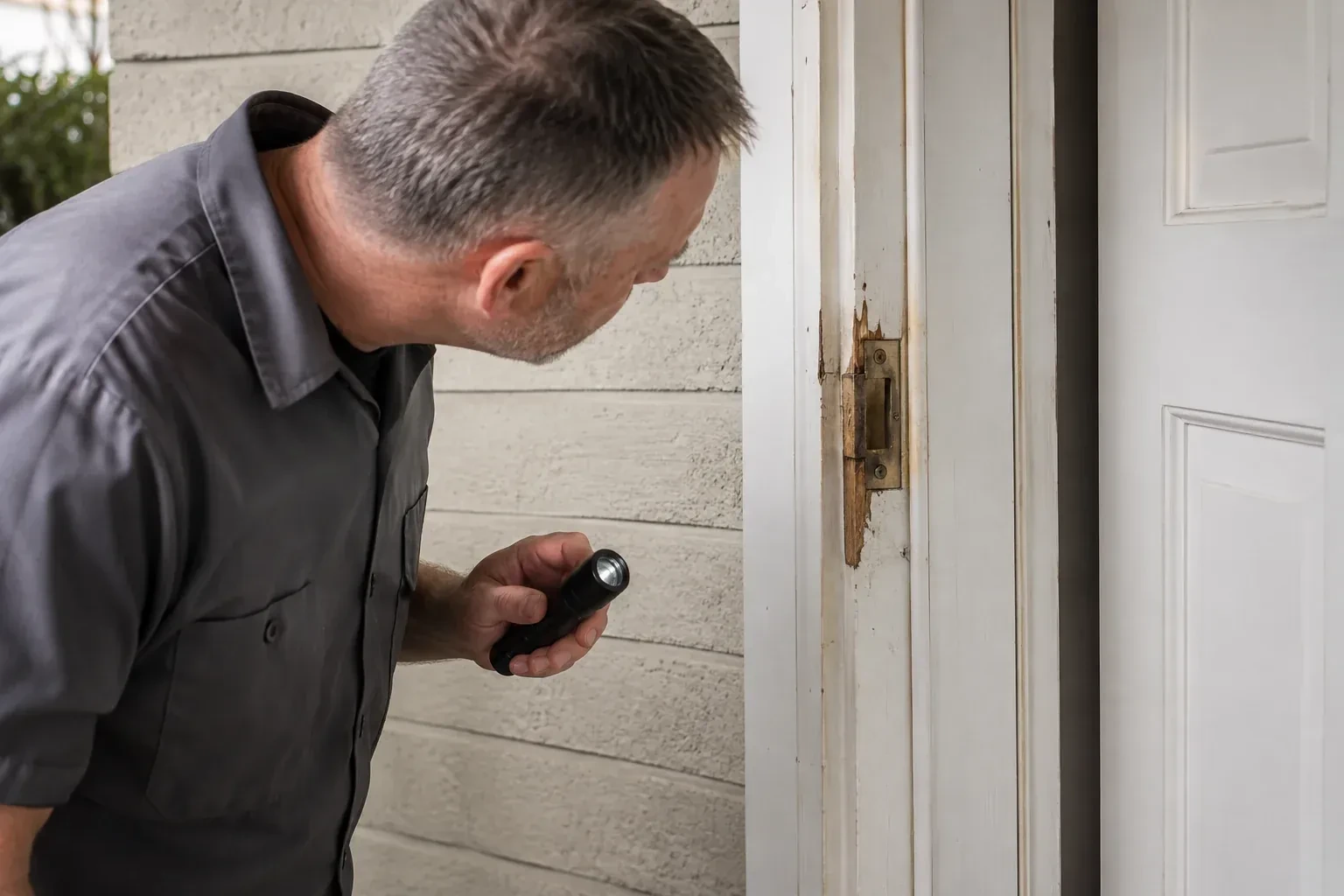
There is a hole where the cylinder used to be.
In plain words
Break-in damage lock repair is the visit that turns a forced door back into a locked one. The locksmith first confirms you own, rent or manage the property, then looks at everything the attack touched: the lock, the bolt, the strike plate and wood behind it, the door edge, the hinges and any glass beside the door. The opening is secured before the visit ends, and the parts that gave way are replaced with stronger hardware and longer fasteners set into the framing. Any lock a taken key could open is rekeyed or replaced, so the house is closed on your terms again.
How the visit goesPolice have come and gone, the occurrence number is on a sticky note, and you are standing in a cold hallway looking at a splintered frame, wondering how the house gets locked before everyone tries to sleep.
Break-In Damage Lock Repair
How the visit goes
Which keys and codes are gone
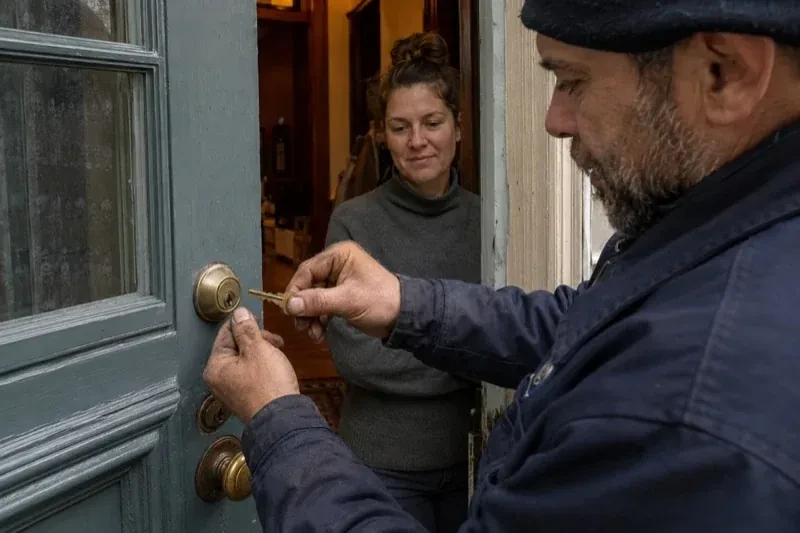
Break-ins change who holds the keys, so the assessment includes a short inventory. Were house keys hanging by the door, in a drawer or on a hook in the garage? Was a car taken with a garage remote and a house key on its ring? Was a bag or wallet with keys inside stolen? Are alarm codes or safe combinations written anywhere that was disturbed? Each yes adds a cylinder to be rekeyed, a remote to be erased from the opener or a code to reset. The locksmith lists every lock those keys fit, including the mailbox, padlocks and a rental unit's suite door, so nothing that opened yesterday still opens tomorrow.
Fitting the new deadbolt and cylinder
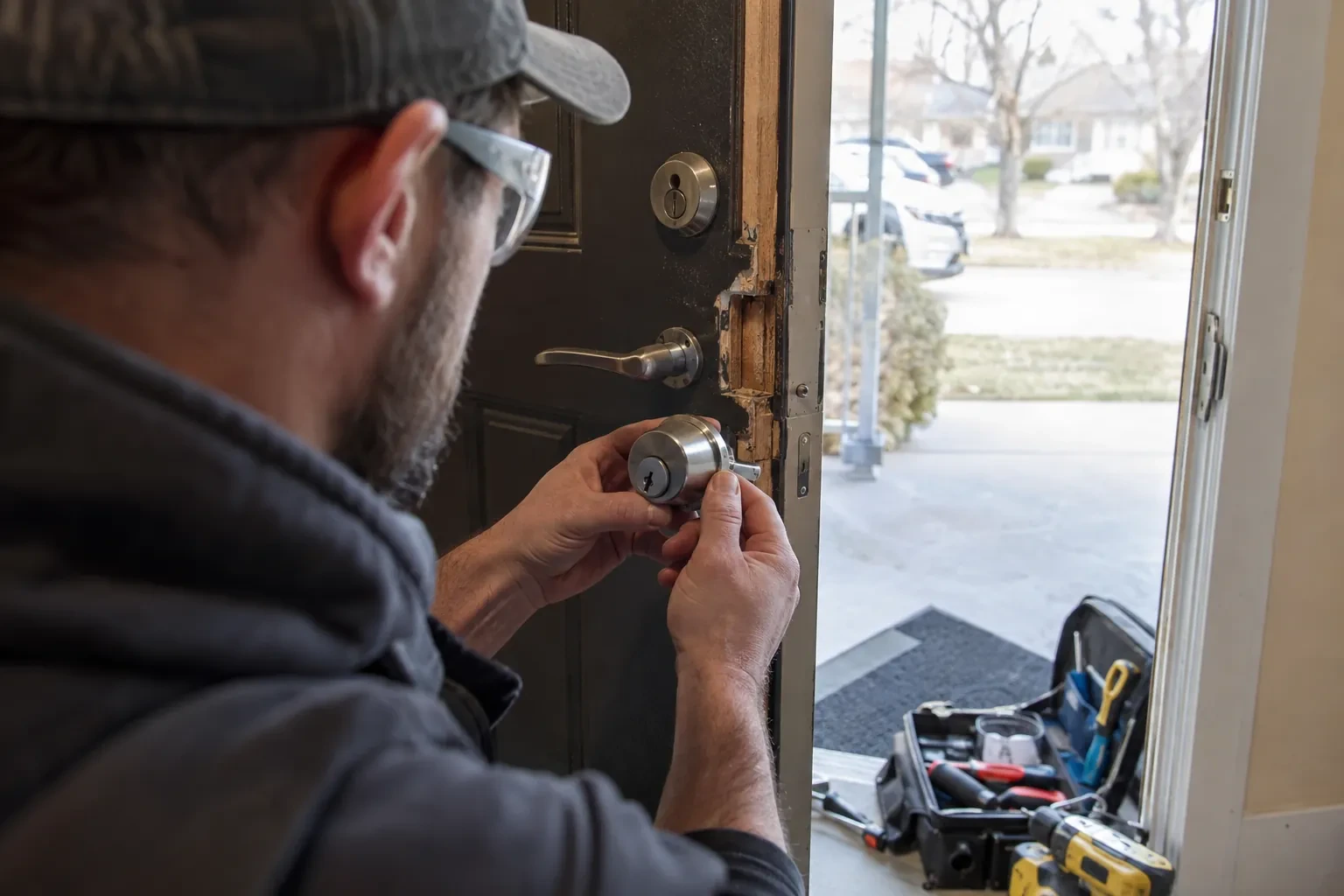
The replacement hardware is chosen for the door and for the attack it suffered. A deadbolt with a full one-inch throw, a hardened insert against sawing and a low-profile face that resists a wrench grip is the usual choice, graded to a recognised durability standard rather than the lightest unit on the shelf. It is matched to the existing bore and backset so no new holes weaken the slab, or the preparation is enlarged cleanly where the old hardware was small. The bolt is tested with the door open, then closed, and the strike adjusted until it throws without dragging. Trim and finish are matched to your other doors where you want that.
Stronger than it was before
A repaired door is usually the strongest door in the house, because the parts that failed have been replaced with the parts that should have been there. The bolt now sits in a boxed strike anchored to the stud by long screws, the hinge side is fixed to framing rather than trim, the door edge is sleeved in steel where it was soft, and a full-throw deadbolt with a hardened insert has replaced the light one. None of this shows from the street. What changes is that a repeat attempt meets resistance at every point the first one found weak, and the noise and time that demands is exactly what intruders avoid.
Break-In Damage Lock Repair
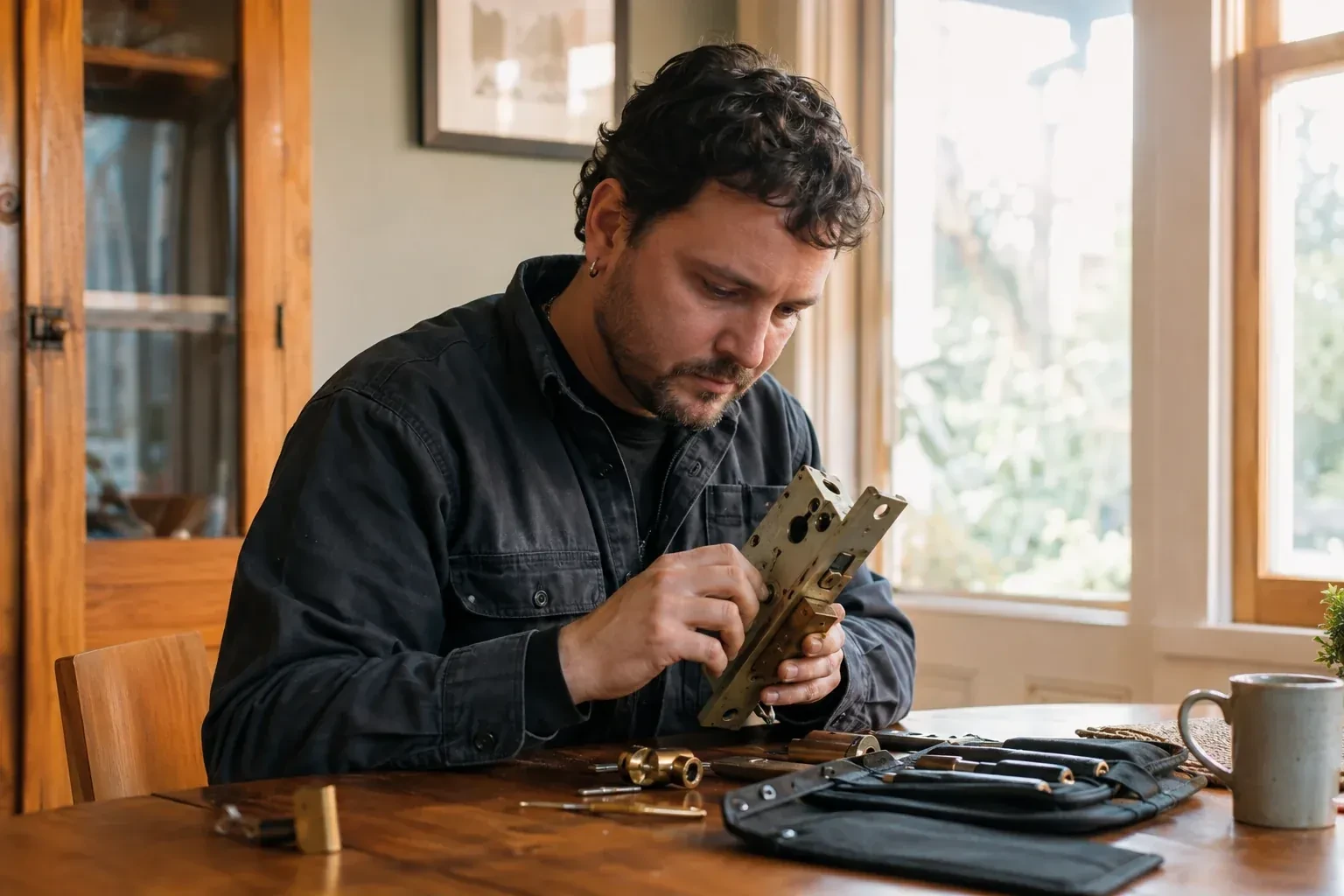
In the van
Grade 1 deadbolt with one-inch throw
Rekeying pins and key blanks
Hinge reinforcement plate
Wrap-around door edge reinforcer
Latch guard plate
Break-In Damage Lock Repair
What affects the quote
Lock failure or frame failure
Replacing a lock is hardware and fitting time. Rebuilding a strike side with a boxed strike, epoxy and long screws into the stud is carpentry as well, and is quoted as its own line.
How many parts were damaged
One broken cylinder on a sound frame is a small repair. A torn strike, a split jamb, a crushed door edge and bent hinges together are a longer visit with more hardware, and the quote follows the count.
Work referred to another trade
A shattered frame, a broken door slab or smashed glass is listed as needing a carpenter, door installer or glazier, and that work is quoted by those trades rather than by the locksmith.
What to have ready
- Are there other doors or a garage entry on the same key?
- Have you photographed the damage as you found it?
- Would you like stronger hardware fitted while the door is being repaired?
Break-In Damage Lock Repair: questions
QuestionsThe intruder found our spare keys. What should be rekeyed?
Everything those keys fit. That usually means the front, back and side doors, the garage man-door, the mailbox and any padlocks, and in a rental the suite door with the landlord's involvement. Rekeying changes a serviceable cylinder to answer to a new key, and a cylinder that cannot be rekeyed is replaced instead. Doing every affected opening in one visit, keyed alike where the cylinders are compatible, means no forgotten door still answers to the stolen ring.
Do longer screws really make a difference?
A large one. Factory strike and hinge screws are usually short enough to grip only the jamb, a piece of trim about an inch thick. Three-inch screws pass through the jamb and the gap behind it into the stud, so a blow has to move the wall rather than the trim. Lock manufacturers supply reinforcement plates with three-inch screws for exactly this reason, and note that a door beside a sidelight needs a different arrangement because glass sits where the stud would be.
I rent. Who arranges the repair, and can I change the lock myself?
Tell your landlord or property manager as soon as the police have been called; provincial tenancy law makes the landlord responsible for repairs to the unit, and most will arrange the locksmith. A tenant may not change locks without the landlord's agreement, and a landlord who changes them must give the tenant keys, so the visit is coordinated between you. If you arrange securing yourself in an emergency, keep the receipt and the record of what was done for both sides.
Related services
- Business Lockout ServiceIt is ten to nine, three staff are on the sidewalk with their coffees, and the key that has opened the glass front door for six years will not turn.
- Broken Key ExtractionOvernight the deadbolt froze, and this morning the key would only turn partway.
- Seized & Jammed Lock OpeningThe key turns a full circle without any resistance and the deadbolt stays exactly where it is.