Lockouts · Toronto
Business Lockout Service
It is ten to nine, three staff are on the sidewalk with their coffees, and the key that has opened the glass front door for six years will not turn.
In plain words
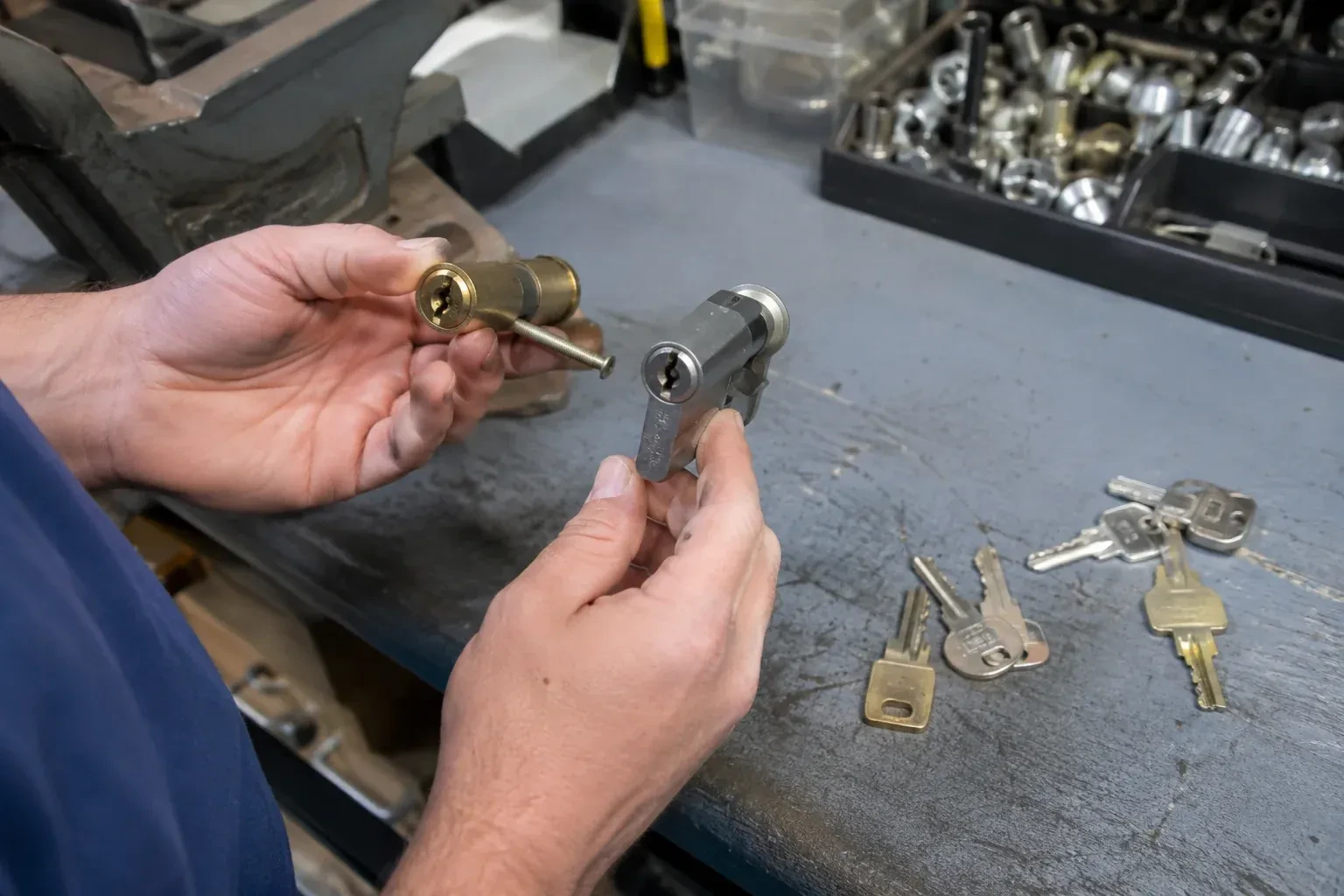
Businesses are locked out by people as often as by hardware. A keyholder is away, a former employee still has a key, a master key has gone missing, or the only spare lives in a drawer behind the locked door. A business lockout deals with the door in front of it and then with the pattern behind it. Cylinders can be rekeyed or removable cores swapped so an unreturned key becomes useless, new keys are cut and recorded against named holders, and a second keyholder or a lockbox is set up so that one absence never again closes the business for a morning.
How the visit goesThe manager who holds the only set of office keys is on a plane. The team is gathered in the corridor outside the suite, the landlord's office does not open for another hour, and the client meeting is at nine-thirty.
Business Lockout Service
How the visit goes
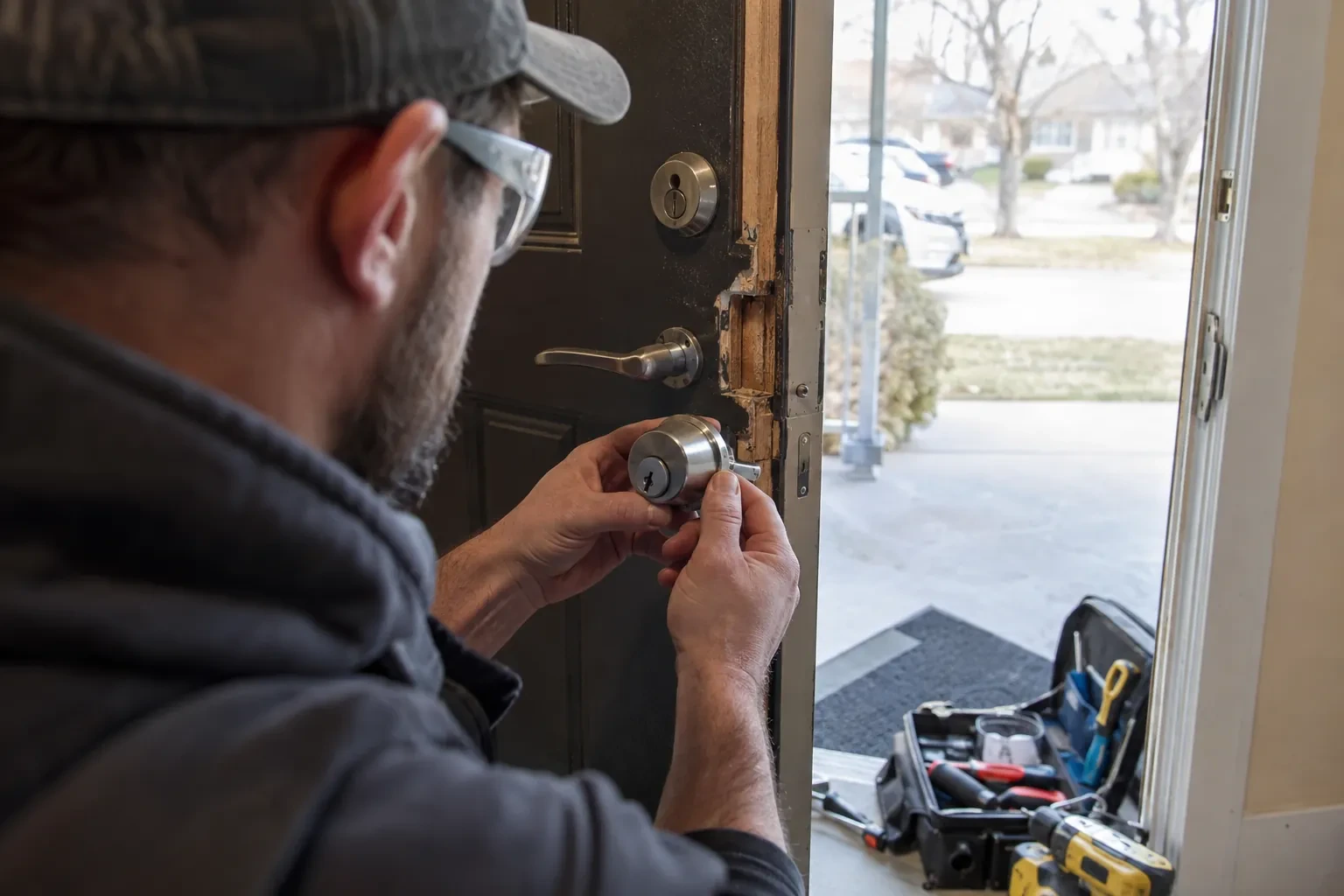
Every other opening on the premises
The front door is rarely the only lock a business relies on. The locksmith asks about the rear service door, the side door to the compactor, a roll-up shutter and its padlock, the gate on the compound, and interior doors that matter such as the cash office, the stockroom, the server closet and the staff washroom. Some of these may be on the same key as the front door and others on their own. Knowing the map before starting means the right cylinders are rekeyed together afterwards, a padlock is not forgotten, and a second door that could have been opened more gently is not overlooked while everyone stares at the first.
Doors with a push bar inside
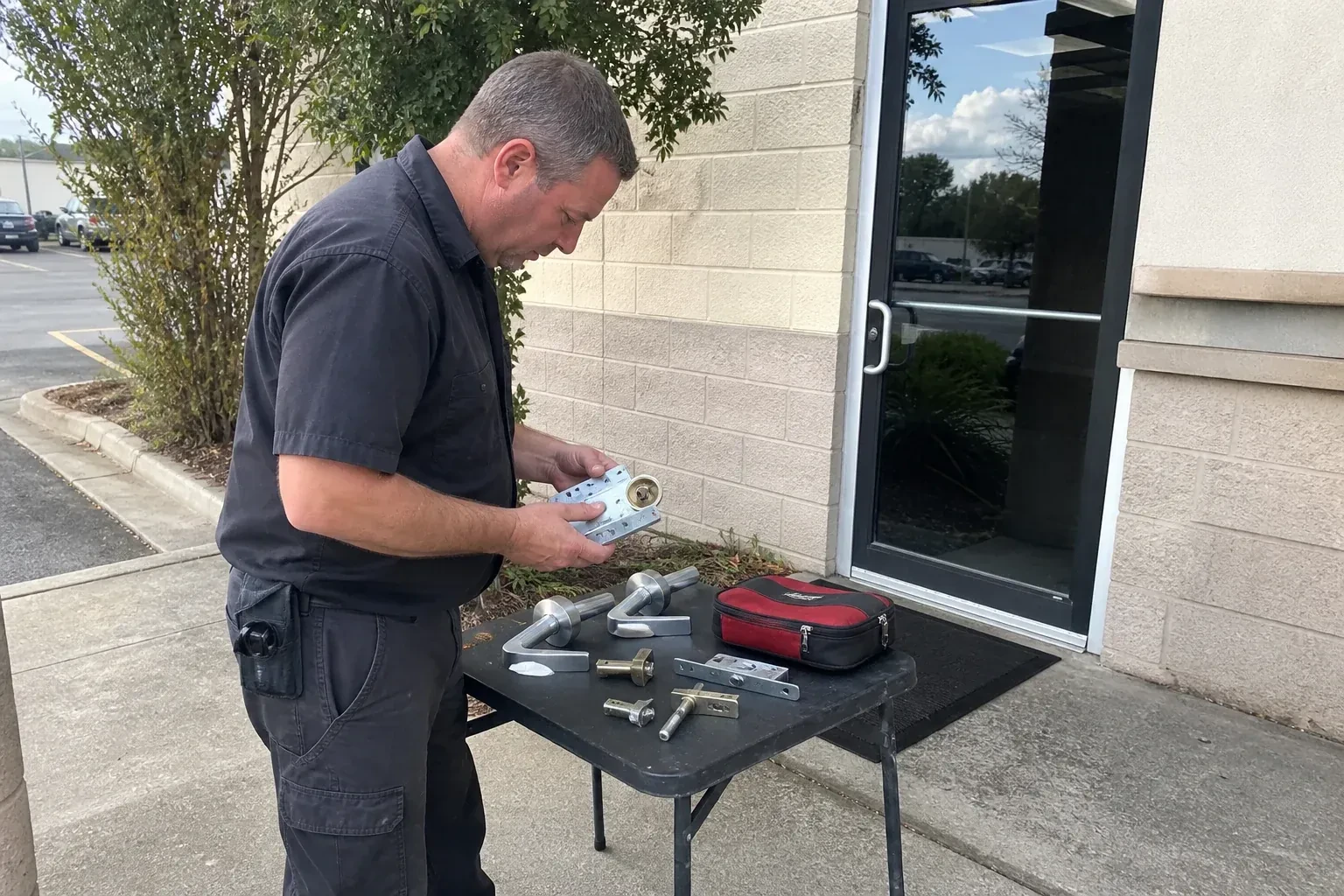
A rear door fitted with an exit device is opened from outside through its trim: a keyed lever, a pull with a cylinder, or a bare cylinder in a nightlatch function. Depending on that trim, picking or decoding the cylinder either retracts the latch directly, the way a nightlatch trim does, or unlocks a lever, knob or thumbpiece that then has to be turned to let the latch go. The device itself, including any vertical rods and the dogging mechanism, is left exactly as installed, because it is the way out in an emergency. Afterwards the bar is pressed from inside to confirm the latch releases with one push, and the outside trim is checked for a loose cylinder.
Doors that open for the day and lock at night
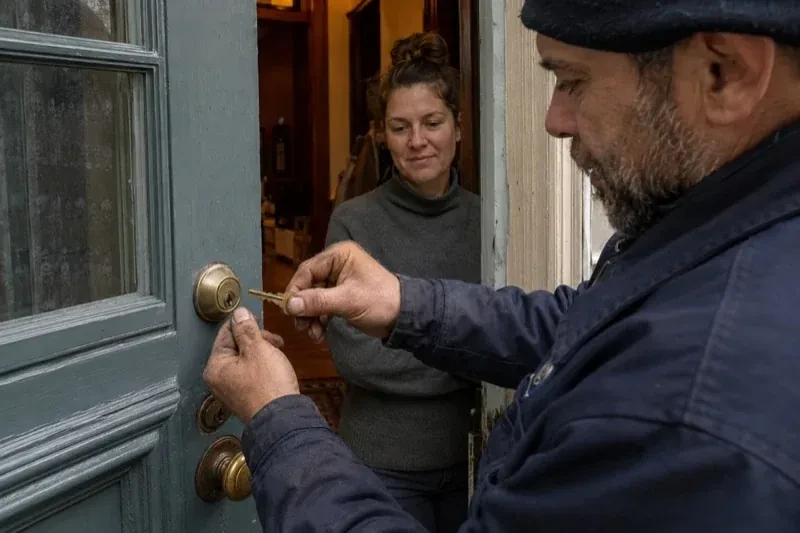
The visit ends with every door that was worked on cycled from both sides, open and closed, with the customer's own key. A hookbolt is watched to seat fully in its strike, a deadlatch is checked to catch on its own when the door swings shut under the closer, and a lever is tested to stay locked from the corridor while turning freely inside. Whoever locks up that evening is shown what was done, so the closing routine holds no surprises. Any hardware replaced is demonstrated and the packaging and old parts left with you, and the door is locked once more with your key before the van leaves.
Business Lockout Service
In the van
Key blanks and code cutter
Storefront deadlock and deadlatch bodies
Strikes, pivot shims and closer adjustment tools
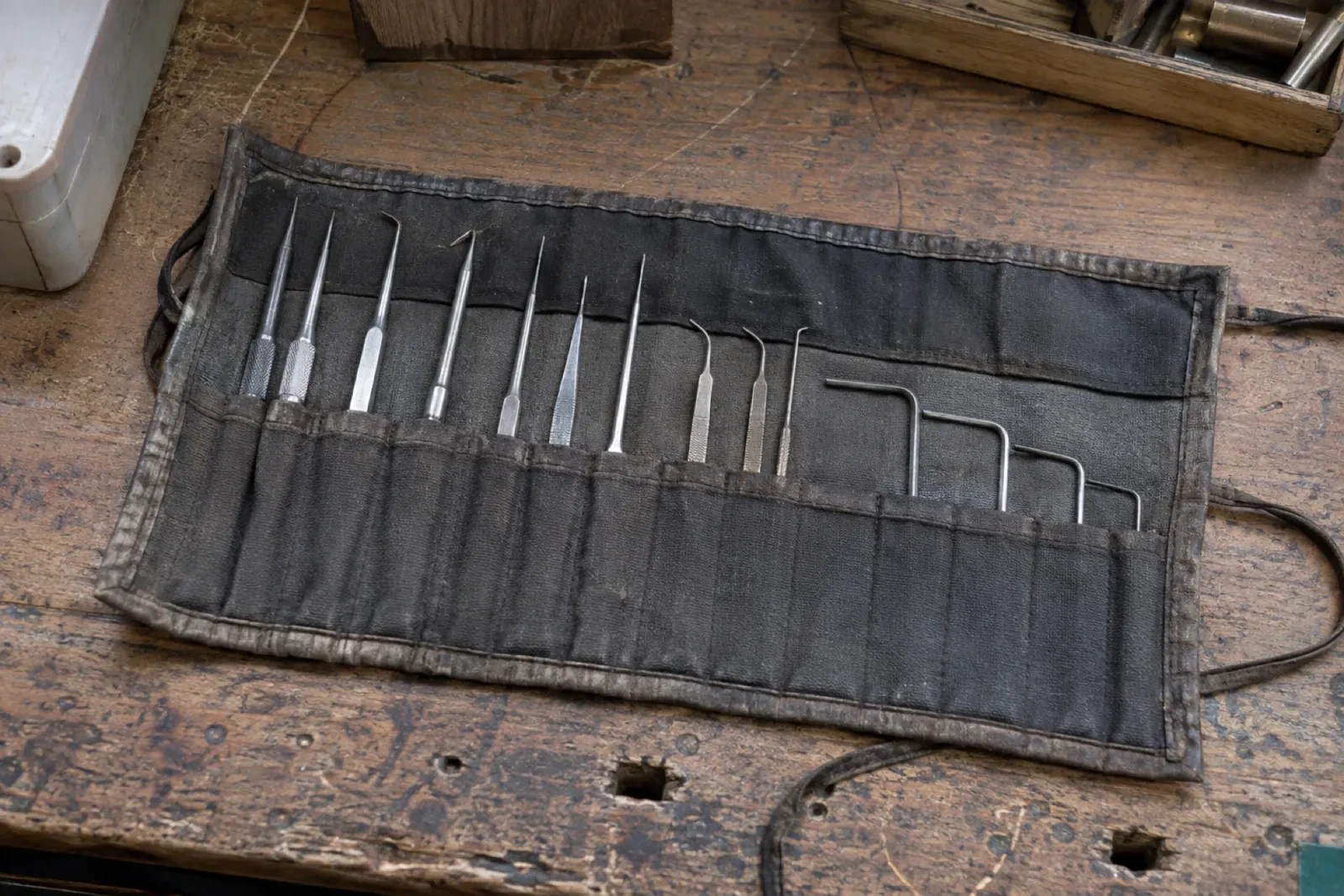
Cylinder decoder and plug spinner
Control keys and core-removal tools
Business Lockout Service
What affects the quote
When the call comes in
A weekday morning, an evening after closing, a weekend or a statutory holiday all cost the same amount for a business lockout, and locksmiths are reachable at any hour. The figure is confirmed at the door once the locksmith has looked at the door and the hardware involved.
Cold weather on the day
A cylinder frozen solid, a door iced to its threshold or a closer stiff with cold fluid means patient thawing before the opening can start, and a winter call is quoted with that time in mind.
How many doors are involved
One front door is the simplest visit. A front door, a rear exit device, a roll-up padlock and a cash office add hardware to open and, often, cylinders to key alike afterwards.
What to have ready
- Are there other doors, a roll-up shutter, a gate or a padlock you also need opened?
- Can you send a photo of the lock face and the edge of the door?
- Has a key gone missing or left with a former employee, so that rekeying should follow?
Business Lockout Service: questions
QuestionsDo you work with our alarm company and access-control provider?
Yes, and it makes the visit smoother. The alarm station is told an entry is expected and the authorised person handles the disarm and password. For access control, the provider can often confirm the controller's status, unlock a magnetic lock remotely, or re-enrol fobs once you are inside, while the locksmith handles the mechanical side and the override cylinder. Nobody's wiring is cut; each party does the part it is set up to do.
What is an interchangeable core, and how do I know if we have one?
An interchangeable core is a small, self-contained cylinder that slides out of the lock with a special control key and drops back in on a new combination. Look at the keyway: a figure-eight shaped face on a lever or mortise housing is the usual sign. Buildings choose them because a lost key or a staff change is handled by swapping the core rather than taking the lock apart, and a locksmith can carry cores pinned to your system.
My key turns all the way but the door stays locked. What has failed?
Usually the link between the cylinder and the bolt. On a storefront lock the cam behind the mortise cylinder can wear or slip out of position; on a lever or mortise lockset the tailpiece or a spring in the deadlatch gives up. Your key is fine and so are the pins, so once the door is opened the fix is a new cam, tailpiece or latch, and your existing keys carry on working.