Commercial · Toronto
Access Control Installation
Another employee left and the keys never came back.
In plain words
The installation is not finished when the last door is wired; it is finished once the business can run the system without the locksmith standing there. That means an administrator account handed over with full control, a walkthrough of adding and revoking credentials, pulling an entry log, and changing a schedule for a holiday or an event. Beyond that point, whether the installer keeps any support or maintenance access is a setting the business chooses at handover rather than something assumed either way, and every routine change to who can enter is the business's own decision.
How the visit goesThe back door of the shop runs on one key, and by now it lives on six different rings: yours, two managers, a cleaner, a supplier who restocks early, and a keyholder nobody quite remembers approving.
Access Control Installation
How the visit goes

Reading the door and the frame
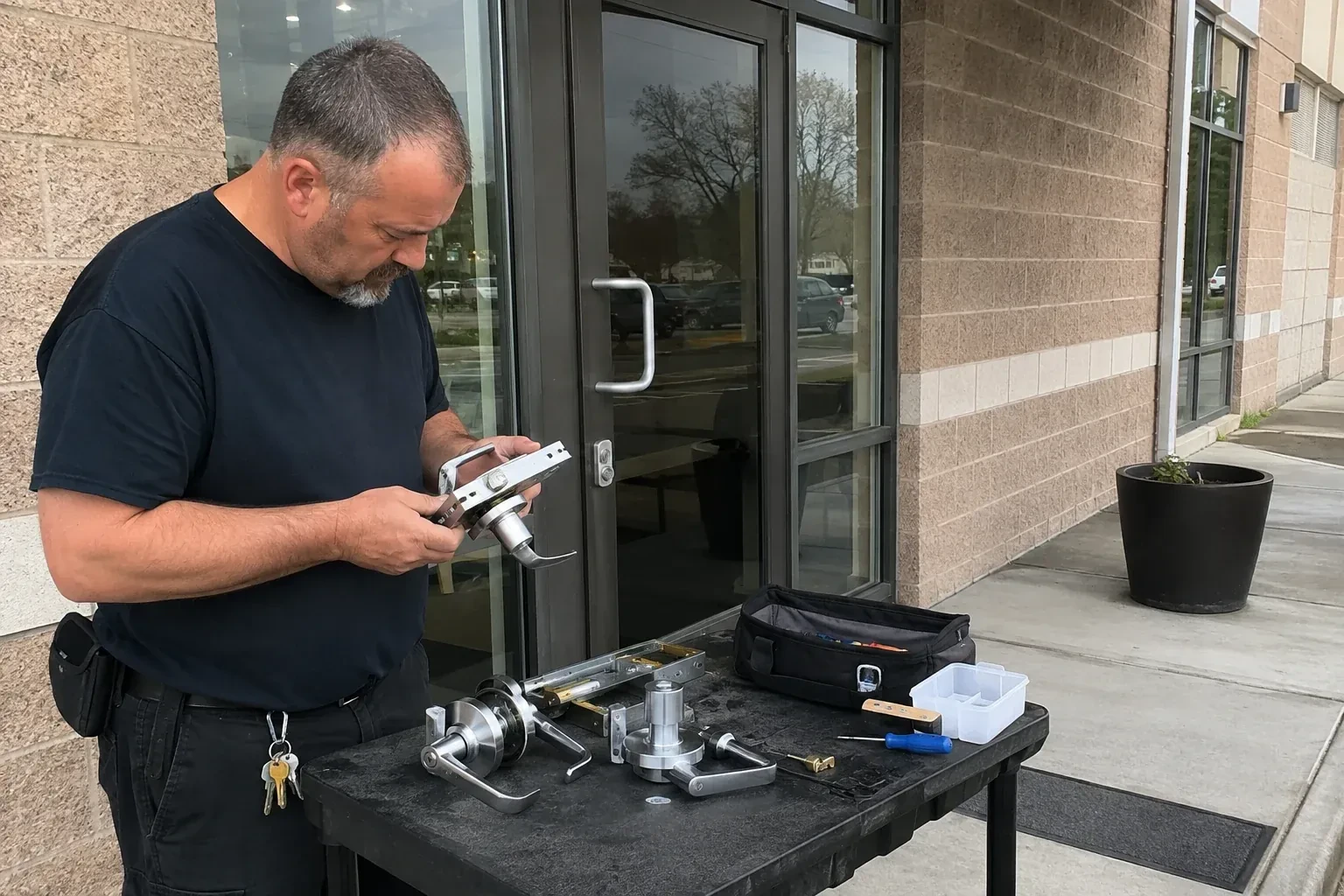
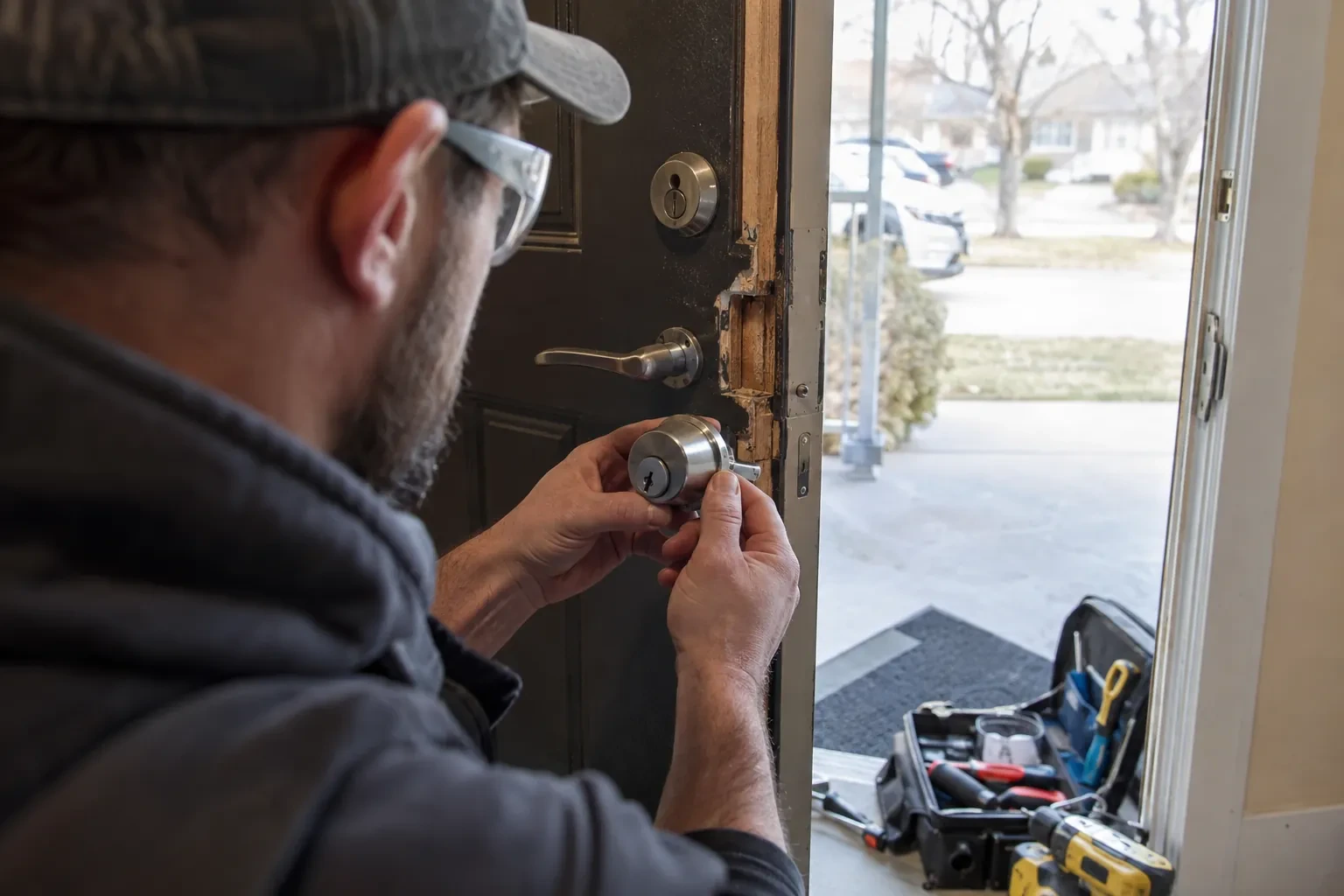
Every opening gets a physical look before it gets any wiring. The locksmith checks what the door and frame are made of, which way the door swings, whether an electric strike will seat cleanly in the existing frame, and whether the door sits on a fire separation, which changes what can be added to it. A hollow metal frame, a wood door, and an aluminum storefront door each take different hardware, and a door that already sits loosely in its frame is noted before an electric strike or a magnetic lock is chosen for it, since alignment decides how reliably the lock releases.
Testing every opening before calling it finished
Each door is tested the same way regardless of how simple or complex its hardware is: a valid credential releases it, a disabled one does not, the request-to-exit device or push bar releases a magnetic lock on demand, and the door position switch correctly reports open and closed. Where a fire alarm interface is fitted, the locksmith confirms the lock actually releases when the alarm activates, not only when it is reset afterward. The battery backup is tested by removing main power briefly and confirming every door still behaves the way it is meant to.
What to do when a card or fob goes missing
A lost card or fob is handled by switching it off in the software rather than replacing a lock. The credential stops working as soon as it is disabled, whoever lost it is issued a new one, and every other door in the building keeps running exactly as it did before. There is no locksmith call needed for this, no rekeying, and no gap where a door sits unsecured while a replacement is arranged. Reporting a lost credential without delay, rather than holding onto the news, is the one habit that keeps this advantage working the way it was intended.
Access Control Installation
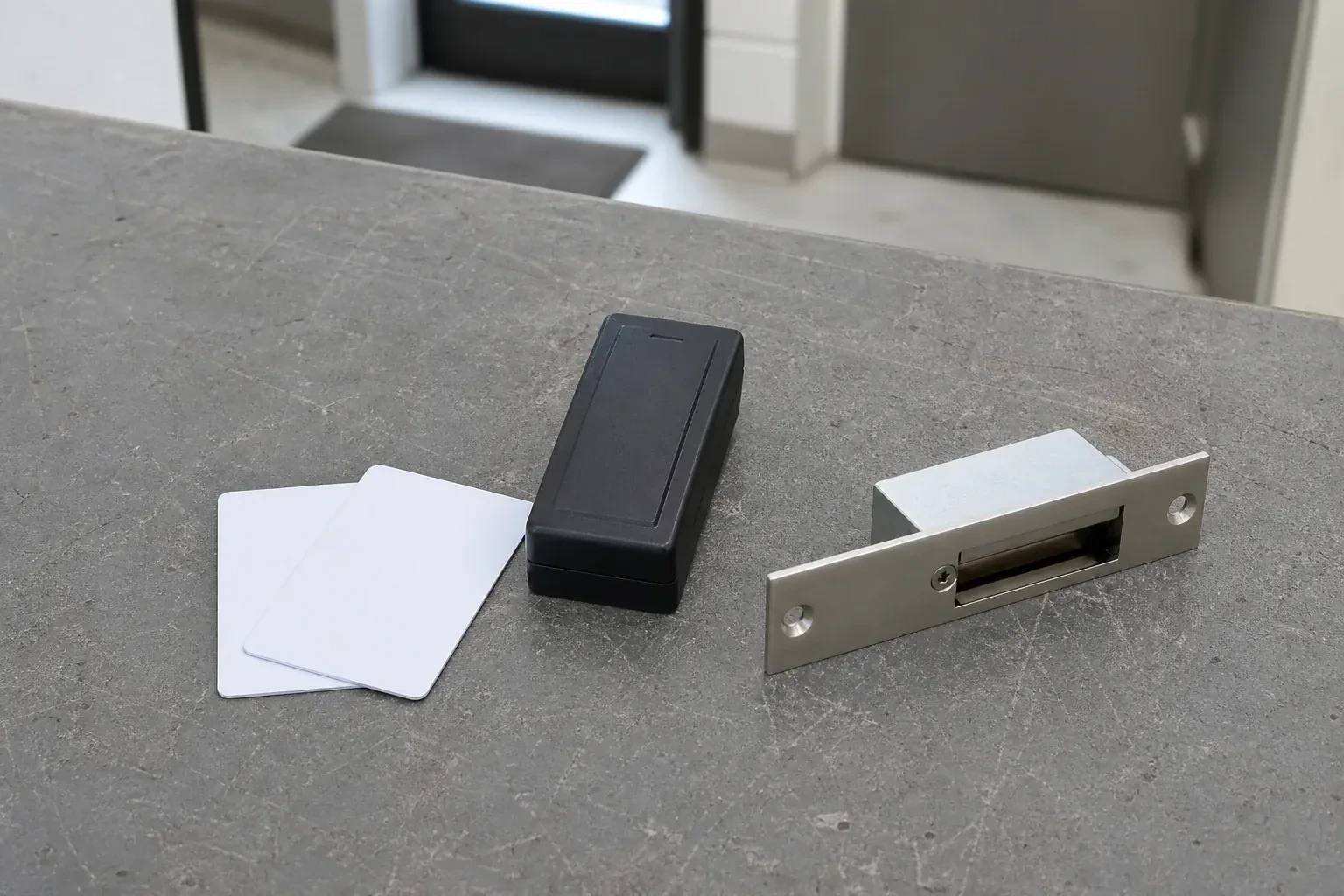
In the van
Mechanical override cylinders
Card and fob readers
Electric strikes
Request-to-exit devices
Keypad readers

Access Control Installation
What affects the quote
How many schedules and access levels are needed
A building with one schedule for everyone is quicker to configure than one splitting doors, hours and roles into several access levels, since each combination has to be set up and then tested on its own.
Standalone or networked
A self-contained reader at one door is simpler than a networked controller managing several openings with shared schedules and a combined log, and the choice between them changes both the hardware list and the wiring involved.
Fitting the mechanical override
Keying an override cylinder into the same system as the rest of the property's keys, rather than leaving it as an unrelated spare lock, takes coordination with whatever keying already exists across the building.
What to have ready
- Which doors do you want to control with the new system?
- What are the doors and frames made of, as far as you know?
- Who in the business will manage the system once it is installed?
Access Control Installation: questions
QuestionsHow is a lost fob or card handled?
It is switched off in the software the moment it is reported, which stops that specific card or fob from working at any door it used to open. A new one is issued and enrolled in its place. No lock has to be changed and no other credential in the building is affected, which is the main advantage a lost fob has over a lost mechanical key.
Can the system be expanded to more doors later?
Yes. A system installed with some spare capacity in its controller and power supply can usually take another door or two by adding a reader and lock and wiring it back in. A door far from the existing wiring can instead run its own standalone unit. Either way, existing schedules and credentials do not need to be rebuilt from scratch.
Will this work with our existing alarm or camera system?
In most cases, yes. An access control installation can be planned to share information with an existing alarm panel, so an arm-or-disarm event lines up with whoever unlocked the door, and with a camera system, so a recorded clip can be matched to a specific credential rather than only a timestamp. The exact integration depends on what the existing alarm and camera equipment support.
Related services
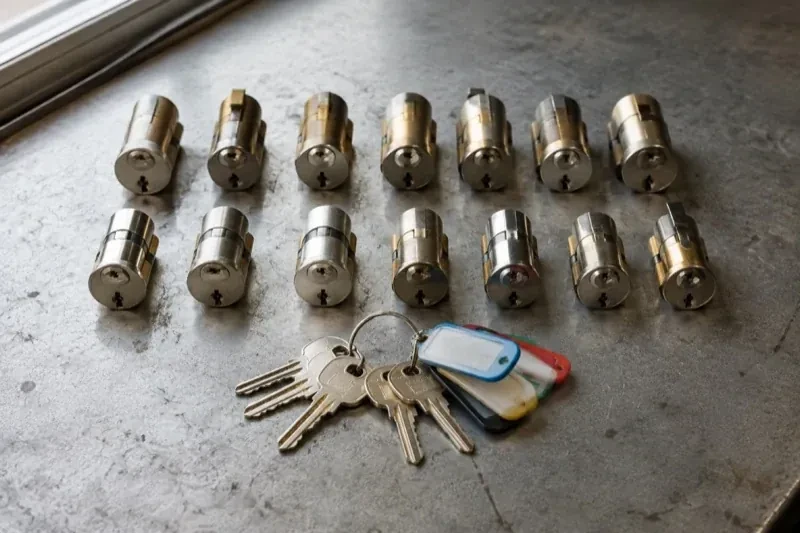
- Master Key System DesignA property manager taking over a small commercial building inherits a shoebox of keys with no labels and no chart.
- Panic & Exit HardwareThe crossbar on the loading-dock door barely returns anymore.
- Commercial-Grade Lock ReplacementAn inspection report flagged the rear exit as needing hardware that opens with one motion and no key, and that door currently has an ordinary keyed knob on the inside.