High security · Toronto
Safe Installation & Servicing
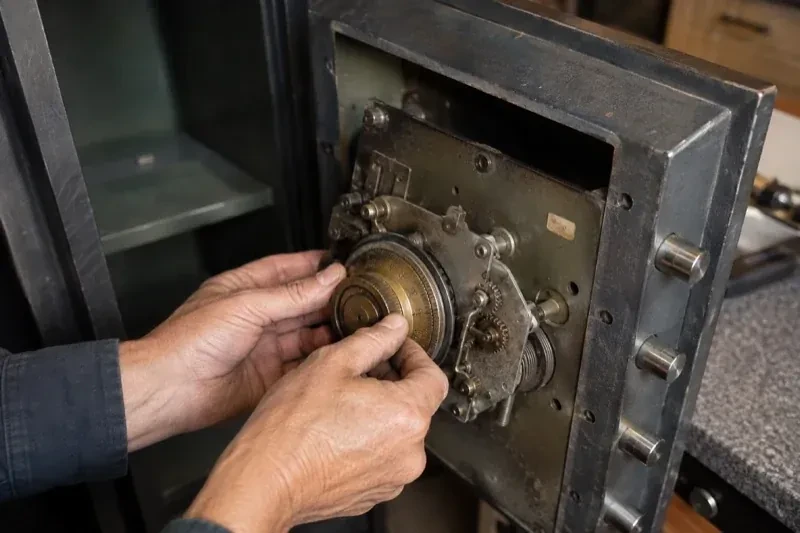
A homeowner inherited a heavy old dial safe from a parent's house, moved it into the new place, and has no idea whether the bolt-work still works, whether the lock is sound, or how it should be anchored.
In plain words
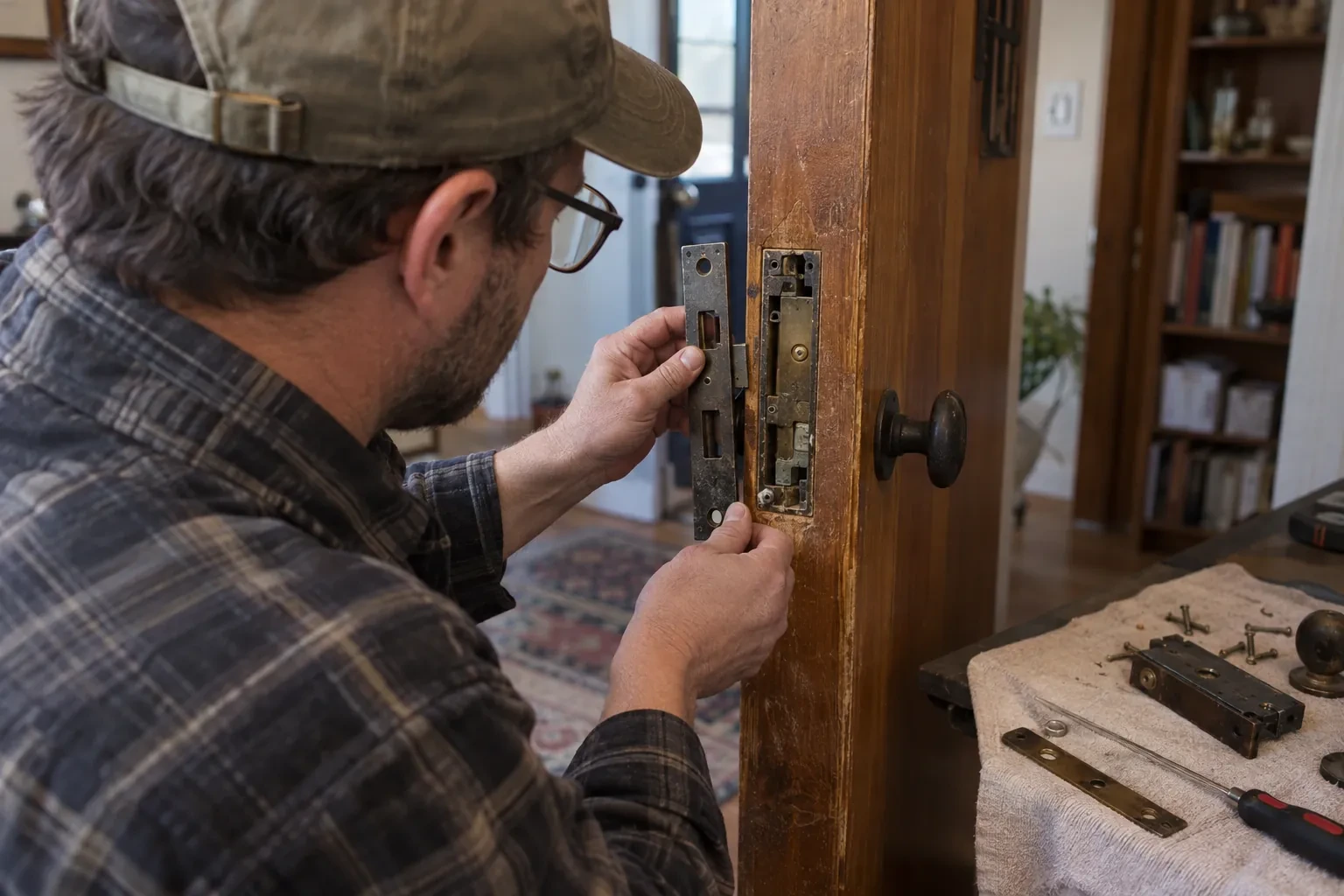
Plenty of visits under this service involve a safe that has been sitting in a back office for years rather than a new one arriving in a box. The locksmith opens the bolt-work, cleans and lubricates the moving parts, tests the lock through several full cycles, and checks whether the anchoring underneath is still solid or was never done at all. Batteries in an electronic lock are swapped before they fail rather than after, and any stiffness in the handle or bolts is traced to rust, dried grease, or a worn part and corrected on the spot.
How the visit goesA community group counts the weekend's raffle and bake-sale cash on a kitchen table, then carries it home in a tote bag until the bank opens Monday, because there has never been anywhere safer to leave it.
Safe Installation & Servicing
How the visit goes
What kind of lock is already, or will be, on the door
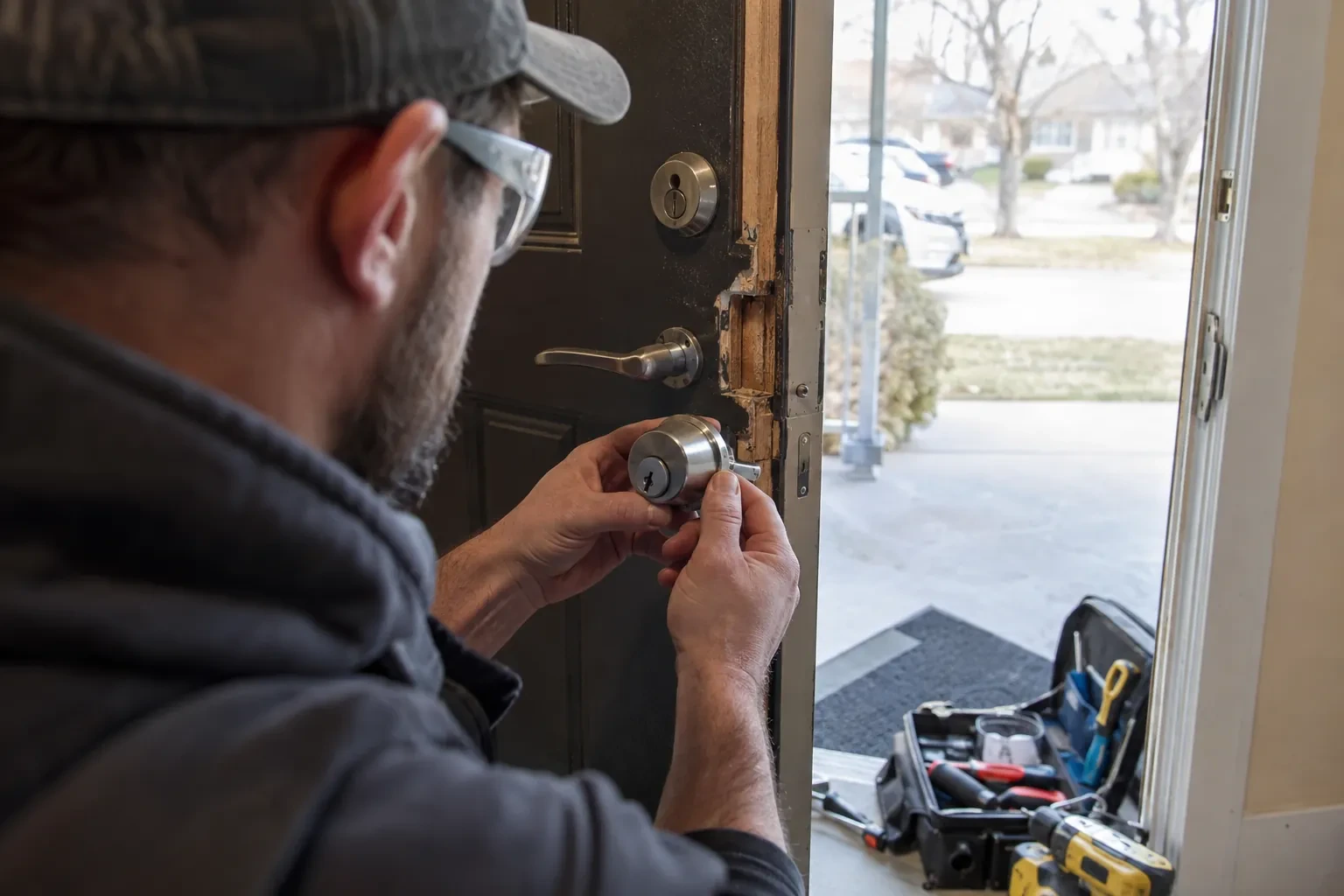
A mechanical dial and an electronic keypad are serviced differently, so the lock gets identified early. On a new installation this is a straightforward choice by the owner. On an existing safe, the locksmith checks whether the dial turns smoothly through a full combination, whether an electronic keypad still lights up and accepts a code, and whether a hidden mechanical override exists behind the keypad in case the batteries run flat. Any handle that binds or clicks without retracting the bolt gets traced back to the lock before the rest of the service continues.
Anchoring into a wood subfloor
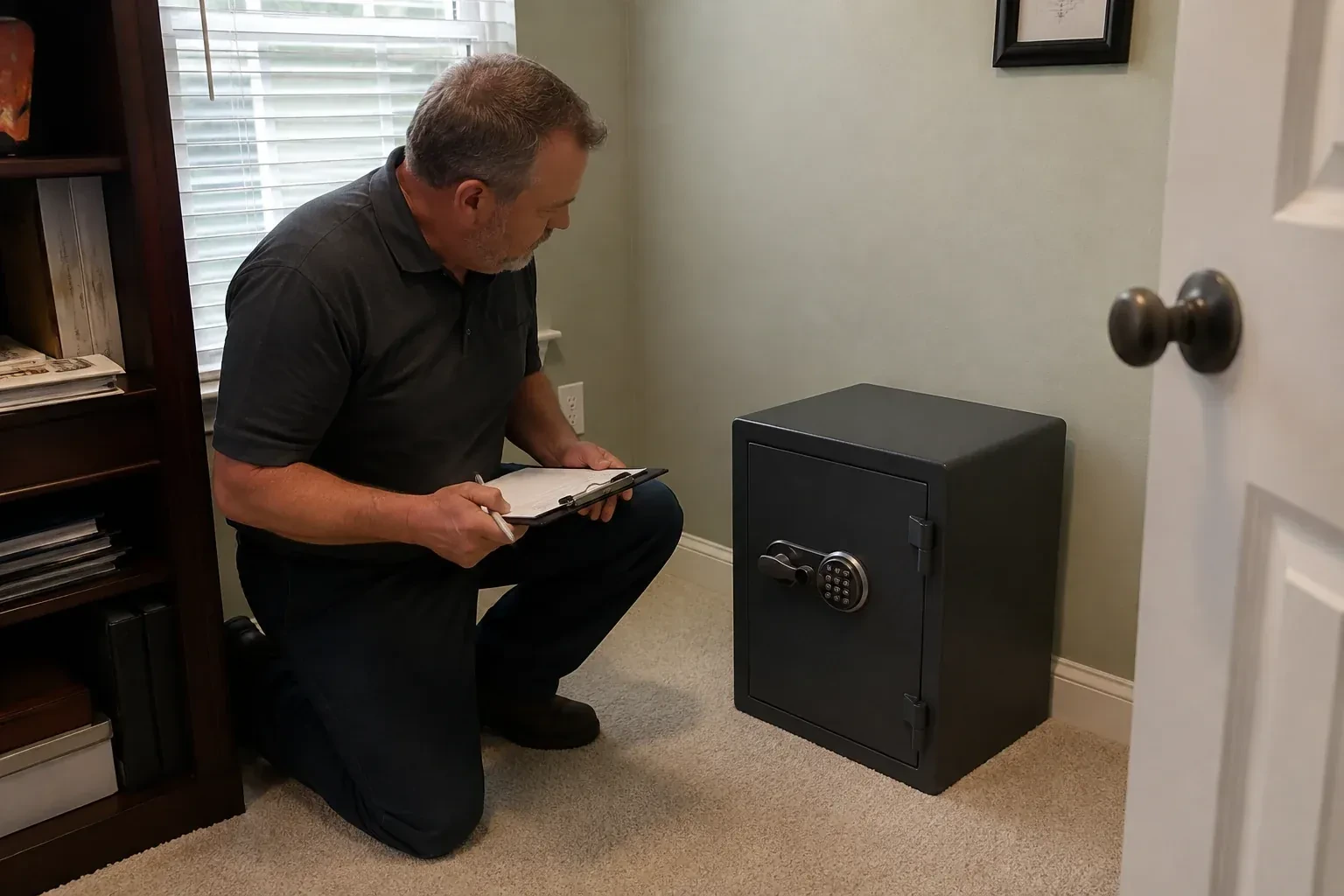
A wood subfloor calls for a different approach, since a bolt into surface plywood alone pulls out under real weight. The locksmith locates the floor joists beneath the finished surface, drills pilot holes through the subfloor into solid framing, and drives long lag bolts or structural screws with washers that spread the load across the wood. Carpet, vinyl, or laminate over the subfloor is worked around rather than through wherever possible, so the finished floor is left as close to undisturbed as the anchoring allows.
A combination or code that belongs only to the household or business
The final combination or code is set by the owner alone, after the locksmith has finished testing, so nobody who did the installation carries it away in their head. Writing it down somewhere other than beside the safe, or storing it with a trusted person away from the property, is worth doing once rather than relying on memory during a stressful moment. Where the lock supports more than one code, deciding now who else should have one avoids an awkward conversation later.
Safe Installation & Servicing
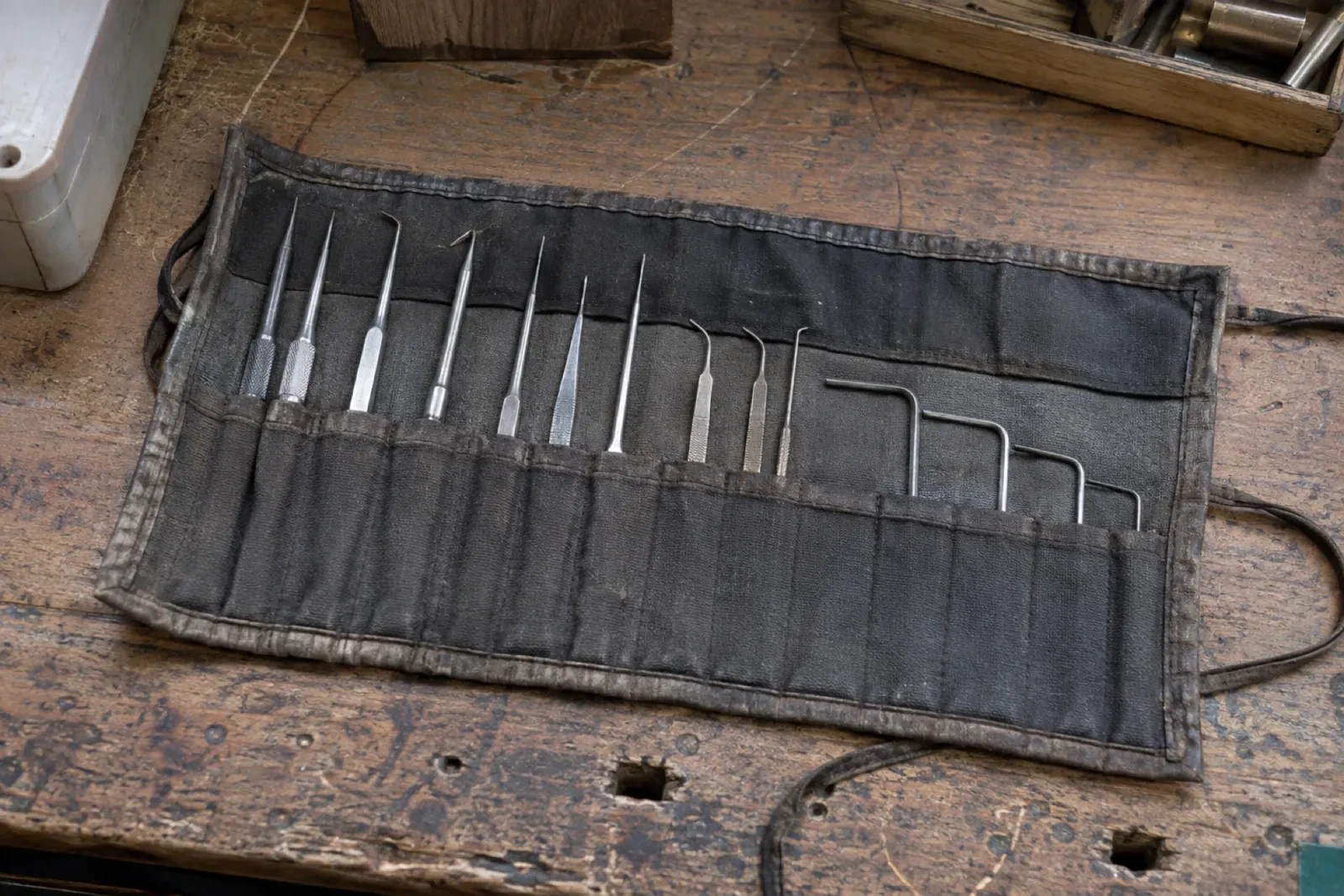
In the van
Hammer drill and masonry bits
Moving dolly and floor protection
Mounting plate
Bolt-work lubricant
Mechanical or electronic lock
Safe Installation & Servicing
What affects the quote
Floor or wall construction
Solid concrete, a wood subfloor reaching into joists, and tile each call for a different anchoring approach and different hardware, and the substrate is confirmed before any drilling begins.
Requests for concealment
Fitting a safe into a closet floor, a recessed wall cavity, or behind a built-in panel takes more planning than a straightforward open placement, and can limit which units will actually fit.
Number of safes handled in one visit
A single unit is the simplest visit, while a property with a till safe, a document safe, and a smaller personal safe in another room involves more total work in one call-out.
What to have ready
- Which room or level of the building will it go in?
- Does an insurer or head office require a specific rating?
- Roughly how much does the safe weigh, if known?
Safe Installation & Servicing: questions
QuestionsCan more than one person have their own code?
Yes, on an electronic keypad that supports multiple users, each person can be given a separate code rather than everyone sharing one, which also makes it simple to remove a single code later without resetting the whole lock. A mechanical dial lock, by contrast, has one combination for everyone who needs it, so a change in who has access there means changing that one combination.
How do I know what rating of safe I actually need?
Start with what will be inside it. Cash, jewelry, and firearms mainly need protection from tools and time, so the burglary rating matters most. Paper records and digital backups mainly need protection from heat, so the fire rating matters most, and digital media needs a noticeably lower internal temperature than paper to survive. Many households and businesses end up choosing a unit built to both standards rather than picking just one.
Do you deliver and move the safe, or do I need to arrange that?
Delivery and the final move into position are part of the service, using equipment suited to the safe's actual weight rather than improvising with furniture dollies or straps meant for lighter loads. The route in is measured ahead of time so doorways, stairs, and tight turns are accounted for before the unit arrives, which avoids a surprise at the one hallway that turns out to be too narrow.