Lockouts · Woodbine Gardens
Business Lockout Service in Woodbine Gardens
It is ten to nine, three staff are on the sidewalk with their coffees, and the key that has opened the glass front door for six years will not turn.
In plain words
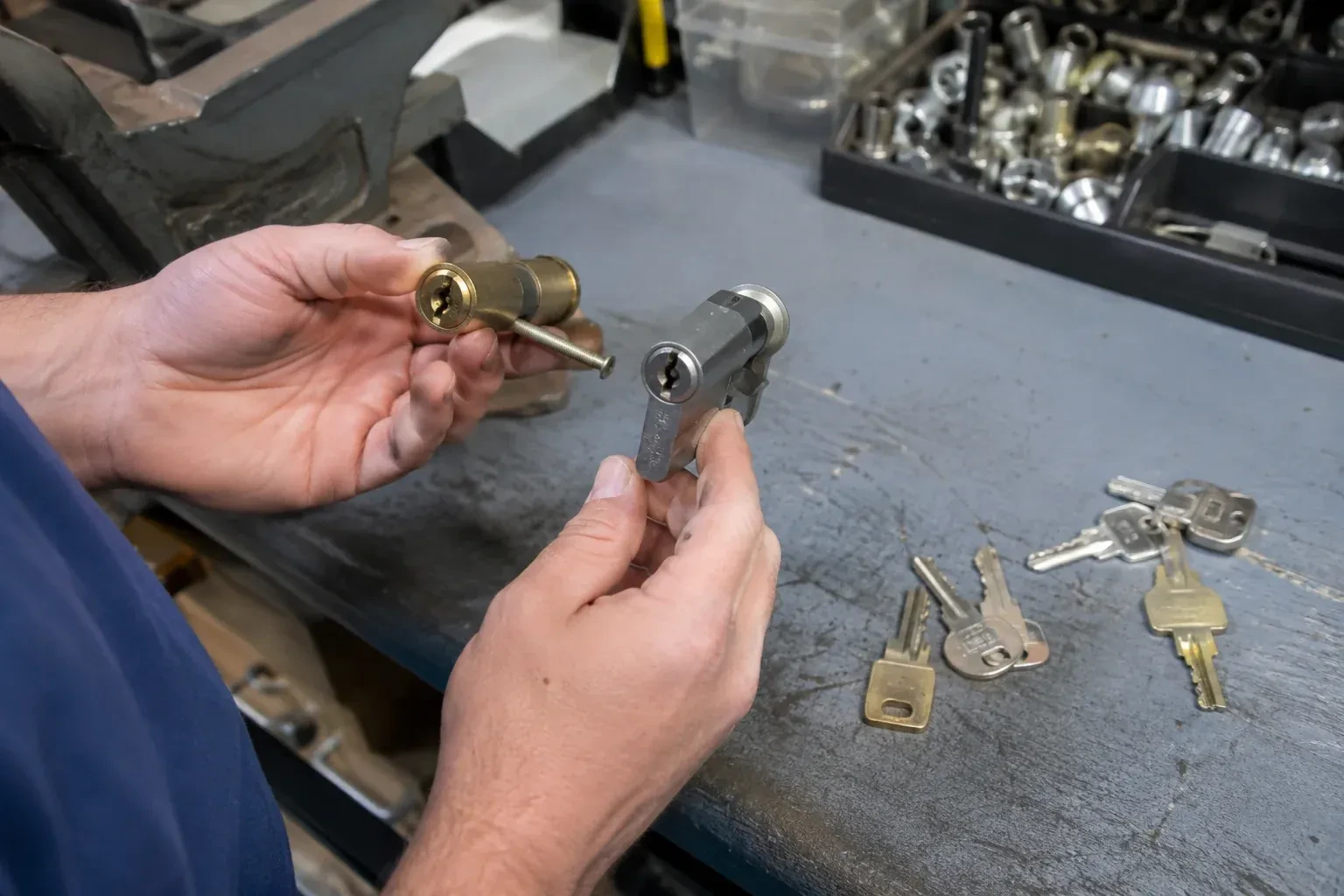
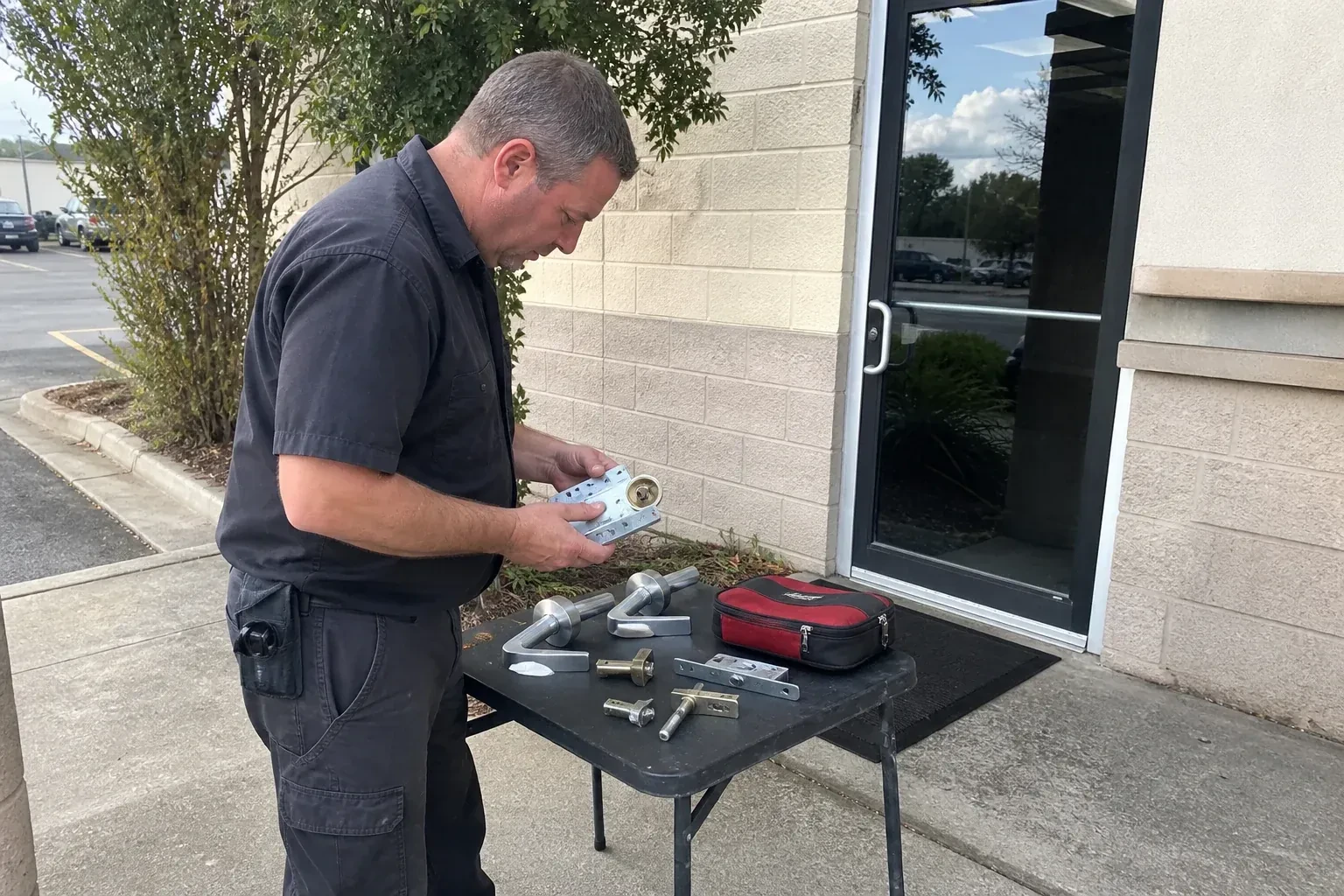
Commercial doors carry hardware that most homes never see, and reading it correctly is the first skill of a business lockout. An aluminium storefront door usually has a narrow mortise cylinder driving a hookbolt deadlock or a paddle-operated deadlatch. An office suite is more likely to have a lever lockset that stays locked from the corridor side, sometimes with a removable core. A rear door may carry an exit device with a keyed trim outside, and a steel door in a plaza often hides a full mortise lockset. Each of these opens differently, and choosing the technique that suits the mechanism is what keeps the hardware intact.
How the visit goesThe heavy glass door has been scraping the threshold for weeks. This morning the key turns, you can hear the bolt trying to move, but it is jammed hard in the strike and the door stays shut no matter how the handle is pulled.
Business Lockout Service
How the visit goes
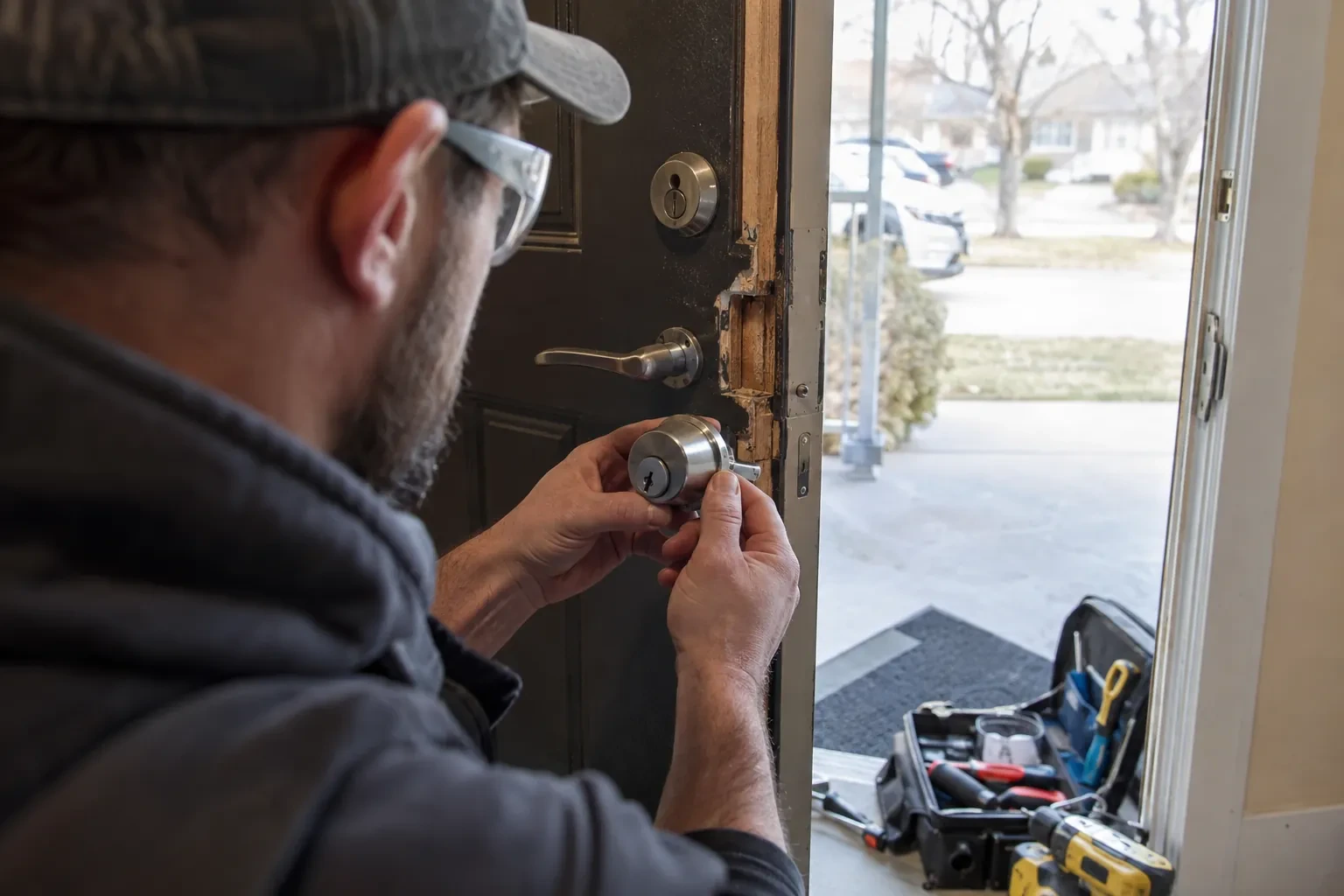
The building around the unit
A unit inside a plaza, office tower or industrial condominium comes with rules of its own. The locksmith asks whether the door is master keyed to a building system, because rekeying one cylinder without the property manager's knowledge can lock out cleaning and maintenance staff. A labelled fire door needs hardware that keeps its rating. A door on the exit route must keep releasing from inside with one motion, which rules out some replacements before they are suggested. Loading docks, freight elevators and after-hours building access are confirmed so the locksmith can actually reach the door with tools. A short call to the property manager often answers all of this at once.
Freeing a frozen or bound door
Ice and misalignment are dealt with by patience and leverage rather than force. A frozen storefront cylinder is treated with lock de-icer or gentle warmth until the plug turns, and the keyway is dried before a dry lubricant goes in. A door that has dropped on its pivots is lifted by hand or with a wedge to bring the bolt back in line with its strike while the cylinder is turned, and the bolt slides free. With the door open the cause is corrected so it does not repeat: pivots or the continuous hinge adjusted, the strike dressed or moved, the closer speed and latching force reset, and salt cleared from the threshold and bottom rail.
Keys you can account for
After a rekey or a core swap you receive a counted set of new keys, cut from the fresh combination rather than copied from a worn original. The sensible next step is a key register: a page or spreadsheet naming each keyholder, the key they carry and the date it was issued, updated when someone leaves. Manufacturers put it plainly: locks only limit access if the keys that work them are controlled. A restricted keyway, where blanks are supplied only through authorised channels, puts real controls around duplication, though the exact process varies by program, and can be introduced now or later. Interchangeable cores make future staff changes a matter of swapping a core rather than a rekey.
Business Lockout Service
In the van
Key blanks and code cutter
Storefront deadlock and deadlatch bodies
Strikes, pivot shims and closer adjustment tools
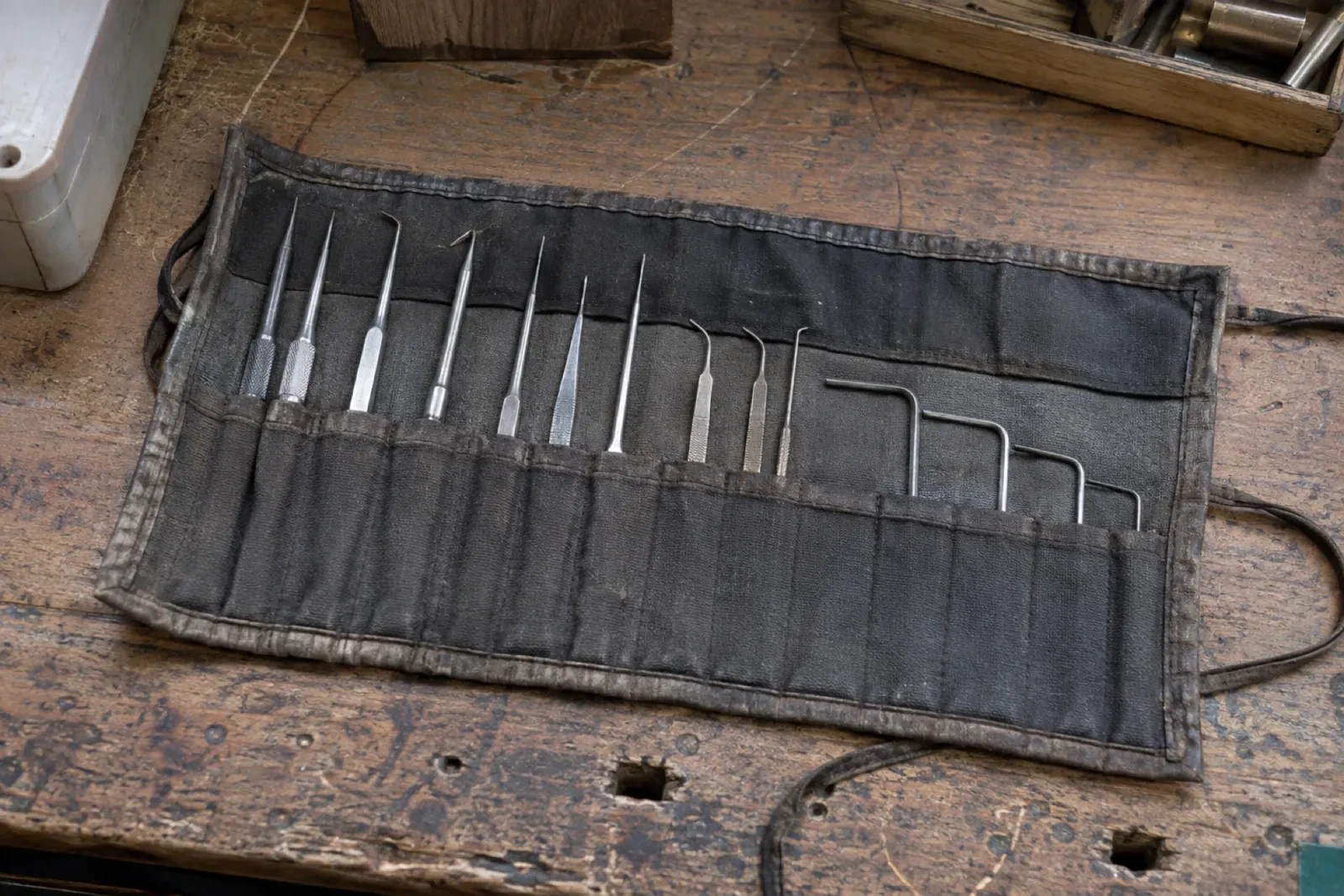
Cylinder decoder and plug spinner
Control keys and core-removal tools
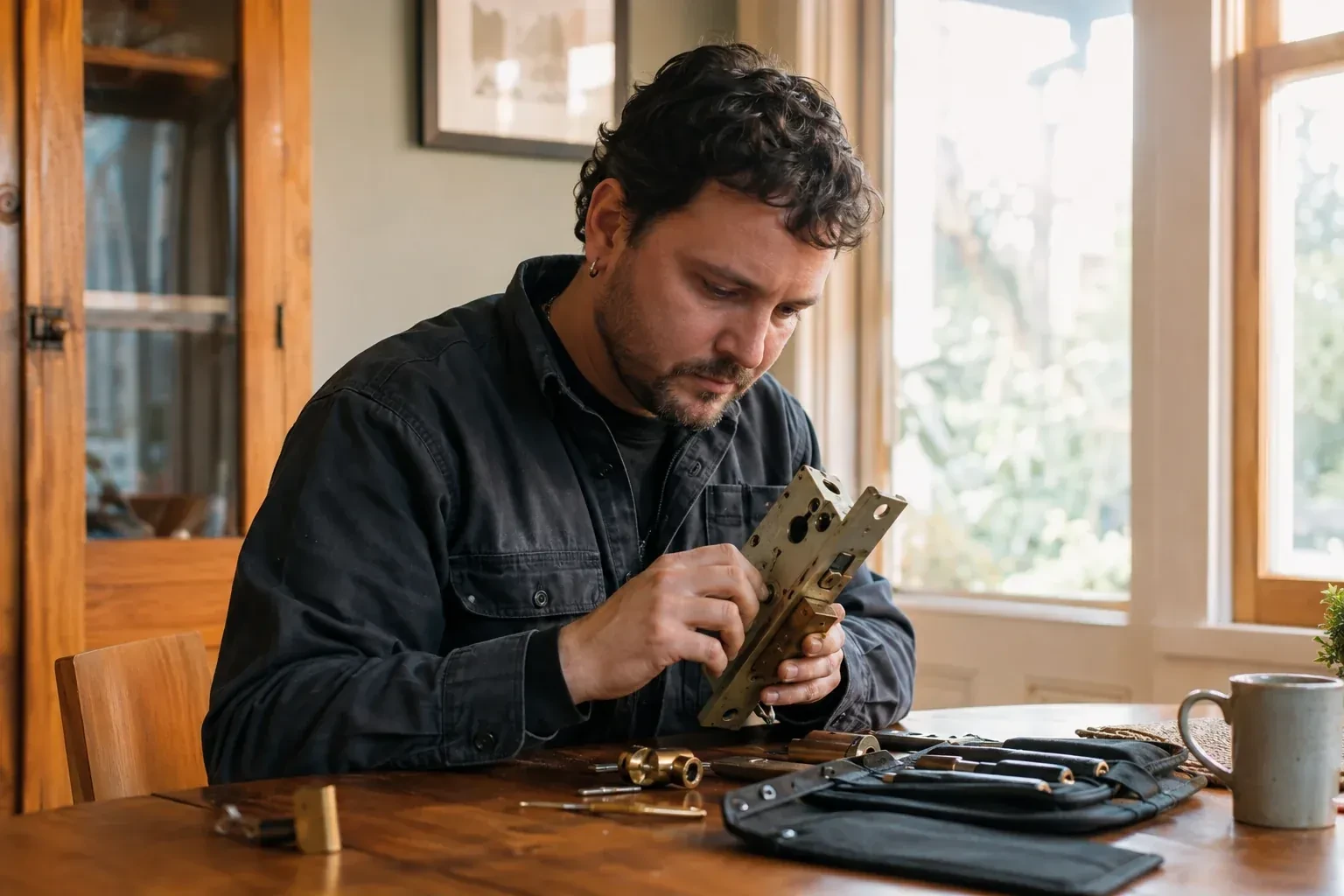
Business Lockout Service
What affects the quote
Storefront, lever, mortise or exit device
An aluminium storefront cylinder, a cylindrical lever lockset, a full mortise lock and the trim of an exit device each take different tools and time to open, and the hardware on your door sets the starting point.
Master key system changes
Where the door belongs to a building-wide master key system, changing it means planning with the property manager and pinning cylinders so both your key and the building key still work, which is more careful work than a single rekey.
Standard or high-security cylinder
Restricted keyways, security pins and patented cylinders take longer to open and cost more to replace, and their keys are cut from system records rather than copied at a counter.
What to have ready
- Does the door use a card reader, keypad or intercom, and is it showing any lights?
- Has a key gone missing or left with a former employee, so that rekeying should follow?
- Can you send a photo of the lock face and the edge of the door?
Business Lockout Service: questions
QuestionsDo you work with our alarm company and access-control provider?
Yes, and it makes the visit smoother. The alarm station is told an entry is expected and the authorised person handles the disarm and password. For access control, the provider can often confirm the controller's status, unlock a magnetic lock remotely, or re-enrol fobs once you are inside, while the locksmith handles the mechanical side and the override cylinder. Nobody's wiring is cut; each party does the part it is set up to do.
What is an interchangeable core, and how do I know if we have one?
An interchangeable core is a small, self-contained cylinder that slides out of the lock with a special control key and drops back in on a new combination. Look at the keyway: a figure-eight shaped face on a lever or mortise housing is the usual sign. Buildings choose them because a lost key or a staff change is handled by swapping the core rather than taking the lock apart, and a locksmith can carry cores pinned to your system.
My key turns all the way but the door stays locked. What has failed?
Usually the link between the cylinder and the bolt. On a storefront lock the cam behind the mortise cylinder can wear or slip out of position; on a lever or mortise lockset the tailpiece or a spring in the deadlatch gives up. Your key is fine and so are the pins, so once the door is opened the fix is a new cam, tailpiece or latch, and your existing keys carry on working.