Commercial · Toronto
Commercial Rekeying
The office has been reshuffled twice since the locks were last touched.
In plain words
A business hands out keys as people join and rarely gets every one back as people leave. Rekeying resets that count. Instead of guessing how many copies of the front-door key exist, the cylinders are repinned so only the newly cut set works, and those keys are numbered and signed for. Where turnover is steady, the locksmith can fit interchangeable cores, which let a manager swap a core with a control key in a couple of minutes when someone departs, so the reset becomes routine rather than an event. Either way you end up with a premises where the keyholder list matches the staff list.
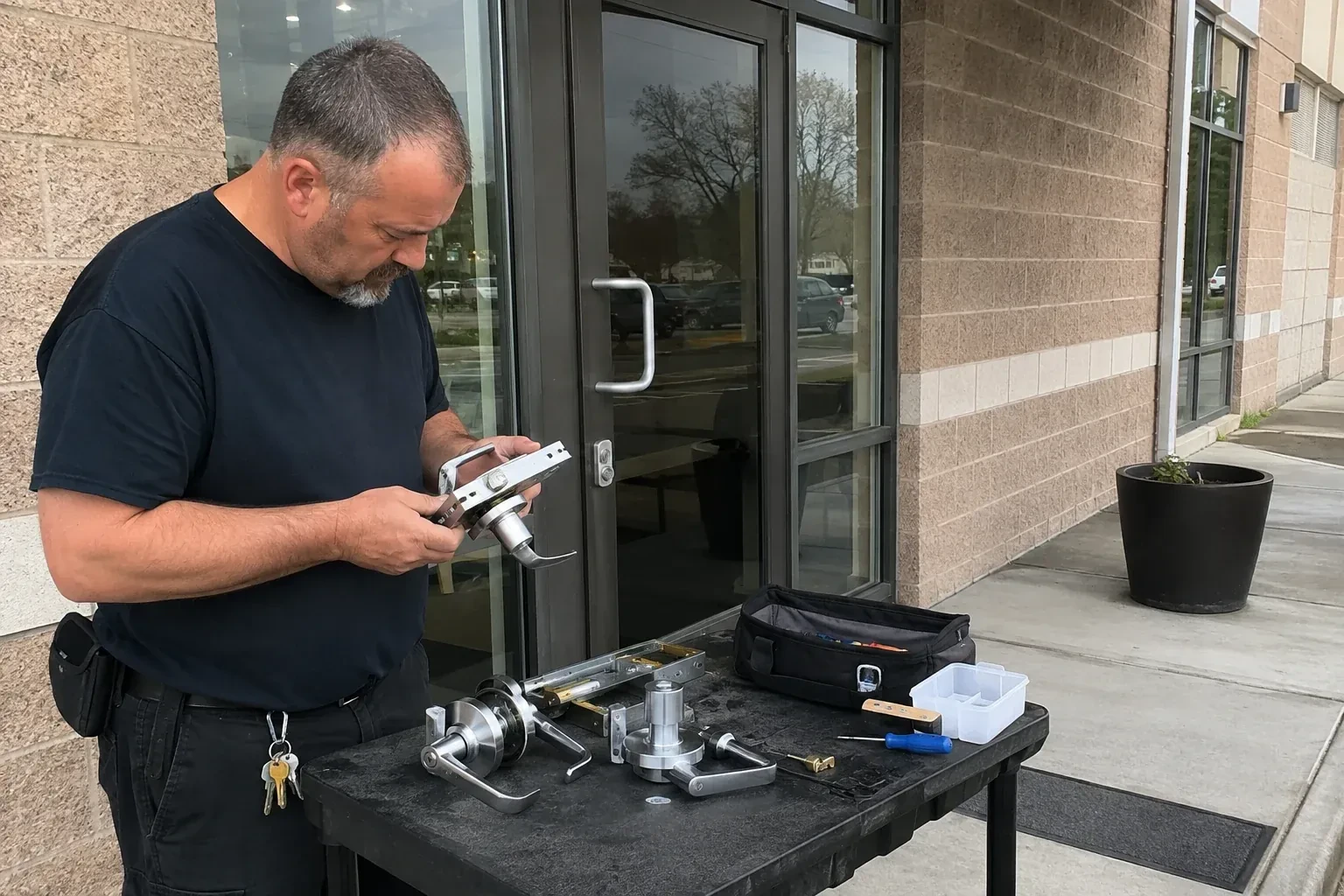
How the visit goesThe renovation is finished and the contractors have gone, along with the loaner keys they used for six weeks. Trades, delivery drivers and an inspector all came through, and the front door still answers to the key that was passed around the site.
Commercial Rekeying
How the visit goes
Who is entitled to order the change
Every commercial rekey starts by confirming that the person asking for it has the standing to do so. For a small business that is usually the owner or a director; for a larger one, a facilities manager or property manager acting under written authority. The lease matters here too, because it decides which doors are the tenant's to alter and which remain the landlord's, and many leases ask that the landlord be given a key or told when locks change. Getting this straight before any cylinder comes out protects the business, its neighbours in the building and the locksmith, and it means the finished keying chart lands in the right hands.
Cutting and marking the new keys
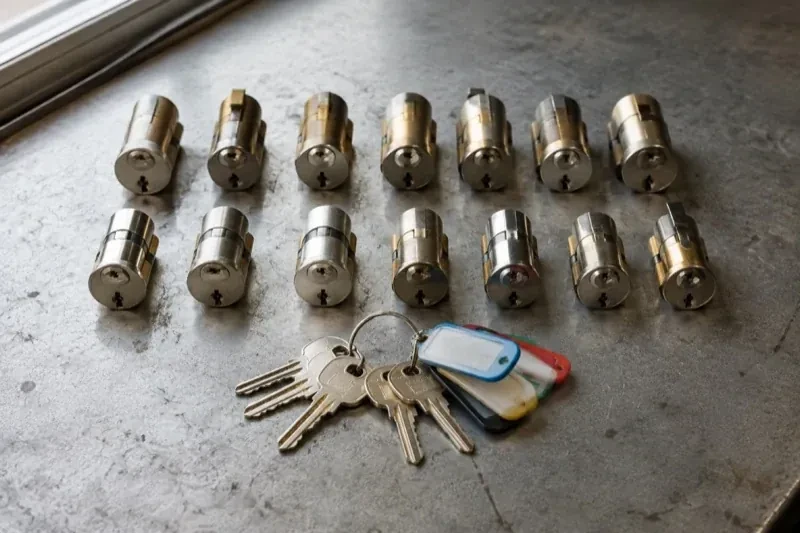
Keys are cut to the new combinations on a code machine rather than traced from another key, so every copy is exact and the tenth key fits as cleanly as the first. Each key is stamped with a short code that means something only on the keying chart; the business name, the address and the word for the door it opens stay off the metal, so a lost key gives nothing away. Keys are counted out by group, tagged, and listed against the names of the people who will carry them. Where the plan uses a restricted keyway, the blanks are drawn against the authorization letter, and that letter is filed with the chart for future orders.
Adding a door without starting over
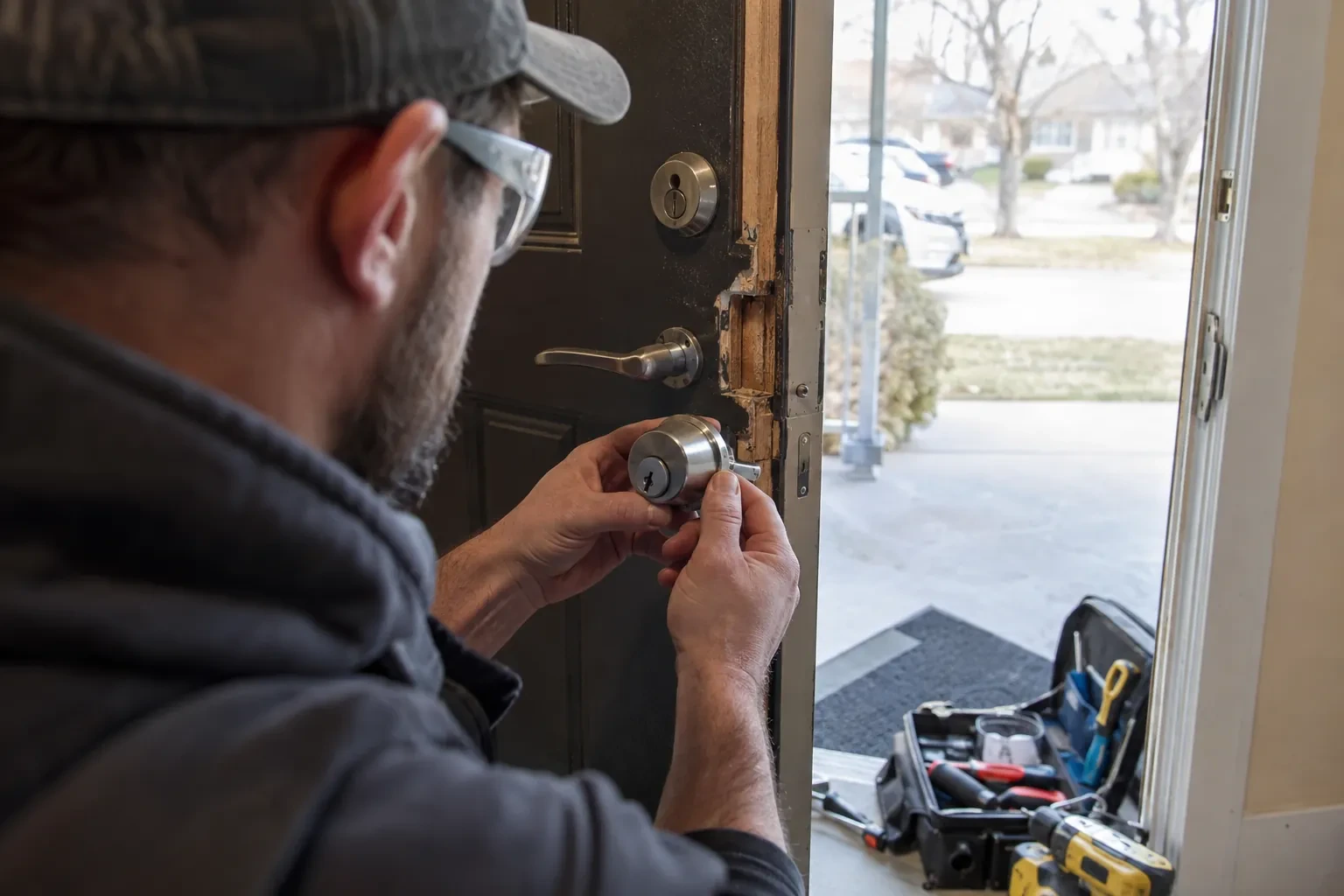
The pinning records kept from the visit mean the system can grow. When the business takes the unit next door, adds a storage cage or replaces a worn lever set, the new cylinder is pinned into an unused combination on the existing chart and handed a key from the right group, and nobody already carrying a key notices anything changed. That is the value of leaving reserve combinations in a master system rather than using them all up on day one. Keep the locksmith's reference number for the system with the chart, mention it when you call, and a single new door becomes a short visit instead of a fresh plan.
Commercial Rekeying
In the van
Mortise cylinder set screws and cams
Dry graphite or PTFE lubricant
Standard and restricted key blanks
Code key machine
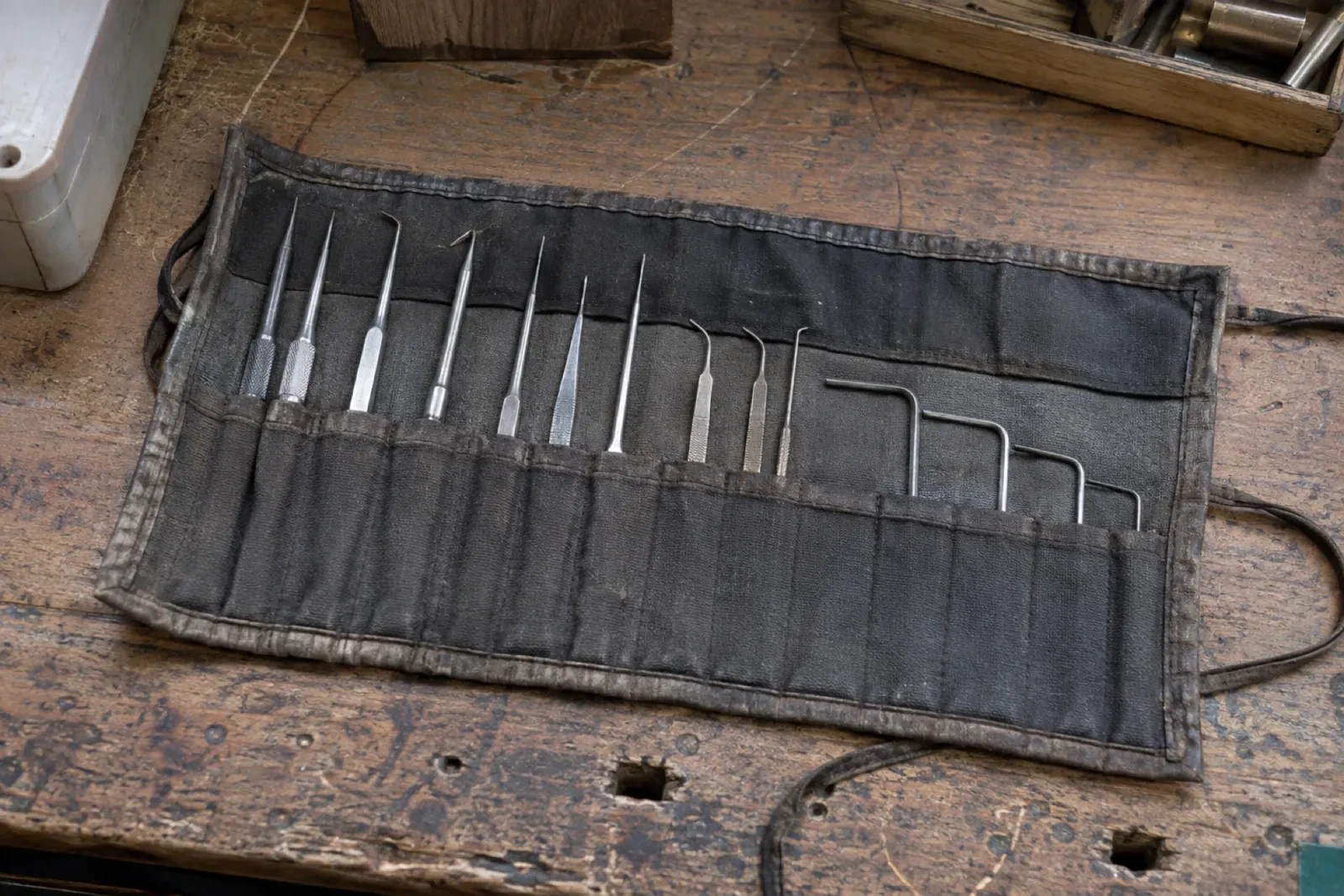
Cylinder removal and spanner tools

Commercial Rekeying
What affects the quote
How many keys are cut
Each key cut to code and stamped is counted into the quote. Two per door group for a small shop and forty for a warehouse shift are different numbers.
Mix of lock types
A key-in-lever cylinder, a storefront mortise cylinder, a back-door rim cylinder and a padlock take different handling, though several full-size formats can share one pin kit for the same key system; a premises with a wide mix of cylinder types and brands still takes longer than one with one.
Several locations
Rekeying two or three sites onto one keying plan means travel between them and a chart that spans buildings, quoted per site plus the shared design work.
What to have ready
- Which staff need to open which doors on a normal day?
- Are any of the locks interchangeable cores, and where is the control key?
- Does your lease say anything about changing locks or giving the landlord a key?
Commercial Rekeying: questions
QuestionsWill every old key stop working once you are done?
Every old key that operated a cylinder included in the plan will stop working, and the locksmith proves it by trying old keys at each door before leaving. Old keys keep working only at openings you chose to leave alone, which are written on the chart so there is no confusion. If a master key existed, it is tested too, since a forgotten master is the most common way an old key stays alive.
Should we rekey every time an employee leaves?
Rekey when a key has not come back or when the departure was unfriendly; when a key is returned and the register confirms it, the cylinders it opened are as secure as before. Businesses that want a response to every departure without a visit each time fit interchangeable cores and swap them in-house. Whatever the trigger, dealing with only the cylinders that key opened keeps the response proportionate.
Can the aluminum storefront door on our unit be rekeyed?
Yes. The narrow stile of a storefront door houses a screw-in mortise cylinder secured from the edge, and it unthreads, is repinned and screws back in like any other. What the locksmith watches is the cam: it has to suit the hook or deadbolt mechanism inside the door and sit at the correct depth, or the bolt throws short. Weather-facing cylinders showing salt wear are pointed out so you can decide on replacement.
Related services
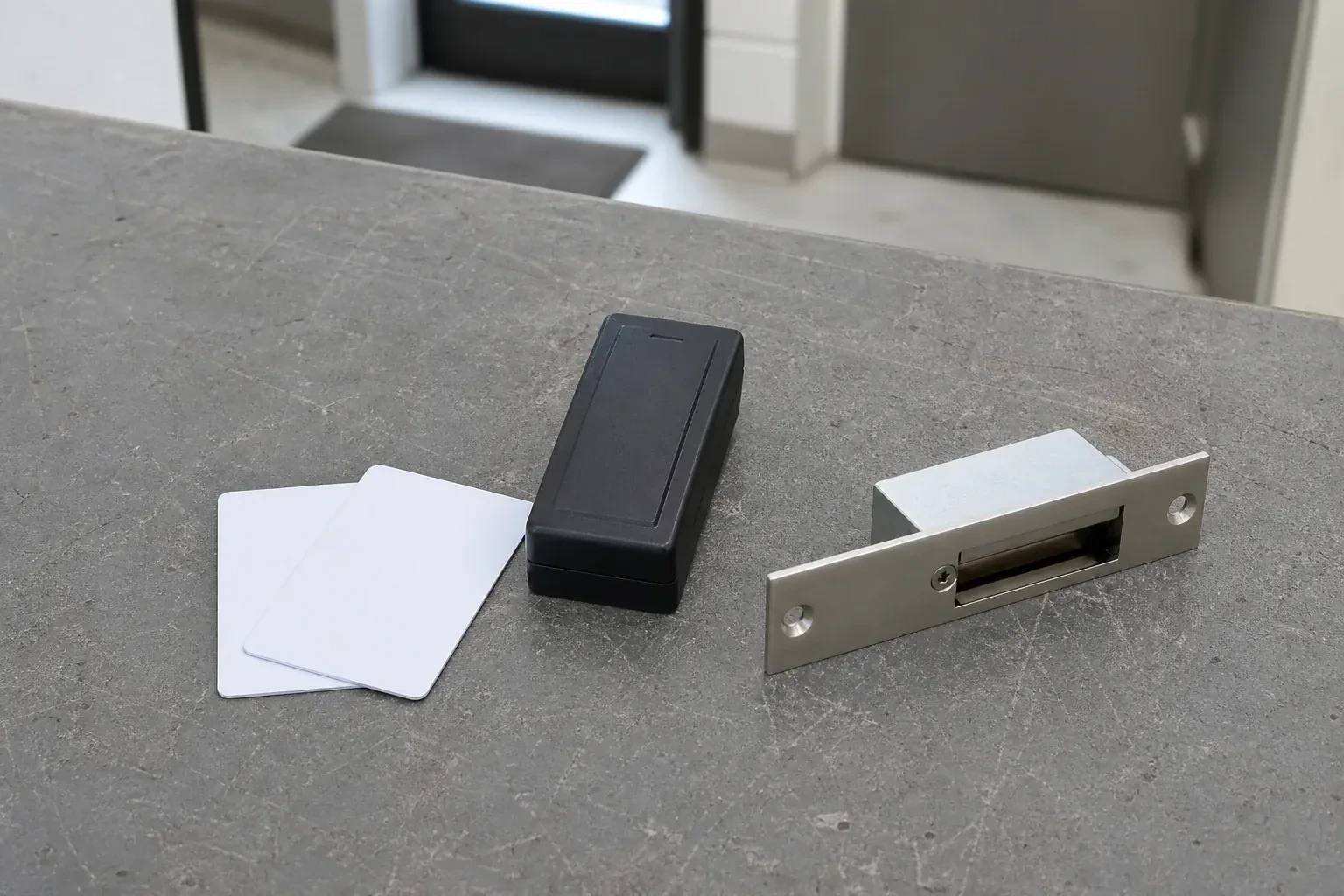
- Access Control InstallationAnother employee left and the keys never came back.
- Panic & Exit HardwareThe crossbar on the loading-dock door barely returns anymore.
- Commercial-Grade Lock ReplacementAn inspection report flagged the rear exit as needing hardware that opens with one motion and no key, and that door currently has an ordinary keyed knob on the inside.