Lockouts · Kennedy Park
Business Lockout Service in Kennedy Park
It is ten to nine, three staff are on the sidewalk with their coffees, and the key that has opened the glass front door for six years will not turn.
In plain words
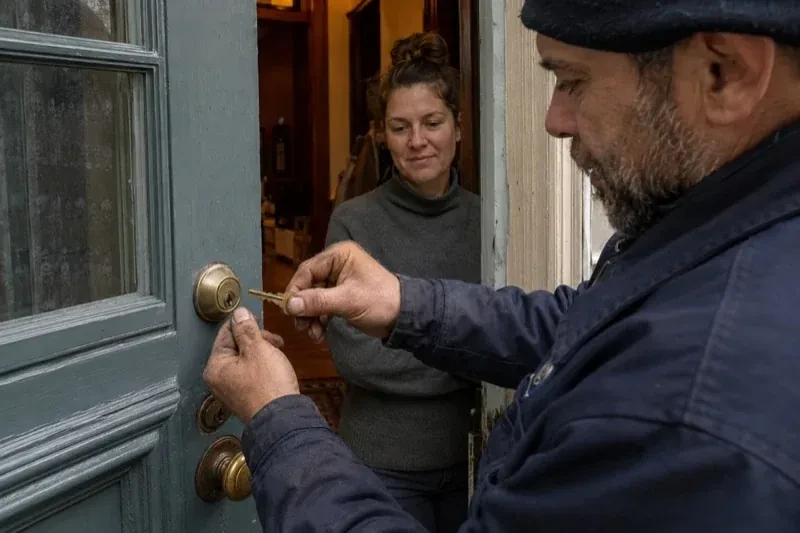
Authority for a business is a question about the company, not just the individual at the door. An owner shows identification and something connecting them to the premises, such as the lease or the business registration. A manager or employee adds a call to the owner or head office, or a property manager who can vouch for them. A commercial landlord brings the lease terms or written instruction that supports the request. Good locksmiths treat this as the opening step of every business lockout and help find the right document rather than guessing, because the same care protects the business the next time a stranger claims to work there.
How the visit goesYou signed the lease on the unit last week and the landlord handed over possession, but the previous tenant's locks are still on both doors and no keys came with them. Your fixtures arrive tomorrow and the doors will not open.
Business Lockout Service
How the visit goes
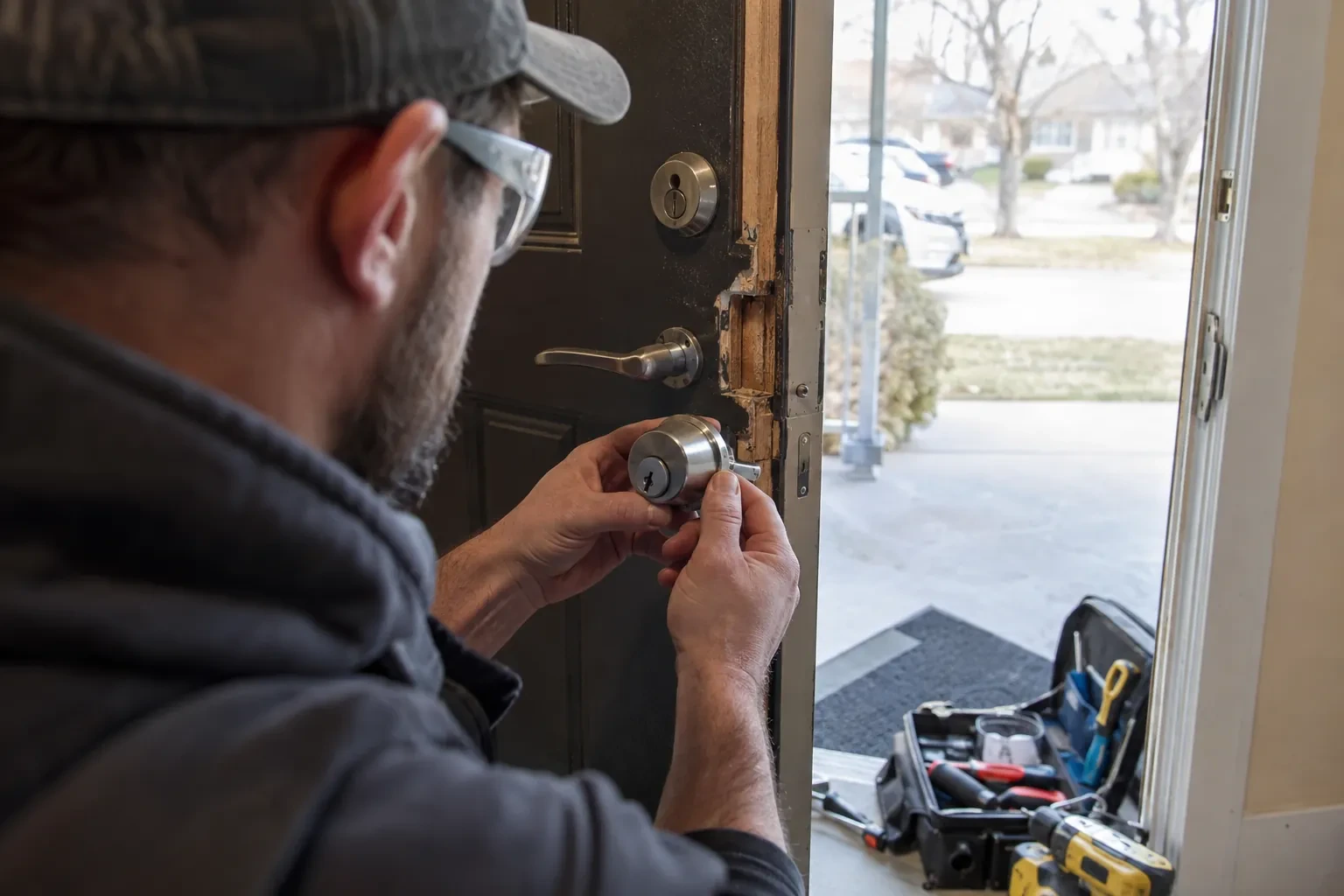
Which door and what is fitted to it
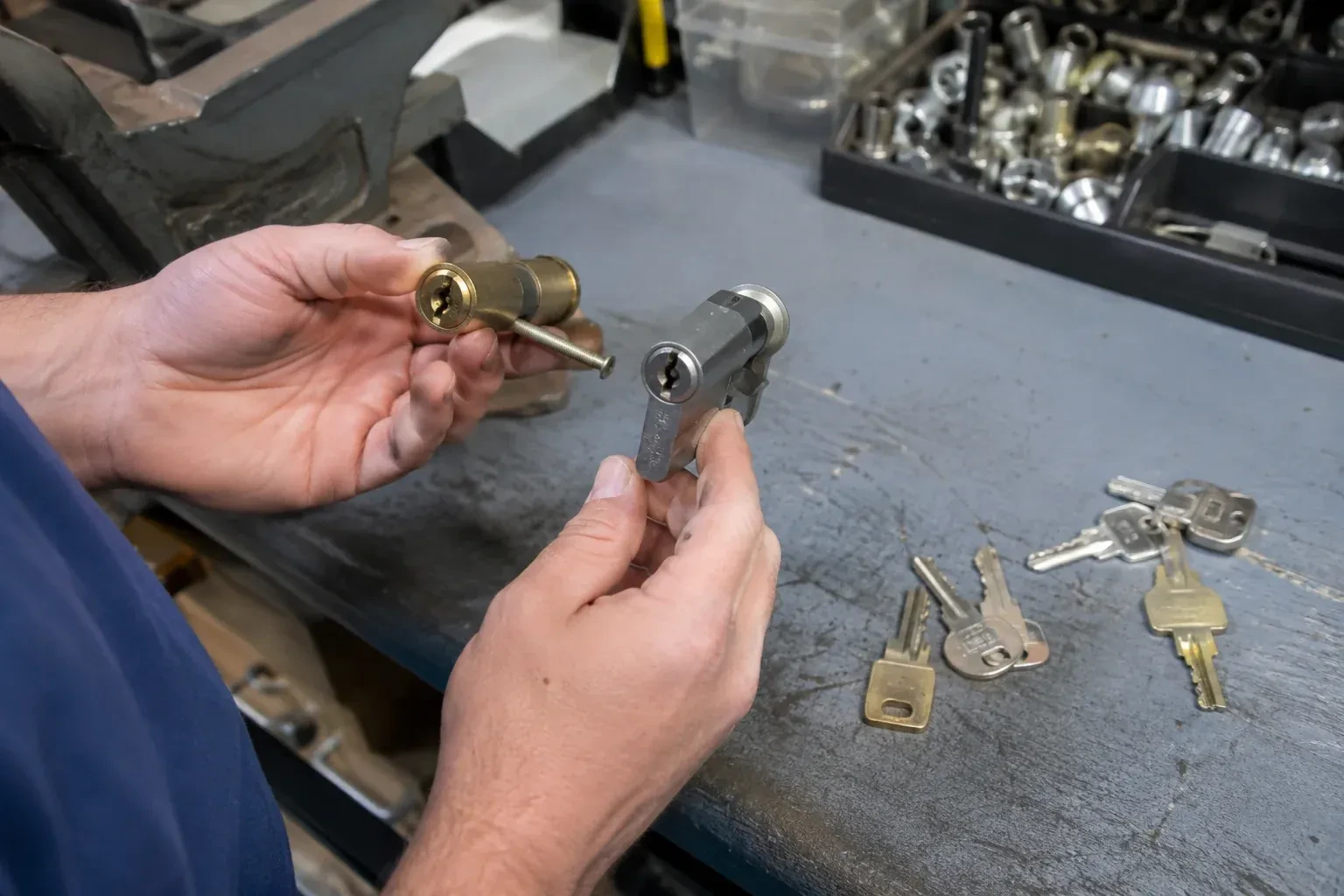
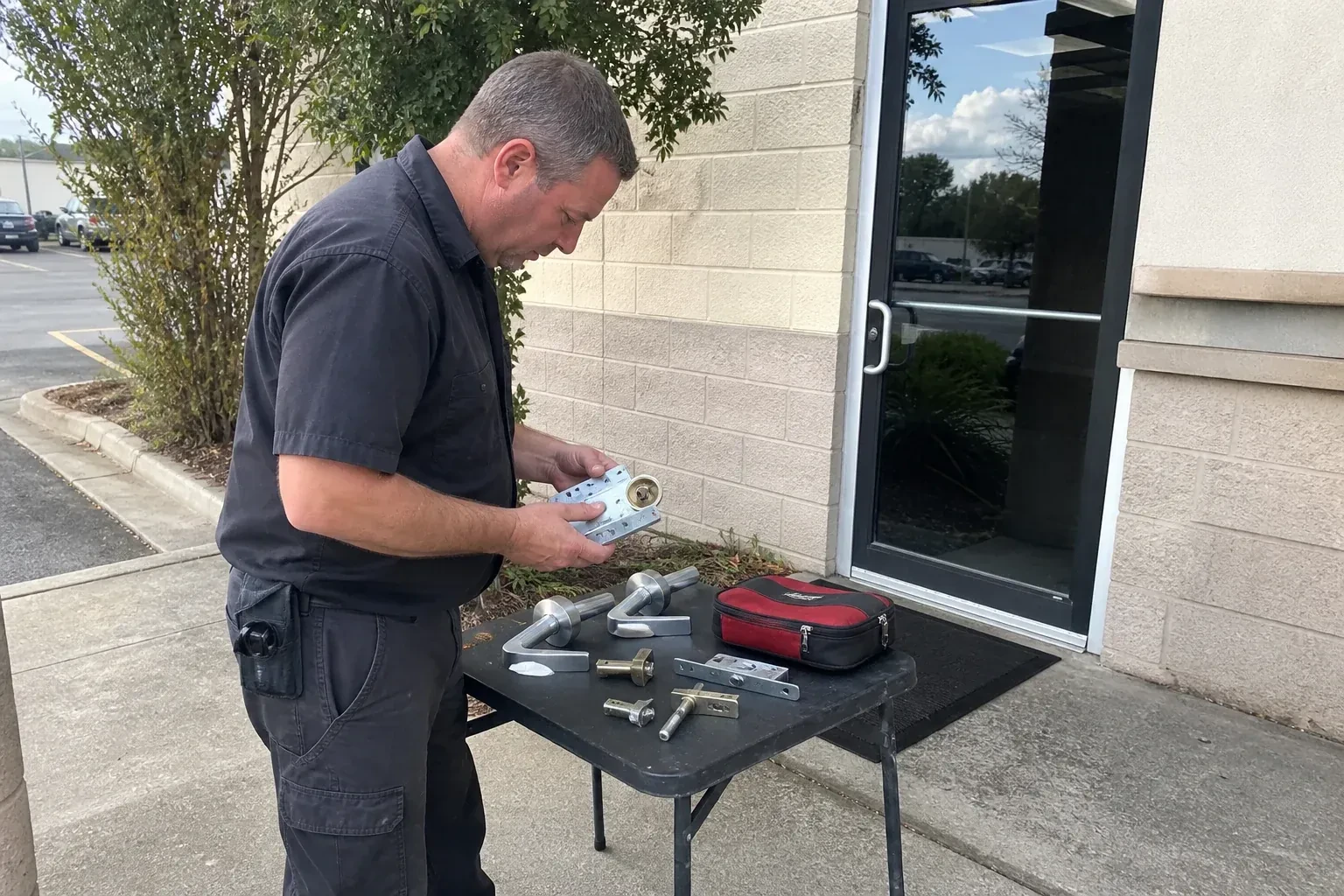
Commercial hardware is identified before it is touched. On a glass storefront door the locksmith looks at the narrow stile for a mortise cylinder, a paddle or thumb-turn inside, and the shape of the bolt in the edge: a hookbolt, a swing bolt or a spring latch with a deadlocking plunger. On a wood or steel door the tell is a lever with a small cylinder in its face, a full mortise lock with a separate deadbolt, or the outside trim of an exit device. A figure-eight core face means an interchangeable core system. Each of these points to a different opening method and a different set of spares from the van.
Opening an aluminium storefront door
The narrow stile of a glass storefront door carries a mortise cylinder that turns a cam inside a slim lock case. The locksmith picks or decodes that cylinder, then works the cam through its full travel to draw the hookbolt out of the frame or lift the deadlatch. A hookbolt hangs into its strike and cannot be pushed back with a shim, so the cylinder is the honest route in. Once open, the cylinder's set screw and cam alignment are checked, because a cam that has slipped a few degrees is a common reason the key stopped working, and the paddle inside is tested so staff can leave through the same door without a key.
Exit doors that still let everyone out
Whatever was replaced, a door on the way out of the building still opens from inside with a single motion and no key while people are in it. That standard is why a storefront gets a thumb-turn or paddle inside, a rear door keeps its push bar, and a double-cylinder deadbolt does not go on an exit route. The locksmith checks each door for this before leaving and points out any older hardware, such as a chain or a keyed-inside bolt on a back door, that the business may want to bring into line.
Business Lockout Service
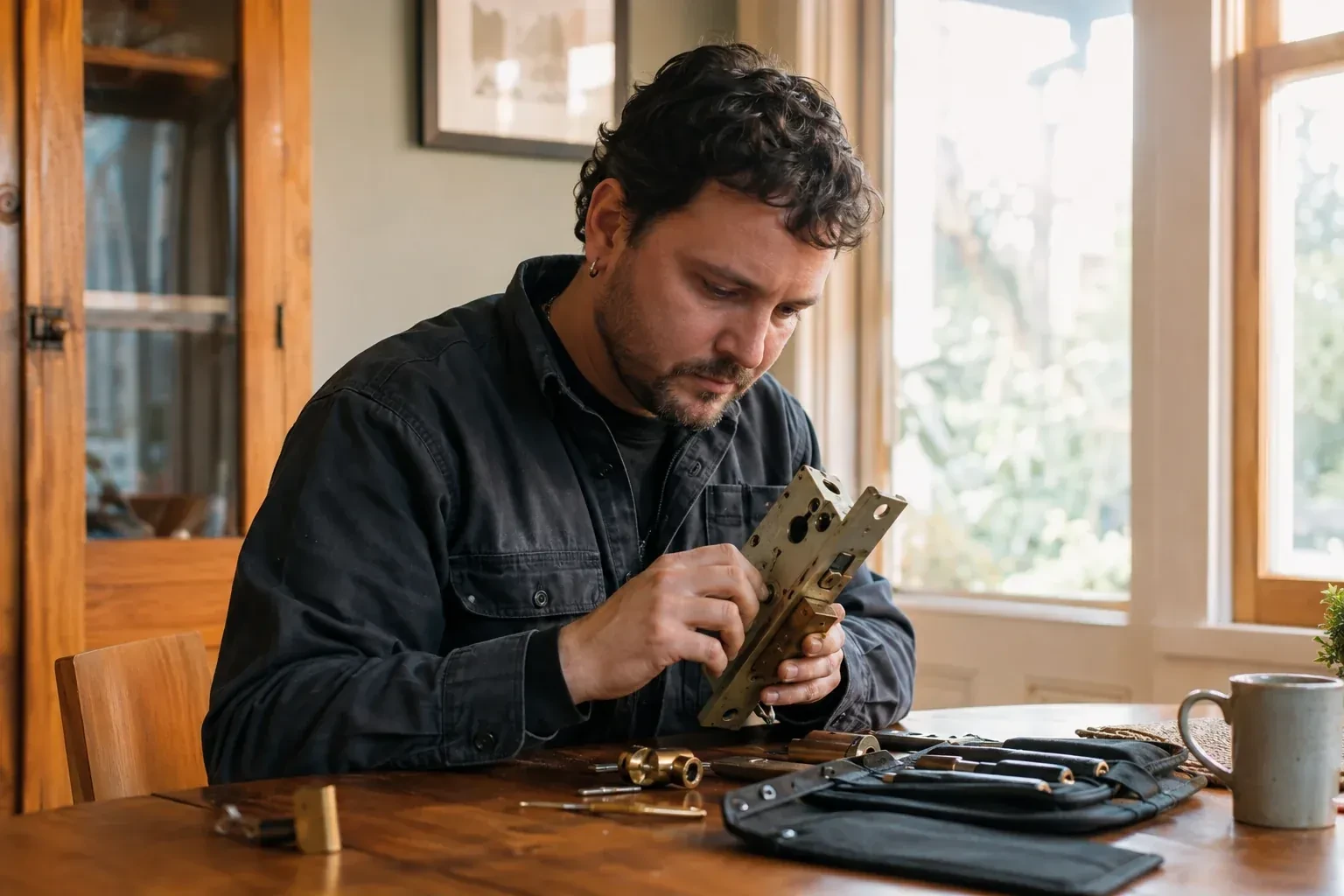
In the van
Key blanks and code cutter
Storefront deadlock and deadlatch bodies
Strikes, pivot shims and closer adjustment tools
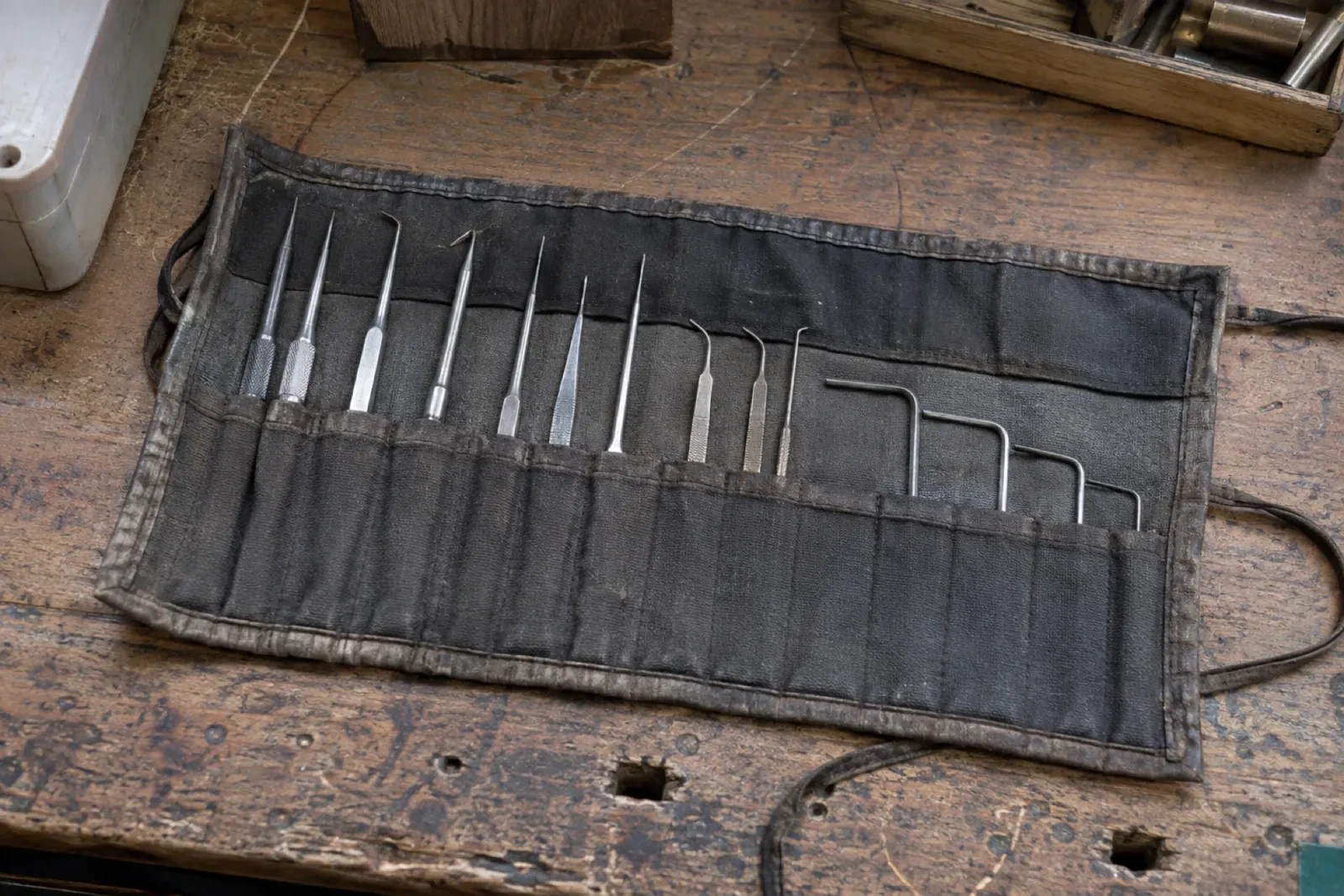
Cylinder decoder and plug spinner
Control keys and core-removal tools
Business Lockout Service
What affects the quote
Damage from earlier attempts
A paddle bent by a pry bar, a stile scratched by a screwdriver or a cylinder wrenched by pliers may need repair as well as opening, and the locksmith points out what was already there before quoting it.
Keys cut and recorded
Each new key is cut and counted individually. Two for the owners and four for the opening staff is a different line from one spare, and restricted blanks are priced above ordinary ones.
Upgrades you choose while the locksmith is there
Some businesses use the visit to move to a heavier storefront deadlock, a restricted keyway, interchangeable cores, a lockbox for keyholders or a reinforced strike. None of it is needed to get you open; each is priced as its own option.
What to have ready
- Has the door been dragging, scraping the threshold or failing to latch at closing recently?
- Who on site can show identification and a document connecting them to the business?
- Has anyone already tried to force or pry the door?
Business Lockout Service: questions
QuestionsDo you work with our alarm company and access-control provider?
Yes, and it makes the visit smoother. The alarm station is told an entry is expected and the authorised person handles the disarm and password. For access control, the provider can often confirm the controller's status, unlock a magnetic lock remotely, or re-enrol fobs once you are inside, while the locksmith handles the mechanical side and the override cylinder. Nobody's wiring is cut; each party does the part it is set up to do.
What is an interchangeable core, and how do I know if we have one?
An interchangeable core is a small, self-contained cylinder that slides out of the lock with a special control key and drops back in on a new combination. Look at the keyway: a figure-eight shaped face on a lever or mortise housing is the usual sign. Buildings choose them because a lost key or a staff change is handled by swapping the core rather than taking the lock apart, and a locksmith can carry cores pinned to your system.
My key turns all the way but the door stays locked. What has failed?
Usually the link between the cylinder and the bolt. On a storefront lock the cam behind the mortise cylinder can wear or slip out of position; on a lever or mortise lockset the tailpiece or a spring in the deadlatch gives up. Your key is fine and so are the pins, so once the door is opened the fix is a new cam, tailpiece or latch, and your existing keys carry on working.