Change or rekey · Toronto
Vintage Mortise Lock Service
The knob flops loose on its spindle and never springs back to level.
In plain words
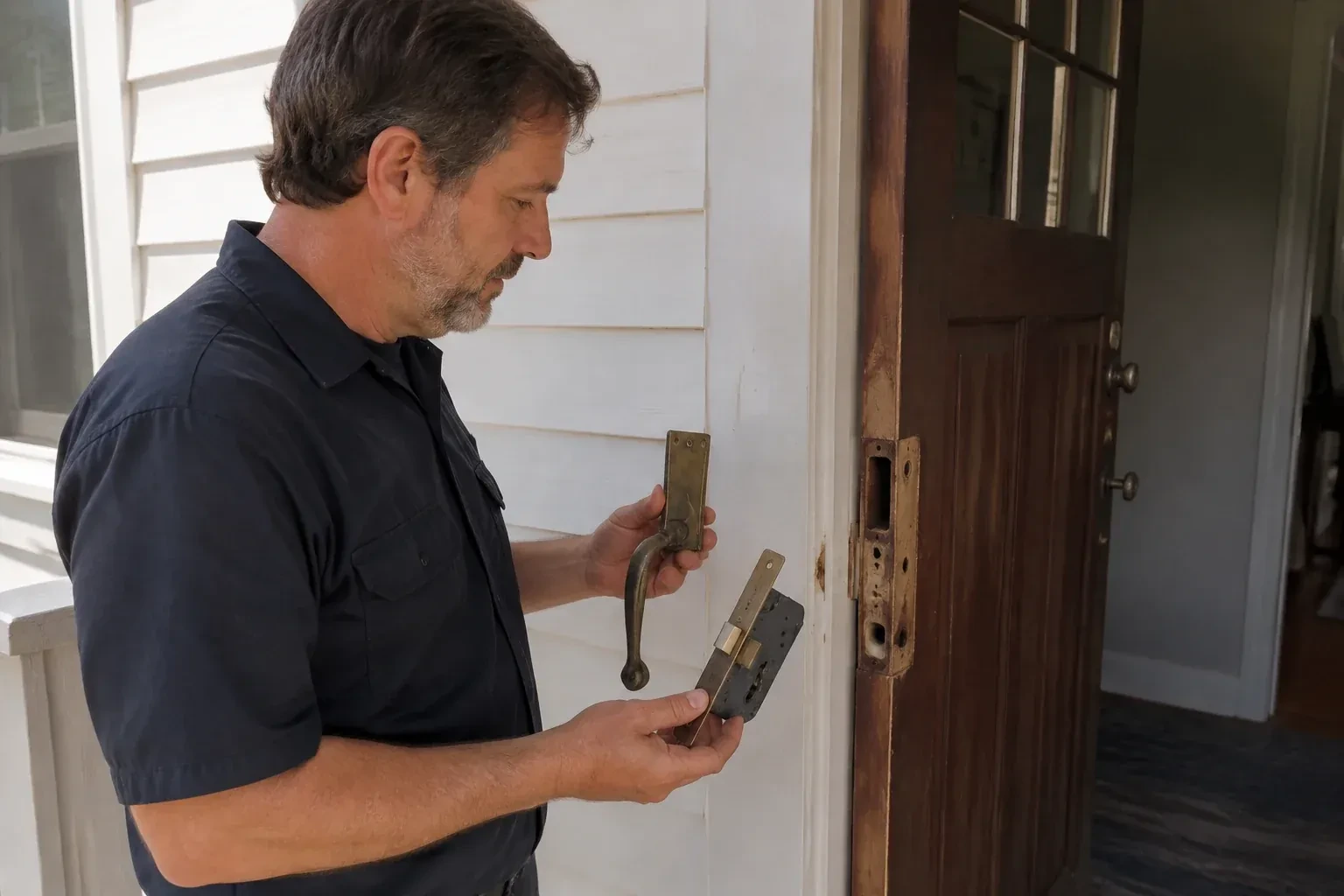
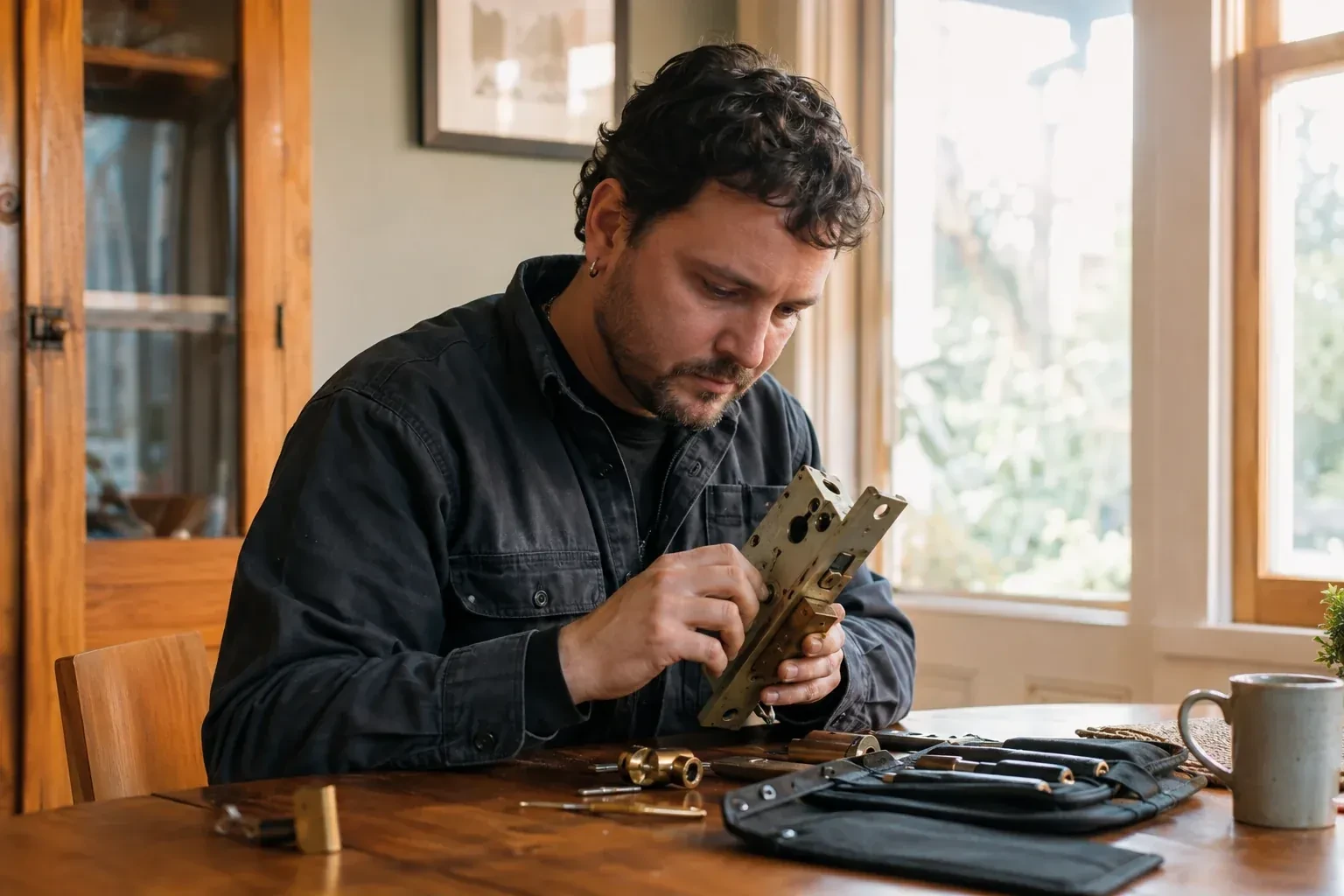
Most old mortise locks fail for boring reasons. A coil spring that has been compressed a hundred thousand times since the house was built finally breaks, or the grease inside the case dries into something like wax and the levers stick in it. Neither justifies cutting a new hole in a solid oak door. The service opens the case, cleans out the old lubricant, replaces the springs with the right size, matches any worn follower or lever and lubricates the mechanism lightly. The same case goes back into the same pocket, and the knob returns to level with the crisp snap it had decades ago.
How the visit goesThe old skeleton key still fits the keyhole, but it now needs a jiggle, a lean on the door and a little luck before the bolt moves. Last week it took three tries. You have one key and no idea where a second could come from.
Vintage Mortise Lock Service
How the visit goes
Repair, replacement cylinder or replacement case
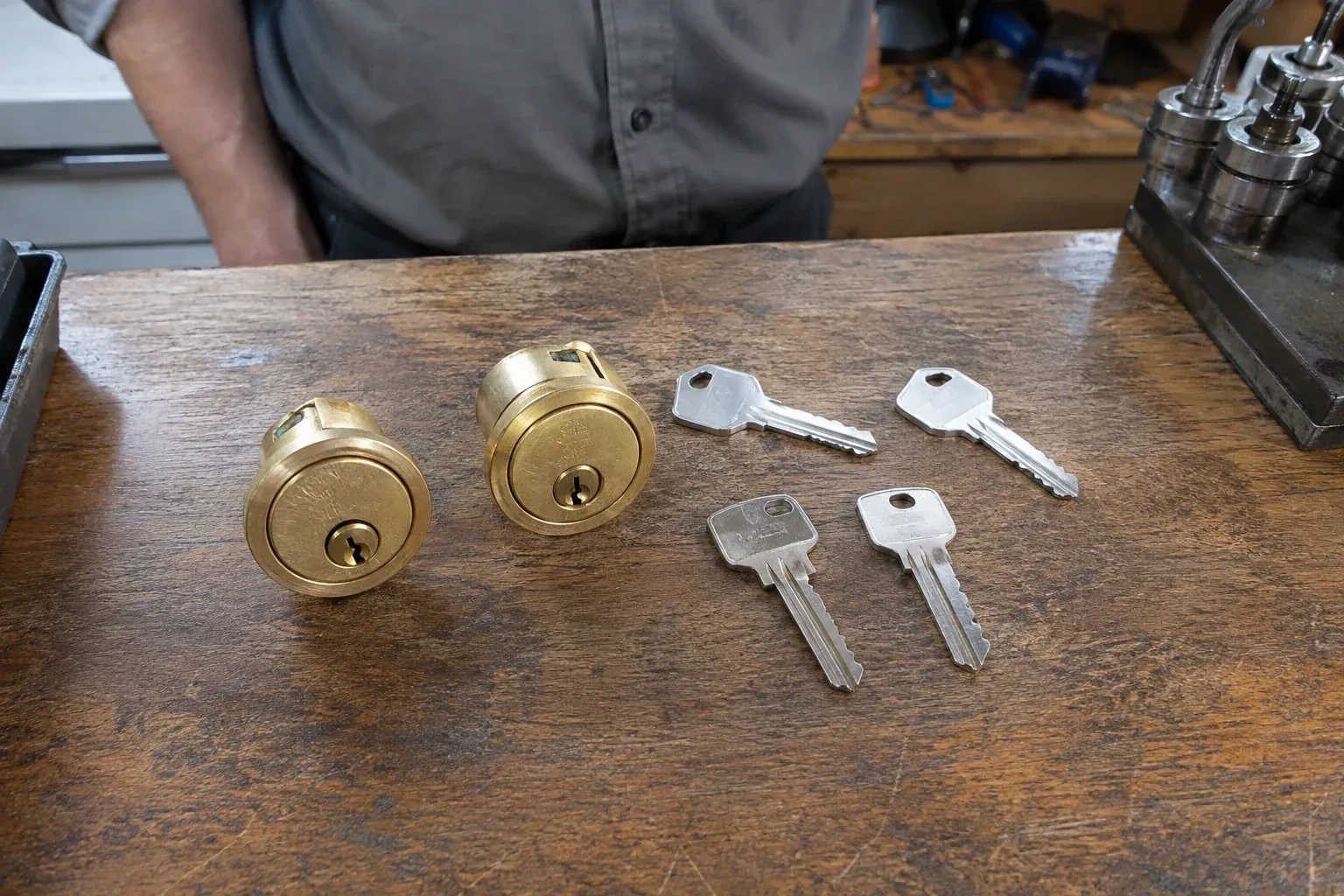
The last step of the check is deciding what the lock needs, in plain terms, before any of it is done. Most cases need cleaning, springs and adjustment, and that is the recommendation. A cylinder lock with a worn plug may be better served by a new mortise cylinder of the same thread and cam, keeping the case. A cracked case, a bolt worn thin or a hub broken through calls for a replacement case in the same pocket, and the locksmith measures for it on the spot. You hear which of these applies and why, and if the answer is a replacement case, the choice between a reproduction and a modern case is yours to make.
Reassembly and setting the trim
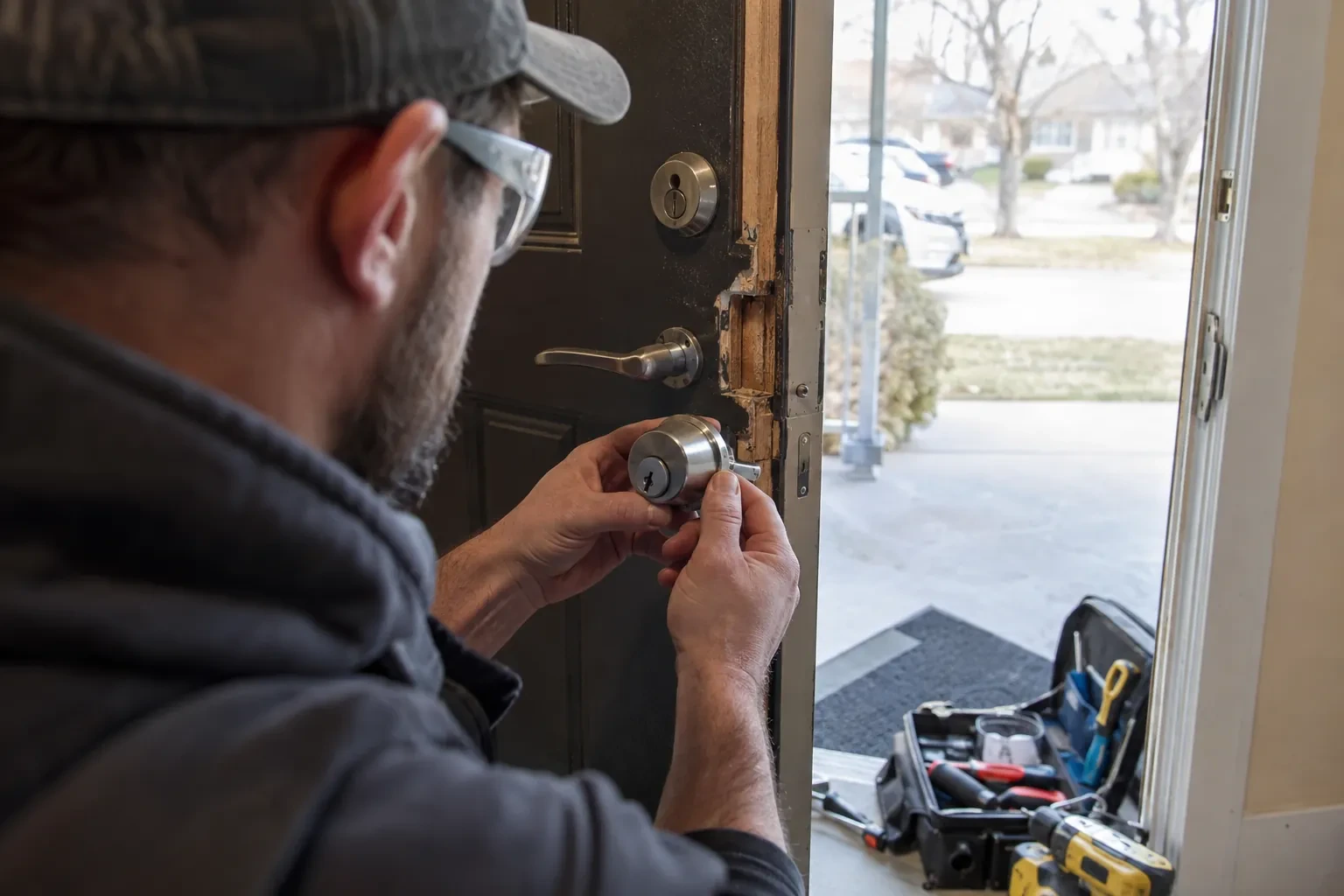
The case slides home and is screwed off, then the cylinder or keyhole escutcheon goes on, followed by the spindle, knobs and rosettes. The spindle is trimmed to length so the knobs sit against the door without pinching, and the set screws are tightened so there is no free play before the latch moves. The thumb-turn is aligned with the deadbolt tail so it throws with a light touch. Paint is cleared from the faceplate and strike edges where it was catching. Then the door is closed and the whole lock is worked from both faces with the key, the knobs and the turn, several times, listening for the latch to seat.
A lock that feels new and looks old
What you get back is the door you had, with the lock working as it was designed to. The knob returns level with a snap, the latch catches when the door is pushed shut, the deadbolt throws with a light turn of the key or the thumb-turn, and the key goes in and out without a wiggle. Nothing on the face of the door has changed except that the brass has been cleaned where it was handled. The locksmith runs through each function with you from both sides before leaving, so the standard of what has been done is something you have seen, not something you have been told.
Vintage Mortise Lock Service
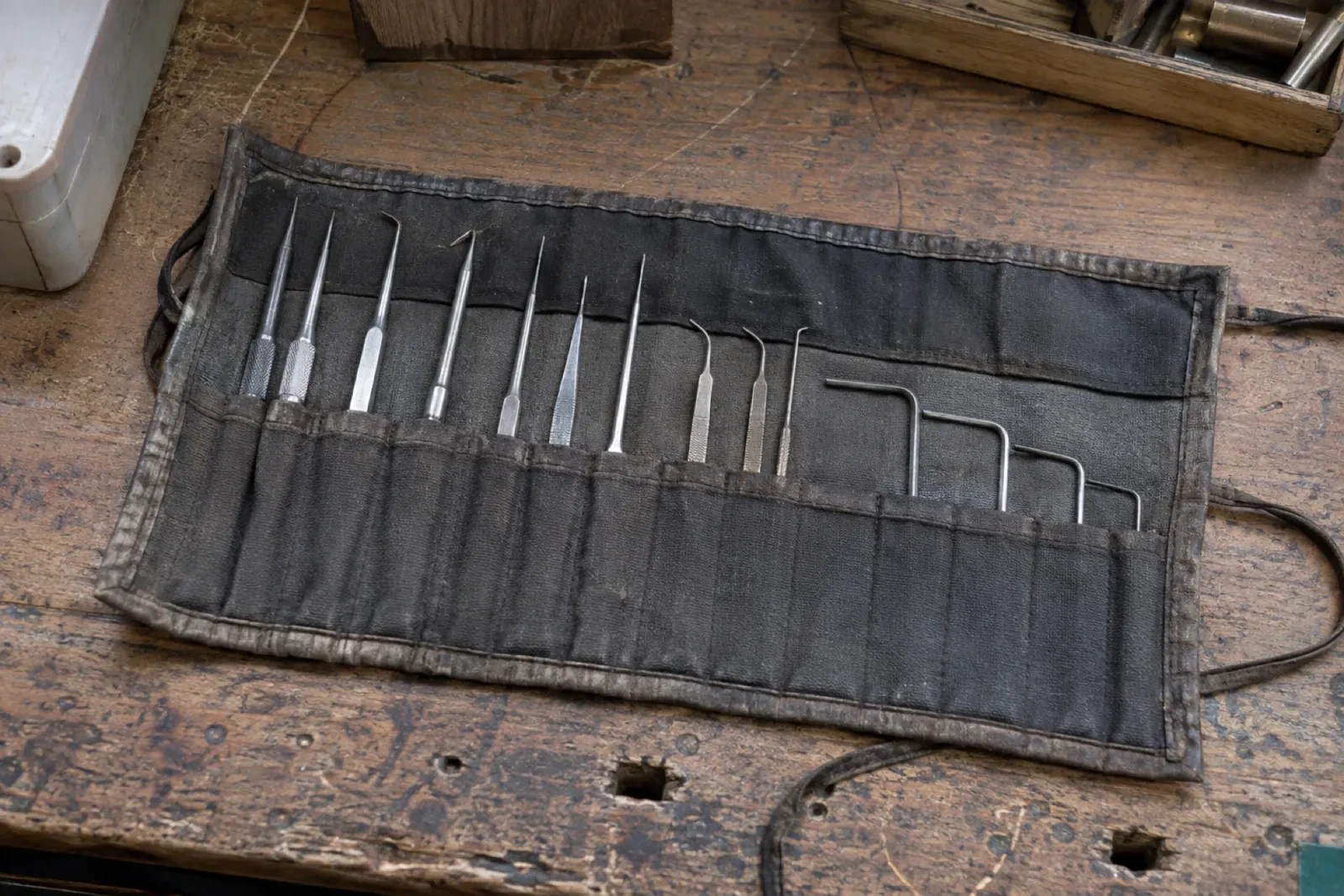
In the van
Spindle and knob set screws
Hub followers and lever packs
Mortise cylinder and cam
Cylinder set screw
Deadbolt lever springs
Vintage Mortise Lock Service
What affects the quote
Condition of the wood
Stripped screw holes, a loosened pocket or a split at the door edge need dowelling, shimming or gluing before the case can be trusted. That woodwork is quoted once the locksmith has seen the pocket empty.
What is actually broken inside
A clean and new springs is the lightest job. A worn hub, a cracked lever or a part that has to be fabricated to match the original adds bench time, and the assessment names which applies before any of it starts.
How many keys you want
Bit keys are made individually by hand and cylinder keys are cut per copy, so the count you ask for is a line of its own. Decide who in the household needs one before the visit.
What to have ready
- Does the deadbolt throw fully with the key or the thumb-turn?
- How many keys would you like to have afterwards?
- Do you own the home or rent it, and who should receive the keys?
Vintage Mortise Lock Service: questions
QuestionsCan you match a missing knob, plate or thumb-turn?
Often, yes. Locksmiths who work on older hardware keep salvage and reproduction trim in the common patterns and finishes, and a knob, rosette or escutcheon can usually be found close enough that the pair on one door match. Where nothing suitable exists, the trim from a less visible door can be moved to the entry and the reproduction fitted where it is seen less. Bring or photograph the surviving piece so it can be matched.
How long does servicing a mortise lock take?
A single entry lock that needs cleaning, springs and a strike adjustment is generally done in one visit of an hour or two. Filing a bit key adds bench time, and a set of interior latches is longer simply because there are more of them. A case that needs a part fabricated, or a replacement case that has to be ordered to size, may mean a second visit; the locksmith says so at the assessment.
Can my interior doors be serviced too, and can one key work all of them?
Usually yes to the first, and to the second once the locksmith checks the locks. Interior mortise latches with privacy turn buttons are lighter versions of the entry lock and respond to the same clean and re-spring. Interior locks in a house were sometimes supplied to one bit key, and where the key sections, warding and levers actually match, the locksmith can restore that arrangement so a single key opens several bedroom and bathroom doors. It is a practical thing to have when a child locks a bathroom from inside.
Related services
- Deadbolt InstallationThe bolt on the front door is keyed on both sides.
- Lock Replacement & UpgradeSomeone tried the back door while you were away.
- Smart Lock InstallationYour mother still lives on her own, and the personal support worker, the pharmacy delivery and two siblings all need to get in on different days.