Lockouts · Kennedy Park
Break-In Damage Lock Repair in Kennedy Park
There is a hole where the cylinder used to be.
In plain words
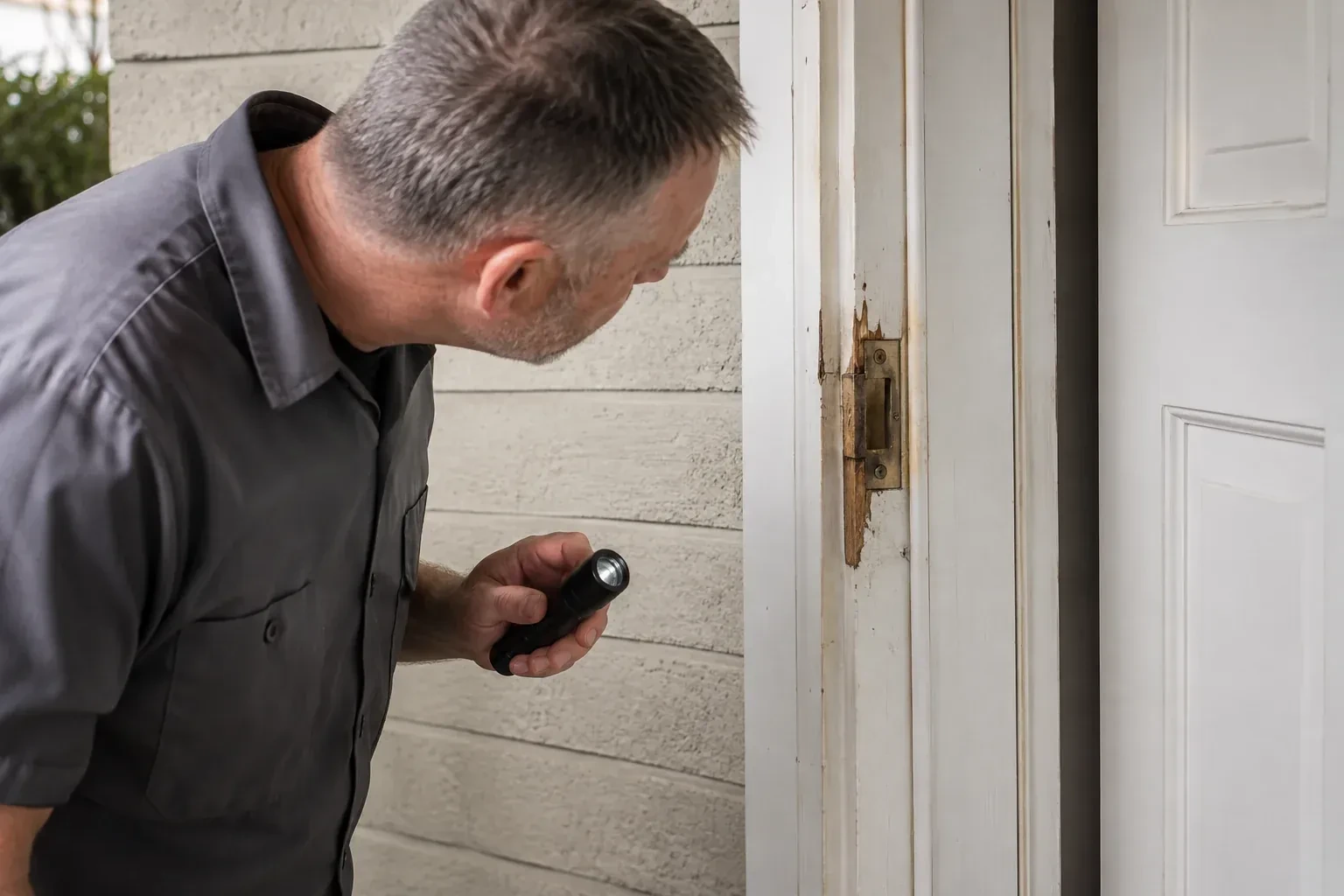
Most forced doors fail at the frame, not the lock. A standard strike plate is held by two short screws in a softwood jamb, and a kick transfers the whole force of a body to those screws. The bolt usually survives; the wood around it does not. Swapping the deadbolt for a heavier one leaves the weak point untouched, so a proper break-in repair rebuilds the strike side with a boxed strike, a pocket cut to full depth and three-inch screws that pass through the jamb and the shim space into the stud behind. The lock is replaced too, but the frame is where security returns.
How the visit goesThere is a hole where the cylinder used to be. Somebody twisted it out of the deadbolt with a wrench, and now the empty bore looks straight through to the kitchen, with the bolt still stuck in the frame.
Break-In Damage Lock Repair
How the visit goes
Lock, frame or door: which one failed
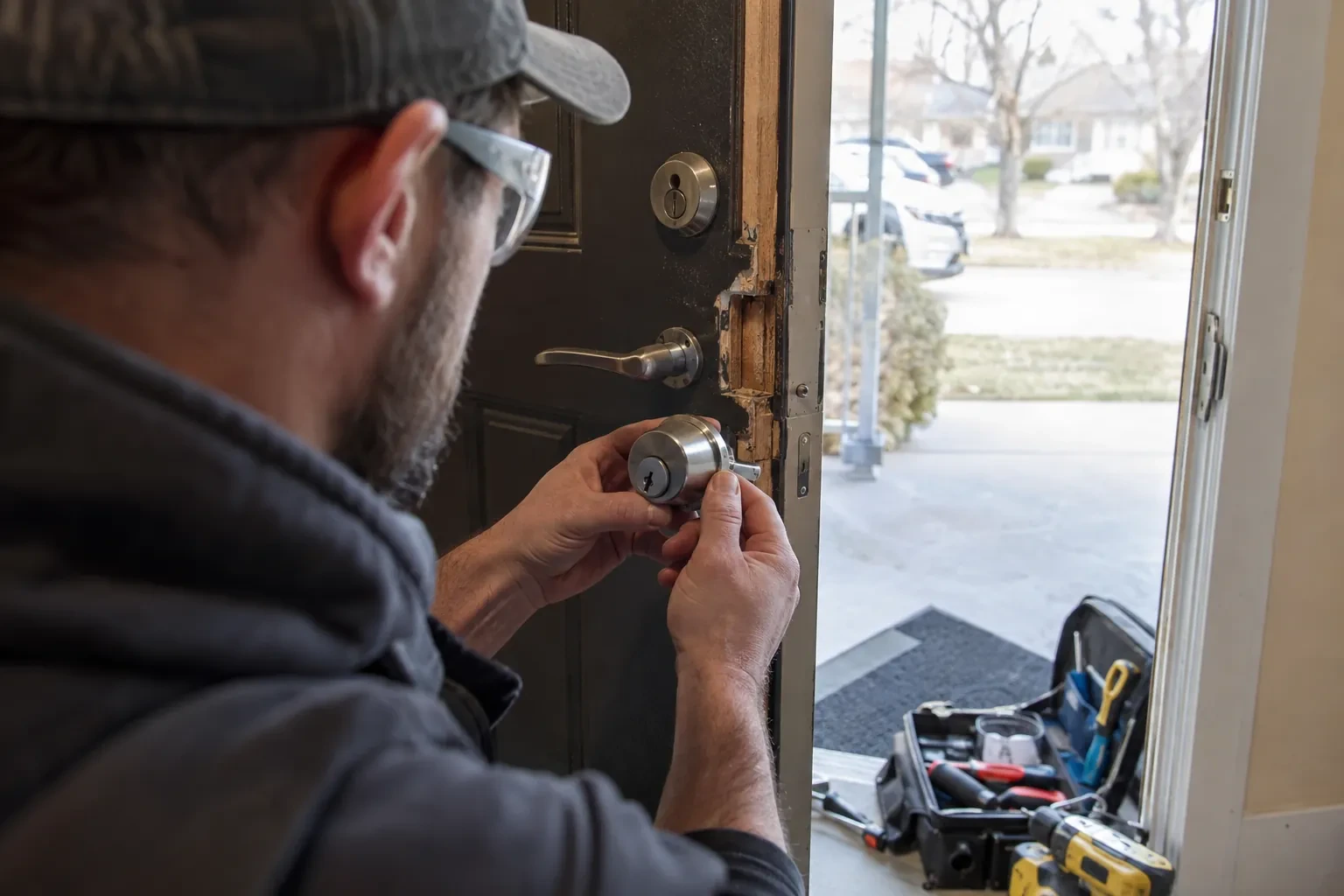
Three components can fail in a forced entry and they are repaired differently, so the locksmith sorts them out before quoting. Lock failure is a broken cylinder, bolt or latch and is answered with hardware. Frame failure is a torn strike or split jamb and is answered with a boxed strike, repair plates, long screws and sometimes new wood. Door failure is a crushed edge, a split around the bore or a bent hinge leaf and is answered with edge reinforcement or, when the slab itself is broken, a door installer. Naming which of the three happened, and often all three, shows you what the locksmith completes tonight and what is handed to another trade.
Sliding doors and garage entries
A forced patio slider is repaired by putting the panel back on its track, replacing the broken latch or fitting an auxiliary bolt into the frame, and adding the pieces that stop the next attempt: anti-lift blocks in the upper channel so the panel cannot be raised off its rollers, and a foot bolt or pin lock at the bottom. A garage man-door that carried only a knob lock gets a proper deadbolt, a boxed strike and long hinge screws to match the front of the house. Where an overhead door was the way in, the emergency release cord is shielded from outside reach and the opener remotes are reprogrammed.
Glass and the reach-in problem
When entry came through glass beside the door, the lock was never the weakness, and the follow-up is about the glass. A tested security-film system, applied with its specified frame attachment, can slow an arm from passing through the sidelight, or the pane is replaced with laminated glass by a glazier. Where the layout allows, the deadbolt is repositioned beyond arm's reach of the glass. A thumb-turn stays on the inside, because it lets everyone leave without hunting for a key, and a keyed inside cylinder trades one risk for a worse one if there is ever a fire. The result keeps the intruder out and the way out clear.
Break-In Damage Lock Repair
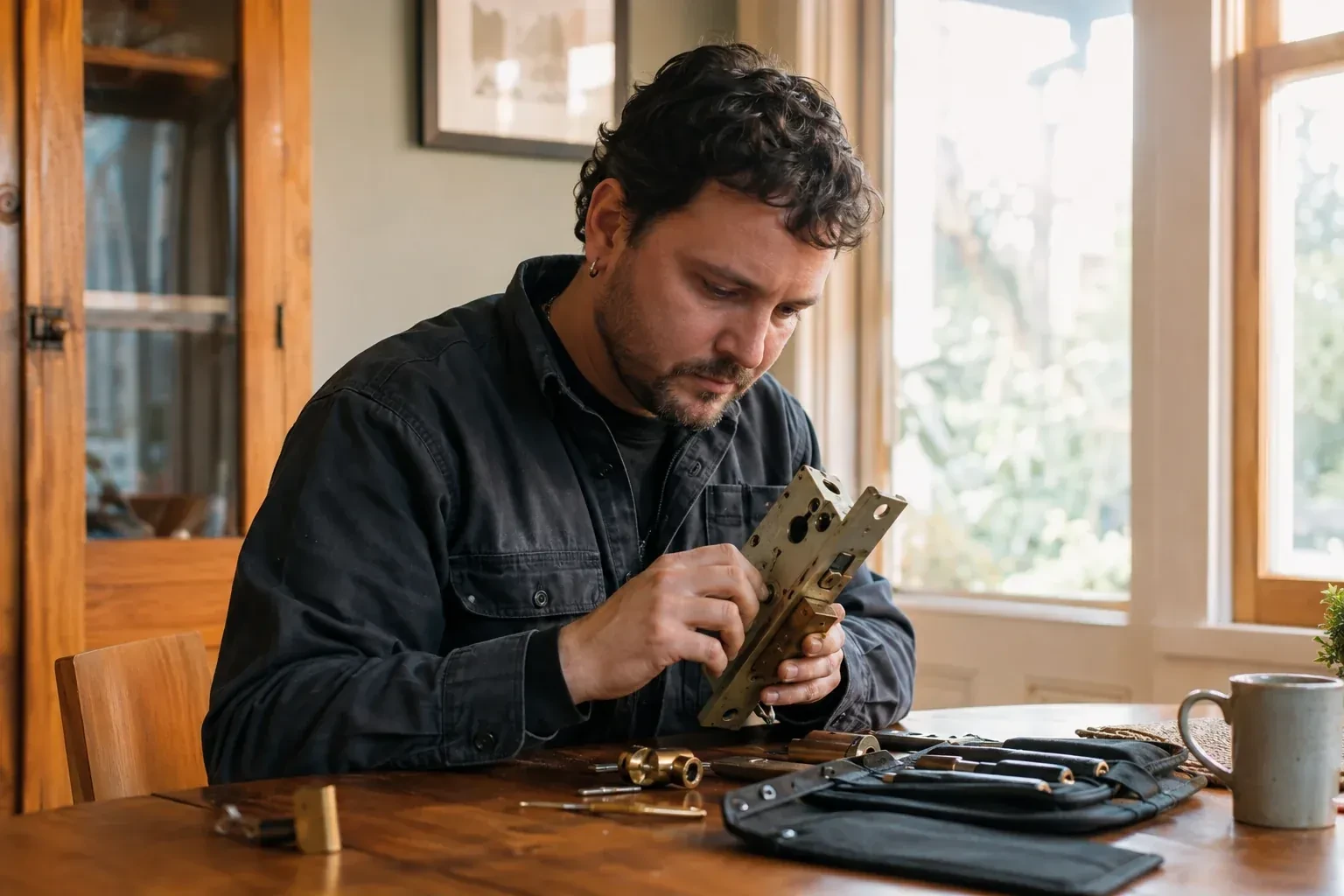
In the van
Grade 1 deadbolt with one-inch throw
Rekeying pins and key blanks
Hinge reinforcement plate
Wrap-around door edge reinforcer
Latch guard plate
Break-In Damage Lock Repair
What affects the quote
Work referred to another trade
A shattered frame, a broken door slab or smashed glass is listed as needing a carpenter, door installer or glazier, and that work is quoted by those trades rather than by the locksmith.
How many parts were damaged
One broken cylinder on a sound frame is a small repair. A torn strike, a split jamb, a crushed door edge and bent hinges together are a longer visit with more hardware, and the quote follows the count.
Commercial and storefront hardware
Narrow-stile deadbolts, hookbolts, latch guards, anti-pry astragals and interchangeable cores are commercial parts with commercial fitting time, and a shop's quote reflects them.
What to have ready
- Do you own the property, rent it or manage it for someone else?
- Are there other doors or a garage entry on the same key?
- Is the damage to the lock, the frame, the door edge or the glass, or several?
Break-In Damage Lock Repair: questions
QuestionsThe intruder found our spare keys. What should be rekeyed?
Everything those keys fit. That usually means the front, back and side doors, the garage man-door, the mailbox and any padlocks, and in a rental the suite door with the landlord's involvement. Rekeying changes a serviceable cylinder to answer to a new key, and a cylinder that cannot be rekeyed is replaced instead. Doing every affected opening in one visit, keyed alike where the cylinders are compatible, means no forgotten door still answers to the stolen ring.
Do longer screws really make a difference?
A large one. Factory strike and hinge screws are usually short enough to grip only the jamb, a piece of trim about an inch thick. Three-inch screws pass through the jamb and the gap behind it into the stud, so a blow has to move the wall rather than the trim. Lock manufacturers supply reinforcement plates with three-inch screws for exactly this reason, and note that a door beside a sidelight needs a different arrangement because glass sits where the stud would be.
I rent. Who arranges the repair, and can I change the lock myself?
Tell your landlord or property manager as soon as the police have been called; provincial tenancy law makes the landlord responsible for repairs to the unit, and most will arrange the locksmith. A tenant may not change locks without the landlord's agreement, and a landlord who changes them must give the tenant keys, so the visit is coordinated between you. If you arrange securing yourself in an emergency, keep the receipt and the record of what was done for both sides.
Related services
- Business Lockout ServiceIt is ten to nine, three staff are on the sidewalk with their coffees, and the key that has opened the glass front door for six years will not turn.
- Broken Key ExtractionOvernight the deadbolt froze, and this morning the key would only turn partway.
- Seized & Jammed Lock OpeningThe key turns a full circle without any resistance and the deadbolt stays exactly where it is.