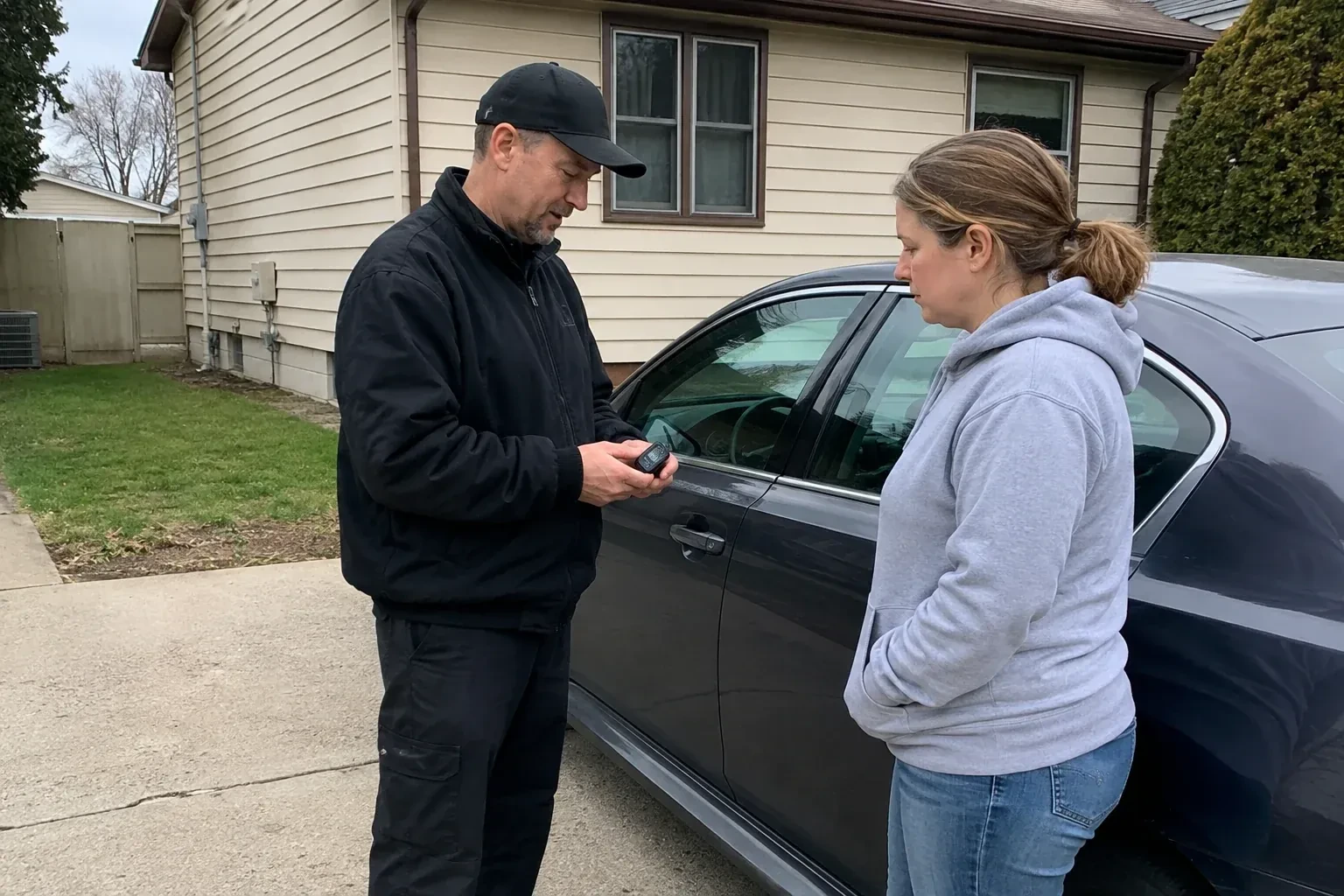
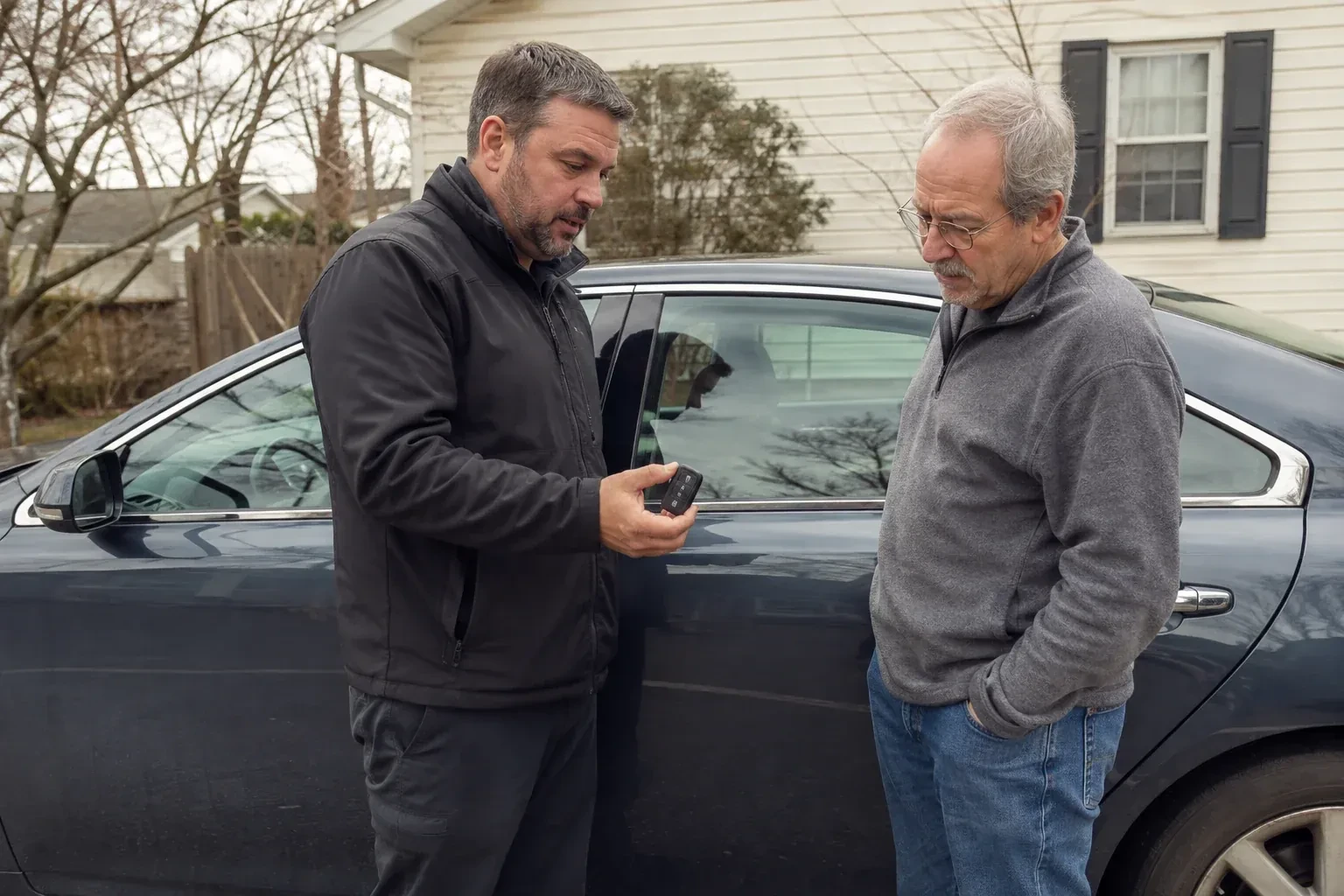
Car keys · Toronto
Vehicle Lock Repair in Toronto
You line the key up with the trunk lock, turn it, and feel nothing catch.
In plain words
Weather leaves its mark on vehicle locks over the years. Worn weatherstripping lets rain and winter brine reach the cylinder, the linkage and the wiring boot at the door hinge, and what starts as a slightly stiff key can turn into a lock that stops responding altogether. Vehicle Lock Repair looks at the seal around the affected door as part of the same visit, since a repaired lock behind a perished seal is likely to face the same moisture again unless the seal is addressed too.
How the visit goesYour key turns smoothly in the driver's door, the same as it always has, but the button underneath stays down and the latch never releases. The passenger side opens without any trouble, so the key itself is clearly not the source of the trouble.
Vehicle Lock Repair
How the visit goes
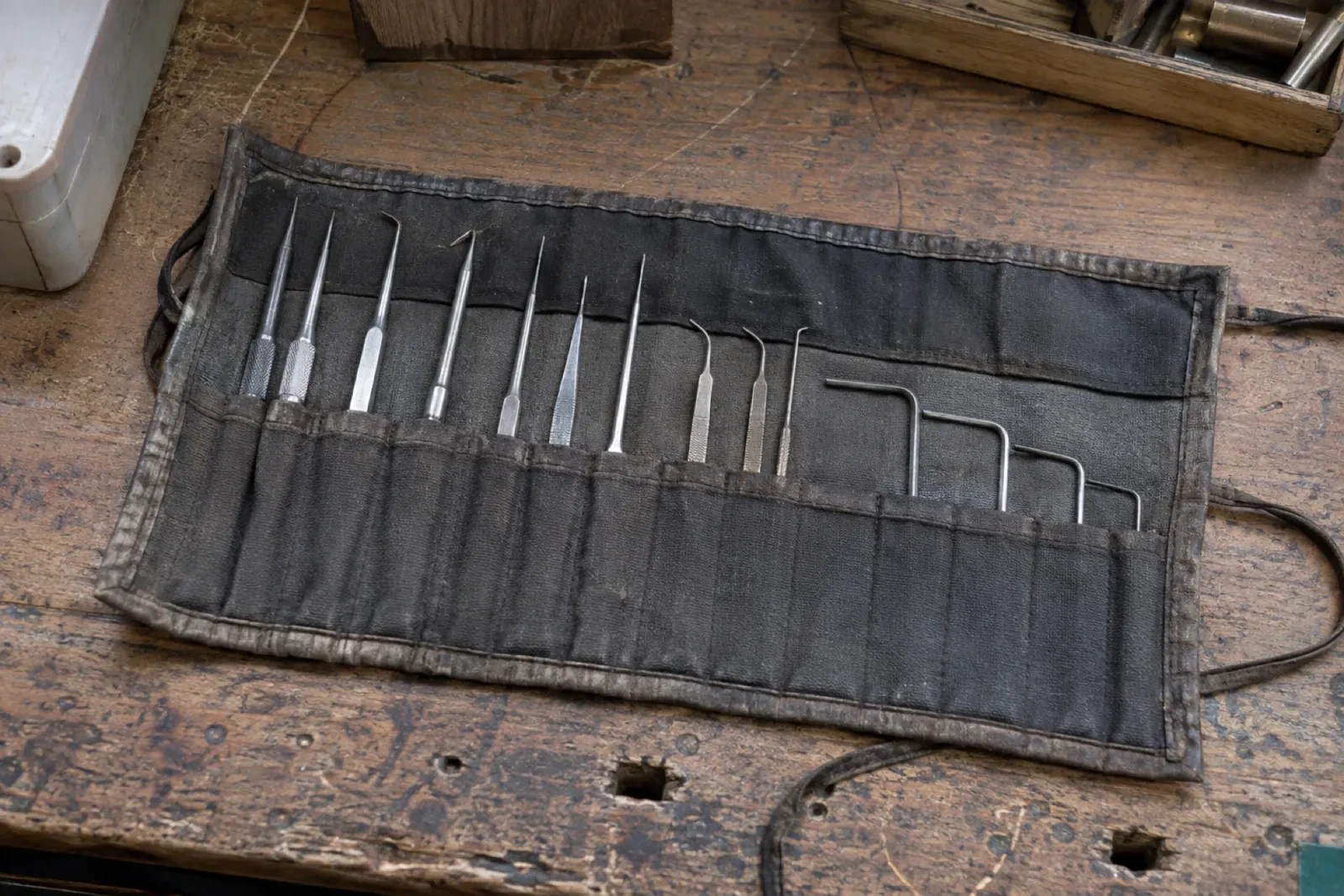
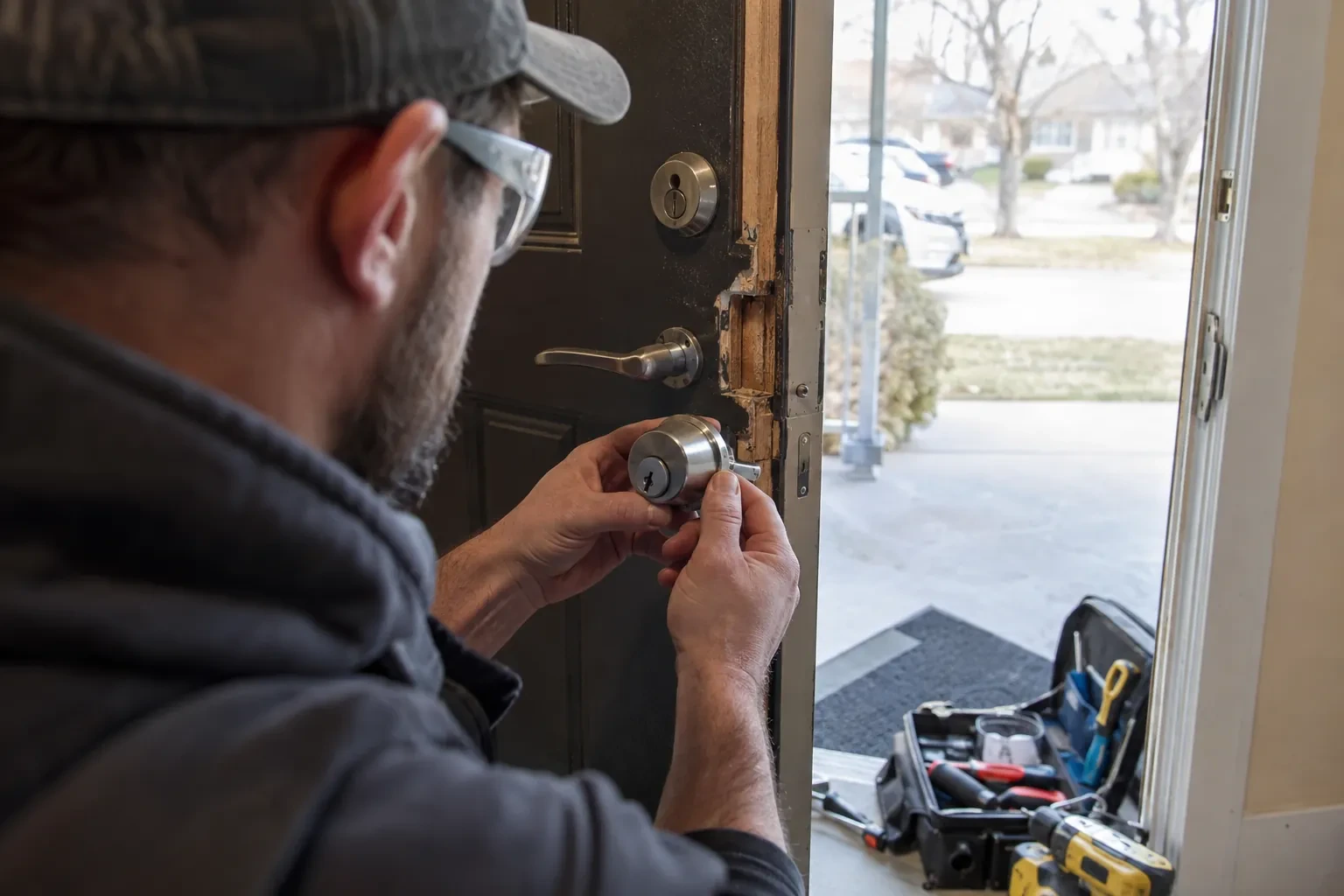
Which lock, and how it is behaving
The next question narrows things down: is it a door, the trunk or hatch, or a storage compartment, and does the key turn without effect, resist turning altogether, or simply refuse the remote while still answering by hand? Each answer points toward a different part. A key that spins without engaging the latch suggests a linkage problem behind the cylinder, while a lock that ignores only the remote suggests the actuator or its wiring rather than the mechanical side.
Reconnecting or replacing the linkage
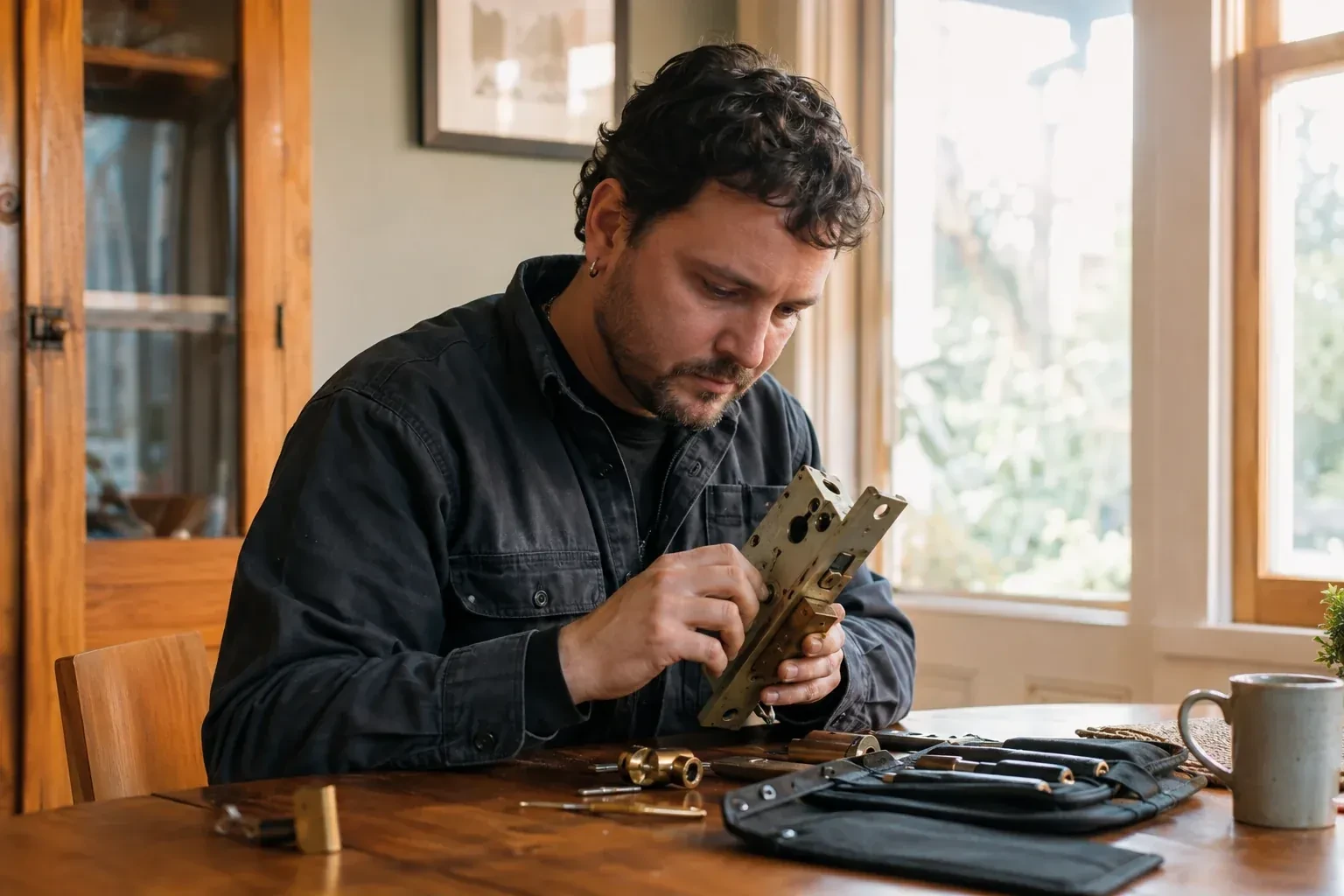
A key that spins without opening the door often means the linkage rod has slipped off the cam at the back of the cylinder or has broken outright, though some cylinders are built to freewheel against the wrong key or a forcing tool, so the locksmith checks which applies first. The locksmith reaches the linkage through the trim panel, reseats or replaces the rod and its clip, and checks that a small amount of free play remains so the mechanism is not binding once the panel goes back on.
Every point cycled and confirmed
Before the visit ends, the locksmith runs the repaired lock through every control it actually has at that location, a key from outside, the interior switch or handle, or the remote, checking that each path locks and releases cleanly. Central locking is cycled a few times with every door watched at once, so a fault that only lagged occasionally is caught rather than assumed fixed after a single try. You see the working lock for yourself before the locksmith packs up.
Vehicle Lock Repair
In the van
Key blanks cut to code
Weatherstripping and seal sections
Multimeter for wiring checks
Dry lock lubricant
Power door lock actuator
Vehicle Lock Repair
What affects the quote
Whether a key or fob needs cutting
Repairing the lock is one task; cutting a new key or programming a fob to match is another, priced separately since it involves its own blanks, transponder chips and testing across every door.
Transponder or immobilizer compatibility
Vehicles that require a chip inside the key for the engine to start add the cost of a compatible transponder and the programming step, on top of cutting the key blade itself.
Matching the vehicle's existing key system
Bringing an odd-one-out lock or key back onto the vehicle's existing key system takes extra diagnostic time compared with a straightforward single-part swap, and the quote accounts for that additional work.
What to have ready
- Does the key turn without effect, resist turning, or not go in at all?
- Has the key fob's battery been replaced recently, or not that you recall?
- Which lock is affected: a door, the trunk or hatch, or a storage compartment?
Vehicle Lock Repair: questions
QuestionsWhat should I do before calling about a vehicle lock problem?
Note which lock is affected, whether the key turns without effect or resists turning, and whether the remote behaves differently from the mechanical key on that same door. That description helps the locksmith bring the right parts for the specific fault.
Why has my key fob suddenly stopped working?
A dead coin-cell battery is the most common reason, and it is a straightforward fix once the fob is opened. Less often, the fob has lost its pairing with the vehicle or its case has cracked and let in moisture, both of which a locksmith can check and address.
What is the difference between an actuator problem and a wiring problem?
An actuator problem usually means the small motor that moves the lock has worn out, though a switch or control signal in the same assembly can fail too. A wiring problem usually means the motor is fine but current is not reaching it, often traced to a cracked wiring boot at the door hinge or a corroded connector, though the locksmith checks the whole path rather than assuming which it is.
Related services
- Car Key ReplacementThe car is yours now, but somebody else still holds a key to it.
- Spare Car Key DuplicationA car sits at the cottage all season, and the only key to it lives on a ring three hours away in the city.
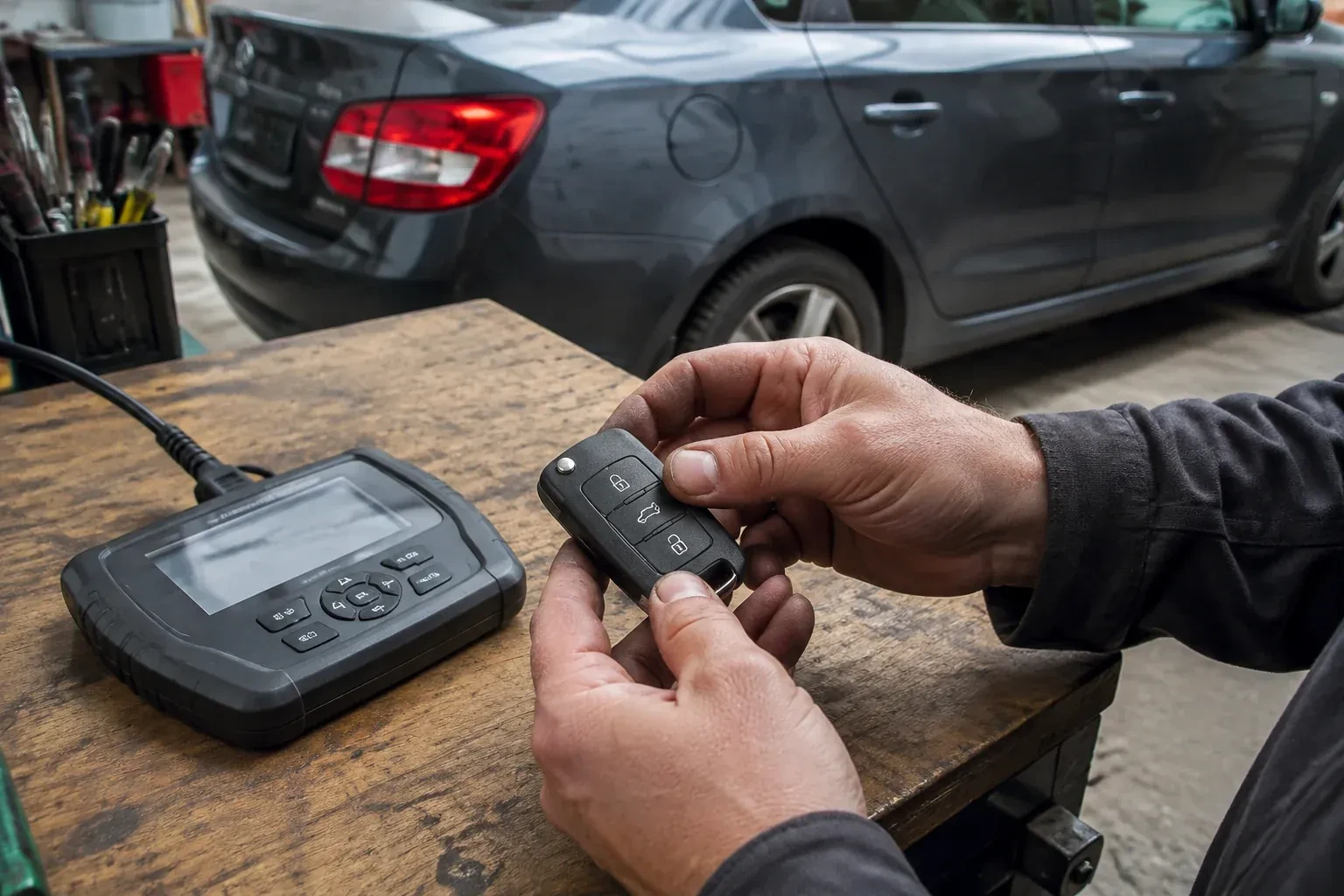
- Key Fob ProgrammingA cracked case or a spin through the wash left the fob unresponsive, and opening it up reveals a slightly corroded board where the buttons used to sit.